
In this episode:
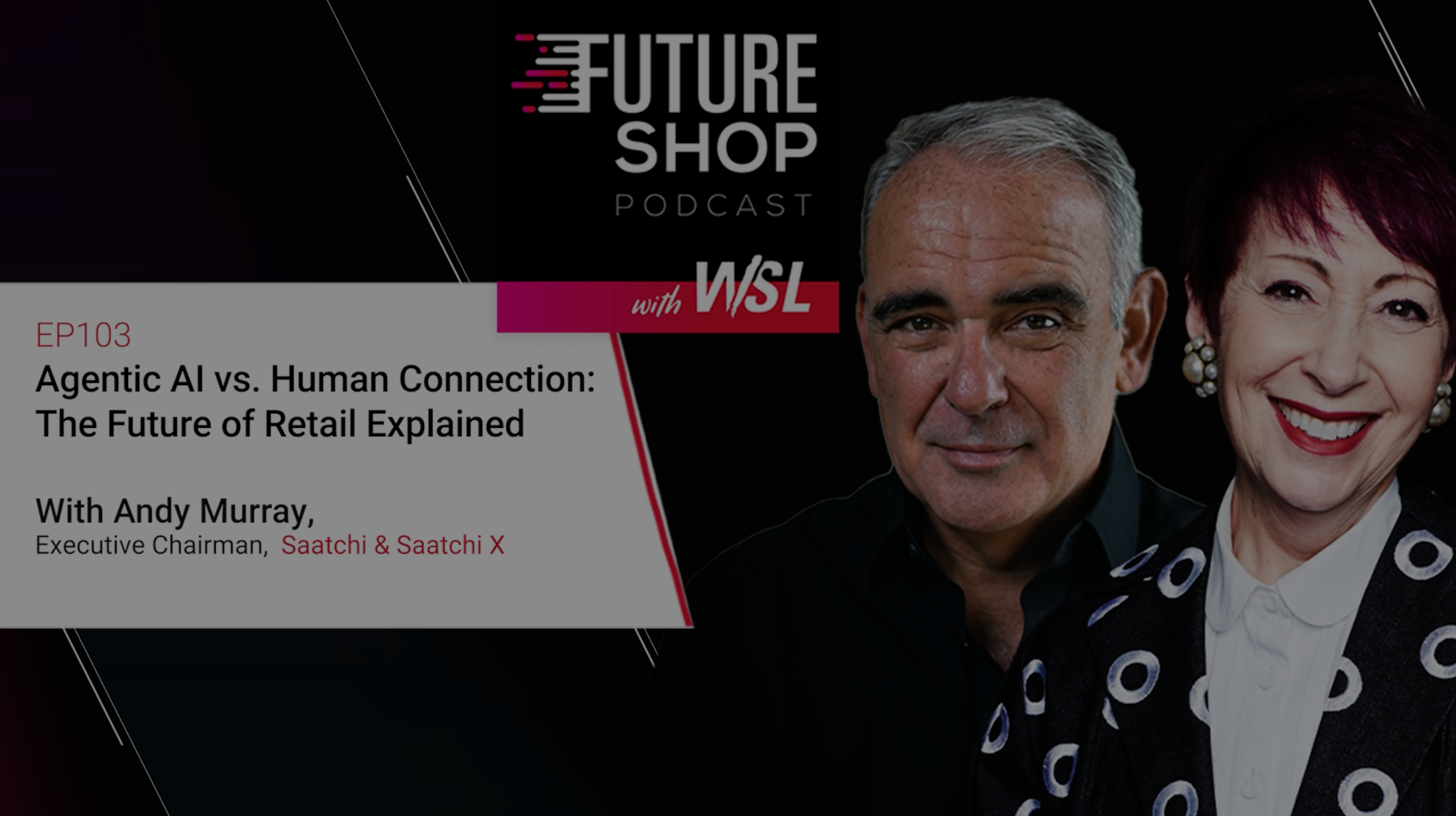
In this episode, Wendy Liebmann sits down with retail veteran Andy Murray to dissect the conflicting forces impacting the modern shopper. From the bifurcated “K-shaped” economy to the rise of “vibe shopping” among Gen Z, Andy shares insights from his time at Walmart, ASDA, and P&G, and his current work with the University of Arkansas. Together, they explore a critical paradox: as technology like Agentic AI advances, the human need for physical touch and sensory retail experiences is growing stronger.
Episode highlights:
- The Muddy Middle: How the economy has split shoppers into value-seekers and luxury buyers, leaving a complex “middle” that is harder to define.
- Gen Z & Transparency: Why younger shoppers are using apps like Yuka to demand total ingredient transparency and how they are leading the charge back to physical stores.
- The KPI Problem: Why traditional channel-based metrics are stifling innovation and why retailers must shift to a total customer view.
- AI vs. Humanity: The danger of using AI solely for efficiency and the urgent need to develop “humanist” skills to coexist with Agentic AI.
Chapters:
00:00 Introduction: Andy Murray & The Future of Commerce
02:32 The K-Shaped Economy & “Vibe Shopping”
09:22 Gen Z, The Yuka App & The Return to Physical Stores
13:46 The Problem with Retail KPIs & Silos
17:44 Agentic AI: Moving from Attention to Attachment
21:54 The Disconnect in Retail Media Networks
26:35 Data vs. Insight: The Pampers Example
31:53 Lessons from Asda: The Chief Customer Officer Role
34:42 Sam Walton’s 10-Foot Rule & Human Connection
38:45 The Future: Coexisting with Agentic AI
Don’t miss upcoming episodes, subscribe to our podcast with your favorite app.
Watch the video episode:

Wendy L. 00:00 Hello, everyone. I'm Wendy Liebmann, CEO and Chief Shopper at WSL Strategic Retail, and this is Future Shop. I'm delighted to have as my guest today, Andy Murray, and he's been on this podcast before the guru and all things shopper, customer experience, worked for some of the biggest companies in the world, from Procter & Gamble to Walmart to ASDA in the UK, as well as businesses in the US. And so he has an extraordinary perspective on all things consumer, shopper and retail in this day and age. So Andy, I am delighted to have you. Welcome to Future Shop. Andy 00:49 Well, thanks for having me, Wendy. It's such a pleasure to be back with you again. It's always cool to sit and talk with a fellow industry guru that loves everything, shopper and all the pieces that go with that. So I couldn't wait to get back on Yeah. Wendy L. 01:01 Thank you. And for those of you who haven't followed Andy in recent moments, he he Andy and his wife have just endowed a chair at the Walton School of Business. I should get that all right, shouldn't I? The Walton College of Business at the University of Arkansas, and customer centric leadership, be still my beating heart. So thank you for doing that. That's extraordinary, and it just continues to evolve all the work he's been doing over the years, some 30 years, in the CPG and retail space. So as always, excited to have you. It was great to see you. Over the summer, you came to Boston and was and you were our keynote. Why am I telling you he was our keynote in Boston at the Future of Commerce 2030 event that we co-sponsored with the Emerson Group, and he really set the stage for what the future of commerce will look like. And it was, it was exhilarating and delighted to have you, have you here to sort of end the year and begin the year where you and I always begin, it's, it's, I always say, to quote, or misquote, James Carville, the Democratic pundit, not to get political. “It's the shopper stupid”. Or although we could go back and say it's the it's the economy stupid, and both pieces would work. Andy, it's been a busy year for you. It's been a crazy year for most of us, I think, including the shoppers. What's changing in the life of shoppers, and where do you think we're headed over the next 12, 18, 24 months? Andy 02:32 Well, if I knew for sure where we're going over the next 24 months, Wendy, Wendy L. 02:28 next week, how about next week? Andy 02:31 We should, we should get a poly market account and see where this is all going, right, and put some that's out there. You know what? It's just really strange, because it's like everything's changing, but then, in some ways, nothing's changing, yeah, and so it's, it's kind of both at and at the same time. And you know, so many macro economic factors, when I start looking at, you know, for me, it's always good to go, Well, see, in retail, we call them the customer. We didn't use the word shopper as much. And the agency world, we said shopper. It was called shopper marketing, and all of that, right? So we said shopper. And then in the CPG world, we use the word consumer. And so it's kind of like, well, wait a minute, you know, what are we what are we, what are we really talking about here, in terms of, you know, how all this comes together, but, but, you know, I think, from a customer, consumer, shopper perspective, boy, what an exciting time, and they're so far ahead of retail and so far ahead of brands with an agent assisted shopping and what they could do. So from a possibility, it's really exciting, but from an economy and headwinds, and you know how they're facing the holiday and coming out of Black Friday, you know, I do see some shopper trends that are starting to change based on this kind of K shaped economy, where there's the wealthy shopper, the boomer side versus Gen Z. I mean, you study shoppers, are you seeing some of those same kind of bifurcations? Wendy L. 03:59 Yeah, I think that's the right word, bifurcation. I mean, everybody's everybody, a lot of people, sort of inside the ballpark. We're all talking about this K shaped economy. There's no doubt. Yes. I think we all look at and say, Is there a middle anymore? And should we even be thinking about the middle, the aspiration, the but I think there is. And I'm curious, in your view, what I didn't mention in the introduction, to everybody that Andy is also, I mean, his litany of successes, was the founder of Saatchi, and SaatchiX so that when he talks about, you know, as we think about marketing and shopper marketing, he was on the ground at the very early days of all of this. So as you talk about that, I think a lot myself about, you know, we say this K shaped economy, but we've got people who've got who are quite comfortable shopping as if they're not depending on what they want. And you know, you see in the parking lot and Aldis and Lidl now, and you see, you know, be. Ws and Lexus. Why would I spend money I don't have to spend. So you've got that kind of trade down, or trade to the middle, and you still have the aspirational shoppers, the Walmart shoppers, you know, the shoppers who are, you know, signing up for Walmart Plus and looking at the efficiencies of time versus money. And so that middle bit is the thing that I'm so intrigued by, as well, because it's not the middle class, per se, as we all grew up. It feels like there's something else going on. How do you see that sort of muddy middle I'm going to call it, yeah. Andy 05:32 yeah, well, certainly value has always been important, but I think we talk about convenience, price, value, quality, a lot of those different drivers, but I think in this particular time period that middle side value is more important. They're a little bit but also it's really interesting. So Black Friday had some pretty good numbers posted. But as you get into it, a lot of it's the basket sizes were smaller, yeah, and it even though the prices were higher, or the it's because the price was a little bit higher. But people are getting more choosy about what is it I'm going to buy, and more thoughtful about it, especially in the middle and in the Gen Z, you know, they're a bit skinned. I heard for the first time this week as I started looking at the Black Friday results. So, you know, there's, there's called vibe shopping, which is kind of the Gen Z version. It's a TikTok influence of what they see. It's their path to purchase is different. They don't do it in a traditional way as an average would. It's a bit more, you know, being influenced through social media on what to buy, and more so than anything else. And so, you know, the the middle, I think, is harder to define and get my head around, because we, we see the boomer side overspending, probably buying gifts for the grandkids because they don't have the money, you know, and the, you know, Gen X side to that, they used to to be able to do it. So we're seeing more clarity on the two ends. The middle is a bit money to me as well. Yeah, yeah, not a not a lot's being written about the middle. Except they are more acceptable for value. They look for value a bit more so than than previous. You know, brands are important, but they're not the main thing, and that's why they all the Aldi, you know, I was in the UK, and then all the experience, there's a little different us, but it is. They don't have that same stigma as it perhaps, like a hard discounter view in the US. Yeah, it just and the quality of the products are really good, and so part of it, too. Wendy, I'm curious. It's like the private brands, or owned brands by retailers, are getting better, and almost every category. Yeah, I don't follow the beauty category as much as I know you do, but in the it just seems like they're getting higher and higher market share. Yeah? Wendy L. 07:34 And I think that's true. I think you know, to your point about this, you know, the what value really means to people today. Yeah, I think. And you know, when you talk about things like agentic AI and all the new technologies and TikTok and those social commerce channels, we have a much better informed shopper, wherever they are, you know, if they're interested in better prices, lower prices, special ingredients. You know, anything that they're interested in is now, you know, in their hand, right? They can do their homework and and then shop accordingly. And I think that's changed the structure or their own autonomy. I The other thing we've been seeing in our How America Shops® research, particularly coming through this last couple of years of chaos, but really a decade of chaos, if you will, is that, you know, shoppers are really trying to take control more, and so I think technology informs that as well. So I absolutely agree with you. I mean, whether it's Costco’s Kirkland brand or special everything's or whether it's walking into an Aldi and buying, I saw the huge, big container of protein powder, their own brand, you know, whatever, they just figured people are coming in and they want protein powder at a price, and they don't want to be paying $25,$35 $40. Why not an Aldi? And I think you know that educated shopper who's trying to keep a handle on what's going on. Is the other other piece to that puzzle, which I find really interesting. You also talked you alluded to very early in this piece, to AI, agentic. Ai, what's your to your view? You on that bright, shiny thing? Or really going to change a consumer world, not just a corporate world for efficiency. Andy 09:22 Well, I think the consumer is there. I mean, Adobe came out with some analysis of, like, there's 800% increase in AI assisted shopping through Black Friday. I mean, it's there. So I think the consumer is ahead of retailers. Yeah, the consumers ahead of most brands. I did a focus group with about 15 Gen Z-ers at the University of Arkansas, you know, just sitting and talking to them about how they shop and what they do. And, you know, ask them, like, how do you shop? And they all talked about this app called Yuca, which I never heard about. And I'm like, Okay, I've not heard about this. And so what is it? And they all. How many of you guys have it? And they all did. Almost all of them had downloaded it, but it gave them complete transparency or control of what ingredients, from Beauty categories to you know, it's good, good for your health or good for you. And then it suggests an alternative. There's no ads. It is a done by a nonprofit of scientists that go and do that. But they're looking for what's real, I think, and what's truthful, and what's good, and yet, you don't go to any retailer's site on their e commerce, it doesn't give you those that information. It's not available. Most brands don't put that on their website, yeah. And so as you look at that, it's like, wow, they're ahead of us again. And so that is kind of an interesting thing to look at, is, how are they getting ahead of us, and how do we catch up to what they're able to do? But I think you hit it spot on, is getting more control over their environment. And the other thing that came out of that focus group that was really interesting is how many of the students talked about valuing going into a physical store, and as we got underneath that, it was a bit around, you know, they're so tech oriented that is a physical touch. And I remember a quote from Nicholas Negroponte that said, the more technology advances and gets more sophisticated in our lives, the more there's a demand for physical touch and humanity and connection grows as a counterbalance. And I think we're seeing that of them. You know, this is a bit get away from the screen time you go into a physical place and be able to touch, feel and see a sensory environment. I didn't expect that out of the Gen Z group at all. I thought that was just maybe that's just our generation, but actually they are valuing it probably even more than we do. Yeah. Wendy L. 11:36 Well, I'm smiling, for those of you who are just listening to this, I'm smiling at Andy, because we see it even in our group, in our company, you know, absolutely Yuka. I first came across it because we have two or three on our team who religiously look at what's in the product. You know, certainly beauty, but in food and other categories, very much focused on that and very digitally engaged and lots of other things, as I say, it's in their hand most of the time. But the other piece, exactly to your point, is also more engaged in the physical experience, but that Andy 13:46 It does. And I think a lot of retailers, over the last, I'd say seven years, have probably moved away from the importance of that human experience in stores, because performance, marketing, e commerce, you can measure all that, the the amount of KPIs we can invent on those digital things are finitely measured, and measurement drives behavior, yeah, and yet, you know, when I started in shopper marketing in ‘99 and we had to talk about what it's going to do and how we change it, we had to go really to insight based research to really understand the principles, and then from those Principles, who would execute, right? And so we, you know, it just like your company would be a great source of information for us to understand what's the potential for these areas. But those are not necessarily, those areas of human emotion reaction don't show up in performance KPIs that you could take to a CFO and say, This is why we need to invest in the in-store environment, or the, you know, they're really hard to invest in. And I think, I think we're starting to see that, and that's why a lot of retailers, I think, have fallen behind. It's really hard to get the capital committee to invest in customer experience. If you can't show the math of what's it going to really do? So, unless it's cost down, labor savings or something like that. At or or click through rates, or increased checkout baskets, all those more tactical things, the whole value of the human experience starts to fall down the list for a lot of retailers that may not that maybe used to have a much better experience, but now maybe on their back feet, looking at, you know what, where the stores are, and are they as exciting as they could be? Are they easy to shop as they could be? Are they, do they pay attention to the smells and then the sounds and, you know, the feeling of being in a great shop? I think Costco does a great job of it, Trader Joe's, of course, Ulta Beauty, there's several that do, but it's, it's an area that I think is kind of exciting to see come back, because I think it's, they're starting to get recognized. If there's something there that's important. I mean, shoppers, 85% of shopper decisions are still made on emotion, right? We're not logical people, and so, you know, there's, you know, we have to be able to do that, but the emotion is the hardest to measure from an empirical side, yeah. Wendy L. 15:57 And I think, you know when, when you say that again, it always warms the cockles of my heart, as my mother would have said, within the context of, how do I measure that level of engagement, not just profitability, engagement that leads to hopefully long term engagement, long term profitability. How do I find whatever this magic KPI might be on that as people start to talk about my store or my place, you know, my Walmart, my CVS, my Ulta, fill in the blanks. And I think you're absolutely right. Nobody runs around at the moment says, My Amazon. You look at places like a Starbucks that I think we're in all in awe of in the early days, where there was that third place, and then it became so efficient that it lost the smell of the coffee and the sound of the music, and that sense, even if you have no time to sit there, the possibility of that. And now they're working hard to bring that back. And so I agree with you. I think the consumer, customer, shopper, obviously, they each have different meanings in some context. But the human that we see, the human who in this, these times of chaos, which seems to be forever, these days and generations, as you said, like Gen Z, who've only known this kind of chaos in their lives, economic, political, technological, all of that, social, you know, looking for a different kind of relationship with the physical place and the people in that place that, to me, is an area that I feel, you know, is so missing in most of the retailers that you and I spend time looking at or working with. And I think that's, that's the opportunity. And the next, you know, in the coming, in, my prediction for the coming years, Andy 17:44 yeah, I totally agree. And if I were a retailer right now, you know, I would covet my store, physical store environment, because the battle on just counting on E commerce, traffic, organic traffic, or paid traffic. And I think the relationship is going to be with their personal agent, personal agent, you know, on an on a digital front, that personal agent is going to mean more because the ChatGPTs the Geminis and that, you know, those that are going to have the shopping, you know, connection, availability, you know, they're not after attention with the consumer. They're after attachment. They want you really attached to this thing that's gonna feel like it knows me better than anybody else. And so if it can disintermediate, disinter intermediate me going through a Walmart.com then to, you know, just does it for me. So what do you really have? Then you've got that physical space that is, you know, you're still going to compete and work in that but, but you can totally, you know, own your physical environment. And what does it mean, and how does it feel to shoppers that no agent is going to touch they might assist you a little bit in the in store space, but not much. It's the physical space. And then, Wendy L. 18:50 And then, which raises the big question as we think about, you know, my topic is, it's the shopper stupid is we are still, though, at this point, where we have to say to ourselves, how many of those physical spaces do we need? How big do they need to be? How small do we need? I mean, we've got this discussion still going on about channels, and I'm like, did we not get the message that shoppers don't care about a channel? They care about, you know, this place? Is it relevant to them? Can I use it, you know, can I order online, pick up in store, can I go into the store? Can I use my app, all of those things. What worries me about this discussion, still about channel, is that it sounds like an a corporate, a business organizational principle, right? And a P&L against the channel, and the staffing against the channel. And you say to yourself, This is not consumer-centric for a minute, you know. And so that's the other piece that I'm, you know, noodling over. And I'd love your thoughts on that as a as a principle for the future. Andy 21:19:54 Well, you know, it's interesting. I felt that way a long time. And I know you've said it for many years. It's not, you know, the. A channel is not a word the customer consumer even thinks about. And yet, yeah, I was at the Path to Purchase Institute's live thing a month ago or so, maybe less than that. And E marketer released some new data. And one of the things that it was the first time they put data to this issue, because they the question was around retail, media networks, and how come they're not. How come? They're kind of stuck. Right now, retailers are having a really tough time, and they got to the question of, what, how are your incentives done? Do you guys share common objectives? Is there like, how many of your organizations have a common KPI for measuring success? And I only 23% of respondents of all the hundreds of retailers said they have a total company view of the customer. Almost everybody measure their KPIs by channel, and they talked about the channel competition inside retail between the E commerce objectives and the store objectives, and sometimes the none of them are connected to the merchant objectives. Is like what you're saying. There is now data to say that these companies do have a problem when trying to move forward in a holistic way to the customer, because the incentive structures, the KPIs, are competing with each other inside the retailers. And I've never seen the data. I've always felt it, but now, now they're starting to see the data show up as a real barrier for the kind of accelerated innovation to meet the customer who's thinking, end to end. Wendy L. 21:23 Yeah, and I think to your it goes back exactly to the point you've made several times today. It is that the customer, shopper, is way ahead of the rest of us. And so if, as a consumer packaged goods company, or, you know, a big national retailer, or even a regional retailer, if we're not looking at it, the customer shopper that way. You know, we are, we are not serving them well, and we're certainly not serving ourselves and our internal teams well. I will say the thing I find both fascinating and aggravating of late, and my, you know, being on the road like you are big companies that we've known for a long time who are now saying, Well, you know, we're going to put the customer in the center of everything. I'm like, Well, what the hell we've been doing beforehand, before? And of course, they weren't. They weren't. They were thinking about their category or their brand. They were focused on category management, which is another thing I'm ready to throw out the window. Thank you, but let's not go there today. That's the next time we talk. But again, thinking about that. The other thing that comes to my mind, and I'm curious about your point of view on it, is with the complexity of what we have people willing to shop in so many places, we see that now data 12.9 different types of retail in a three month period. Not just shop, buy from 12.9 steady for a long time. If they use social commerce, they shop even they buy from even more places. So you sort of see all the new iterations of shopping opportunity expand that that network, I suppose, is the word for that, or that ecosystem. So all of a sudden you've got all of that going on, all the digital tools that are enabling that. And I don't know how, as an organization, there is a question here. I don't know, as an organization, how you even keep track of it, unless you put the human that you're trying to have a relationship within the center of all that. I know. I mean, when you think about the school and the work you're doing and the students you've been talking to, is that grounded in the way you're thinking these days, thinking Andy 23:36 They're thinking, yes and no, it's grounded away. I think not there. So the university world is still siloed on marketing versus a sales, merchant school, you know, disciplines and stuff like that. So they're not coming out with that. I would say in Europe, a lot of the marketing roles, I think it's a structural issue at the top. You need to have, in my opinion, a chief customer officer that really has ownership of the touch points from the product management of the E commerce environment. What that feels like, you know, all the way through. It's not about a mark. It's not about marketing. It's about the total customer relationship. And in many of the retailers in the retailers in the UK, they don't have a CMO, they have a chief customer officer, and that, see, the marketing is only a piece of that. And then you get that integration at the leadership level. So you could talk about, you know, the hours you're putting against customer service. You've got somebody to fight for that where aCMO doesn't typically care for that, right? Care about that as much. And so I think it's a structural thing in retail, I do see more of that starting to happen in the US markets, where they start putting the customer first. And that's when I came back from the UK. That's why I wanted to talk about it's like, Look, we're not even educating our students in this way. You know, where the customer, you can really elevate it to a boardroom level conversation to be there, but you look at like, no retail in their right mind wants to do anything with last mile delivery. It's not efficient, it's not profit, it's margin diluted, but yet everybody invested to do it. Why is that? Because the customer demanded it. Now you look at the last, you. Know, three years, how much money and capital has been putting into retail, media networks. So you say, Well, what is the how's the customer driving that? Well, not, I haven't found a shopper yet that says I want a more relevant ad on my No, it's driven by profit, right? Let's be clear, it's driven by an alternative revenue, high profit opportunity is moving a lot of money into that, but no customer asked for it, right? And so, you know, that's why it's difficult to get clarity on, how does all this advertising work? Because it's not customer driven. There's not but, but now with agentic, where you can have a really, you know, or AI assisted, you know, you've got very net like, they solve the relevant problem, because it knows me, right? And so now I think the chase is going to be the biggest, massive disruption is going to be. How do we make ourselves fit for a Gen X shopping, which that gap was created? Because we never did leverage that first party data in the billion to make anything more relevant. I would go on to any retailer site, and it never really evolved over the last five years, with billions of money spent to be any more relevant to me than it was, you know, seven years ago. So, yeah, I think that is the, you know, it's the customer. When the customer says, we're going to do this, the retailers follow, right? And so I think that's the, you know, once you see it. And like, look at the drive through experience with Chick fil A, no doubt, like the best, right? And so you look at, if I was going to reinvent a pharmacy, drive through your benchmarks at Chick-fil-A, drive through, it's not another pharmacy at another crappy retailer, it's going to be, you know, the it's going to be, what they see is what pickup should be, right? And so I think the customer also has a broader view of what excellence looks like, and are demanding that. Wendy L. 26:35 Yeah, I think that's so you again, for those of you listening, not looking, I'm smiling with a Cheshire Cat grin, because, you know, Andy and I, it's like preaching to the converted to have when you don't have the customer in the center. See, now I'm talking customer. If you don't have the customer in the center of it, you're absolutely with the person in the center of it. What? What? What you know is you, you know. And we see this from our retailers, right? They keep looking at the people who look like them and say, Oh, no, we're better than that, as opposed to looking at the human and saying, no, but the human is at Chick-fil-A, and that's what a drive through experience really does look like. The human is in, you know, Trader Joe's, where it's only people, and so many people, and it's only private brand, and their expectations of whimsy and humor and quality and price are all in this little, tiny, you know, space. And so I think, you know all of that I worry. One of the things I worry about, and I'm usually the eternal optimist, but one of the things I worry about is that, in this, the pressure from many companies, retailers and brands to rethink themselves, in the last couple of years, with all the again chaos, is that that ability to think innovatively, that's even the word, but innovate in real, meaningful ways with the customer, the human In the center, I will really worry that that's we've lost so much of that. And that, to me, is both, as you said in the beginning, we are in exciting times, with all the technology and all the change and all the opportunity. And that's a piece, to me that, you know, I hope all your students in your program are really hungering for because it makes retail a very compelling place. And if you're in Bentonville, you're not in the retail business anymore, you're in the tech business, whatever that is. But you're right. It is a big platform, right? How big is that platform? Andy 28:34 What I, what I kind of worry about is, you know, we've, we've lost the ability, because we've went to using data for everything. Yeah, and what we're missing now is the insight, and it's kind of like the craft of what your company does as an example. I'm not trying to, I'm just saying, you know, look, you understand this more than anyone that you know. To get a if you want innovation, it has to start with what's a customer problem we're solving, a shopper problem we're solving. And where do you get that problem? And it comes through listening, being in touch, asking questions, being with the shopper, you know, getting in the trenches with them, and then you observe and get that insight. And I think you I've never seen a spreadsheet give me a good insight. And I remember a day where the insight you had about how a brand, how a consumer, buy, why they buy your brand, that insight was your best? IP, yeah, because if you had some insight, I remember working with Pampers back in the day, years ago, with P&G, and they had this insight that, you know, when the baby reaches up and touches the mom's face, the baby's happy, that makes the mom happy. And that insight had to be filtered through all the Pampers in some little way about the truth about that brand. And you don't hear anybody talk about that anymore, right? And that's why you would never put a baby by itself. Huggies does, right? They didn't have the same insight, and so you almost had to get into a vault to get that insight, so you'd know how to do the advertising. But I feel like that's a returning thing, yeah, and there's very few companies that have the practice muscle that you have. I'm not trying to sell what you do, Wendy, but I'm just please do Wendy's old is new again, and I think, no, I'm not even sure, there's a lot of marketing competency to know how to go get a deep insight. Yeah. Wendy L. 30:11 Yeah. Well, it's interesting. You said, because one of your alma mater has expressed it publicly and personally, that, you know, they went from being this, as you noted, but that example, yeah, so such leaders in insight, and then, you know, all of a sudden you could have data anywhere, big data, right? Big data everywhere. And so people became analysts, and they didn't, they didn't learn that. And you're absolutely right, that skill, because it is the art and science of, what is that? What question should I asked, What, who should I be listening to? Your example, you know, in old school, excuse the expression way of having 15 of your students sit around a table and ask them questions about life is such. It's not difficult to do, even if you just bring all the people that you employ in your company. We're lucky, small group, very diverse, and everybody has a different story, you know. And just listening to that, that doesn't have to be your, you know, your quantitative support for it, but you begin to listen, you know, you watch people on the subway. It's my big, you know, all my, all my ideas come from the subway, but watch people on the same I mean, just observe. Take the moment to observe. So I know I don't to convince you on all of that, but, but you, you and I have talked about this when you came back from London and the Asda work, and they you talked about the unique role, not of it, a chief marketing officer, but a chief customer officer. That, to me, was a moment, that, I think was a moment, and then it dissipated to some degree. And now you're right. Everybody's chasing the profitability of retail media without understanding who's really in that. Who is this for, and who does it benefit beyond you know, P&L, Andy 31:53 well, one of the biggest insights I got from that role, coming from more of a marketing role into that, was because I had the call center responsibilities, not for the execution of it, but for its KPIs and how it interacted, and to go spend a day on the call center just listening to the calls come in and the kind of problems the customer. It was gold. And often, I would take and pull clips off of the audio stream and play it at the board meetings, executive meeting to hear what the customers say. And, you know, we were so efficiency, performance related, I remember one problem we were trying to solve was, was, you know, we're not, we're, we're not closing out these calls fast enough, you know, they're, they're on the phone too long. And so we need to get better scripts. So, Andy, can you write better scripts that we could, like, solve this? And I'm like, Well, wait a minute. Let's, let's dive into this little bit. Let's go listen to some calls and see what's going on. Right? And what we found was that somebody came in, changed all of the voice the phone calls, the the phones for that used to ring at the store level, went to the to the to one call center at the, you know, for them to be answered. And almost all the large, percent of the calls was somebody saying, do you have this in stock right now at the store? That was the call coming in from the customer. Well, it's routed to a central person say, I have to put the person on hold, call the store, find out, come back, get back on there. And it's like, you guys don't need new scripts, like you fundamentally have changed, you know, the way that the shopper, yeah, but you know what? It was, the store manager. Now our most expensive labor running around the store trying to find something. Okay, well, let's solve that problem, but let's not try to, you know, yeah, and it's just when you really start owning that customer, that shopper, and all the friction points and all of the things that could make their life better, you discover a very wide portfolio of opportunities to improve what you're doing. Wendy L. 33:44 Yeah, and to that point, as we, as we wrap this up, I think one of the things you've said there is, if we understand what the issue is, some of that can be handled, you know, automatically, some of it can be done through technology, and others. It's about the listening. I remember when it was at Zappos, I think first began the online shoe business, and they the customer service people there. They could talk to people for as long as those people wanted to be talked to. It was about building this relationship, particularly in those days when people were they weren't sure, could I really order shoes online? What you're going to ship me five pairs, and then I can ship four back, whatever it is. And so they were building a relationship. And so that was who the customer care, person that was their job to build the relationship. And so I think, you know, sometimes we lose all that as we get smarter or not, and the things we bring with us, and the things we leave behind as we chase these bright, shining well. Andy 34:42 well, and a lot of research is like a lot of people are using AI chat bots as such as a customer service play, because it's way more efficient. But the research that I've seen, I suggest very clearly that if you give a person an option to talk to a chat bot or human, they pick human. Ad, even though it's better in some ways, and why would you give away the one thing, that human connection with your customer and that moment where you're talking one on one? I just don't understand that it's like sometimes the most valuable things we have. But I think our KPIs and corporate ways we measure success still don't reflect the truth about life, and that the human connection is more valuable, is one of our most valuable things we have, and if you treated it that way, you would probably make sure I'm talking to that person directly and have that warmth come through that's never going to come through a chatbot. Yeah, and I could sound like a Luddite, but I don't think it is. Wendy L. 35:38 I don't it's because if you think about the human qualities that have not or the needs that have not changed. We can do Maslow or whatever. But you think about that human connection, particularly in this day and age, when we're so engaged with technology all the time and ourselves individually, that that that desire for connection becomes even greater. And I'll tell you in in all our latest work, where we're where people are really trying to retain some degree of control, that human connection is so important, and it's just, how do I use it? How do I value it? I mean, we can go back to Sam Walton and the Walmart greeter. Oh yeah, that story and that somebody saying, Hi, G'day, welcome. You know, all of that is so powerful because I'm now in somebody's home, and and I now, you know, I immersed. I walk into an experience, not just an acquisition of toilet paper or tissues, or, yeah, whatever. Andy 36:31 Well, I saw on that point quickly. I mean, I was watching, I went to the Walmart Museum, and I saw this clip that the the Walmart museum used to be in my scope. I had that there was trying to keep the museum going and supporting him anything he needed. But, you know, he would find these clips. And there was one clip where Sam rolled out the 10 foot rule, and it's him explaining to the company why this is important. He said, You know, you see a person within 10 feet, you greet them, you ask, How can I help you? Kind of thing. And then he goes on to say something that doesn't often get talked get talked about. He says, I know for many of you people, this is going to be uncomfortable. You're you probably are introverted, you don't necessarily want to do this, but trust me, this will be good for you. And I'm like, oh my. He said that out loud, you know, it's kind of like he was not. He saw the human connection is transformative for his own people, yeah, yes, for its own people to be better, yeah, even if they didn't want to that. This could be an area of personal growth for you when you get able to be able to talk to people and be able to he recognized that not everybody's gonna be comfortable with that. He was very, very smart. Very, very smart, but I think you're right. He absolutely understood the importance of the human connection. Wendy L. 37:36 Yeah, yeah. So I think as we wrap this up, to me, one of the things I'm looking at a lot over this next, I won't go two years, and that's 12 months, is really thinking about things like the role of the people in the experience. And those retailers, I think, curious to what you I think that get it and are willing to fund and support it, they will be the ones that will, that will win. Otherwise, I can buy anything everywhere that we all we you, and I have been saying for a long time, at any price I want, I have total transparency. If I choose to, if I want to take the time to do it, I don't have to even bother about getting out of my chair. And so all of a sudden, think about Chat, right? Think about AI and pricing, transparency. That's a race to the bottom. And how do I engage in different ways, and how do I build that engagement? I don't even talk about loyalty anymore, but engagement with somebody that will continue to return to my place, whatever that place is. So that's what I'm keeping an eye on. So what are you keeping an eye on for the next little bit? Andy 38:45 The same thing I'm more interested in, how do we coexist with agentic AI and let it empower the human connection, not replace it? Yeah, and I feel, I fear, that we could be down a path of just seeing it as an efficiency play, and not valuing the specialness of what it means to be human. And so there's lots of tasks in a retail environment or brand where, you know, the agentic ecosystem. This could be perfect. It's great. It's that. But then if you lose sight of the value of the real things that are important in life, the humanness of us, and how that that connection with shoppers is a human connection, primarily, you know, for it to be the things you're talking about, for it to be loyalty, if you don't want to just be a race to the bottom and a commodity and just whatever that you don't want to just be, you know, like you're giving your catalog day. Yeah, right. I mean, how do you then keep attachment? And I think I'll be talking about the next couple of years. It's just the, how do we prepare ourselves as humans? Because we're gonna human intelligence. We've lost that, right? But what about human inventiveness, human insight, human instincts, human intuition, human connected, interconnectedness, right? There's so many things, but yet we don't really have a lot of. Out there in academia or others to develop those pieces so that our humanist grows at the same speed as the AI intelligence grows. And so those would be things that I'm really kind of keeping my eye on. Wendy L. 40:12 Well, now you have the power to influence that with the chair at the school, which is very exciting. So I think that's a that's a goal that's worthy of all of us, if we, if we actually pay attention. Well, I'll be reaching Andy 40:23 or you've been a big help on connecting me up to the right people who are doing this at other universities. And so I'm much appreciated. It's much appreciated, and I'm going to be pulling you in to help me think about this too as we go, Wendy L. 40:34 a pleasure, as always. Andy, and anytime. Cheers for now. sense of community, sense of connection, going with friends, you know, the efficiency of the way they've learned to shop, or the technology enhanced way they've learned to shop. They even express, you know, looking at TikTok or any of the social platforms, as a way of connection, even though it's, you know, obviously not my direct friends and family, and we had the long conversation recently, because I sort of to your point about the pendulum. I was saying to somebody that I look at TikTok, and I think about it in the context of what television shopping was, you know, when television shopping first came to bear, and we did research around it, people were sort of misled by who the television shopper was, who was at QVC, who was at HSN They always thought they were people who were shut ins, you know, they couldn't get out to the store. They were large size, so they needed whatever, 25x something, whatever. And were quite disparaging about who those people were. When we did our research with them, we discovered they were people who love to shop in lots of places, love the engagement with the host. And so even though it was at arm's length, they were very engaged in the experience, and were very big shoppers, I mean, as in buying, not just browsing. And so I think about TikTok and TikTok Shop now, and now you see QVC with their own TikTok Shop, and skyrocket, skyrocketing again. So your what's changed and what hasn't changed. There's certainly both. And that pendulum keeps just swinging back and forth. Nicholas was right back and forth.