
In this episode:
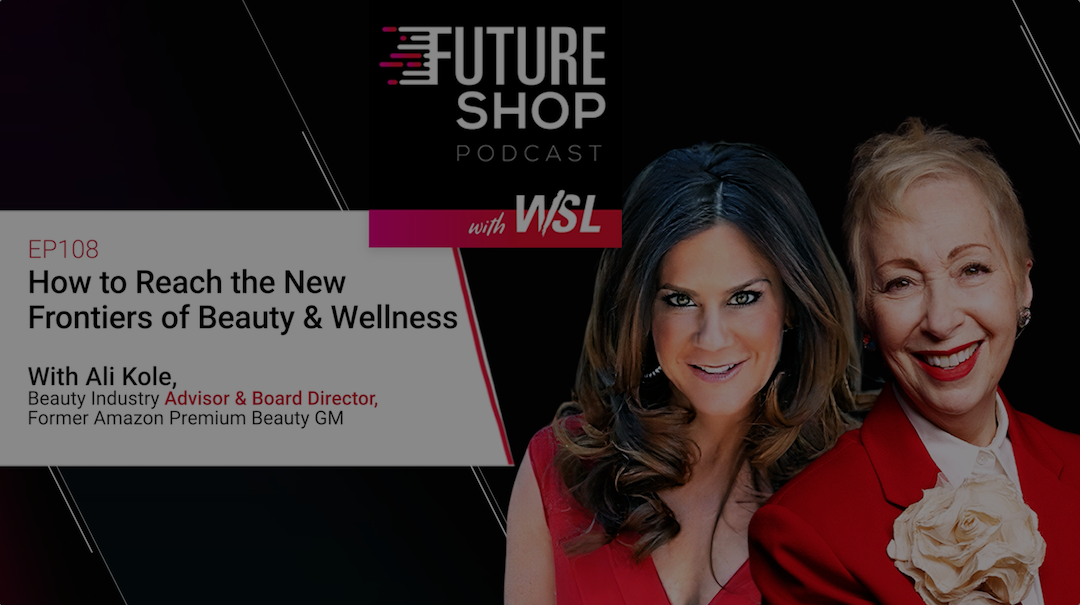
Wendy Liebmann sits down with retail powerhouse Ali Kole to dissect the “accelerated evolution” of the beauty industry. Drawing on her extensive background at McKinsey, Amazon, and Sephora, Kole explores how technology—from back-end logistics to front-end AI—is empowering the modern, information-hungry consumer. They dive into the expansion of beauty demographics, the rise of specialized service models like “Dry Bar,” and why physical storefronts remain a critical “halo” for digital success in an increasingly saturated market.
Episode Highlights:
- Evolution, Not Revolution: Why current retail shifts are a continuation of long-term technological threads rather than an overnight disruption.
- The AI Distiller: How artificial intelligence acts as a tool to simplify “choice overload” for consumers overwhelmed by data.
- Widening Demographics: Exploring the growth opportunities in neglected markets, including Gen Alpha, menopause wellness, and the 50+ demographic.
- The “Store Halo” Effect: Data showing that physical neighborhood locations significantly boost local e-commerce performance and customer loyalty.
- Specialized Services: The movement toward making elite medical and aesthetic services more democratic and accessible.
Chapters:
00:00 – Introduction to Ali Kole’s Retail Vision
03:18 – Accelerated Evolution vs. Retail Revolution
08:01 – How AI Distills Information for Overwhelmed Shoppers
11:33 – The New Beauty Frontier: Wellness and Widening Demographics
22:17 – Specialized Services: From Dry Bar to Accessible Wellness
27:03 – The Physical Store Halo: Why Neighborhood Retail Still Wins
Don’t miss upcoming episodes, subscribe to our podcast with your favorite app.
Watch the video episode:

Wendy L. 00:03 Hello, everyone. I'm Wendy Liebmann, CEO and chief shopper at WSL Strategic Retail, and this is Future Shop. This is where I talk to innovators, disruptors and iconoclasts about the future of retail. Today, I have somebody who has such an extraordinarily broad vision and experience about the future of retail. Welcome Ali Kole. Ali Kole 00:32 Thank you so much, Wendy and everyone out there who's watching us, you are just such an utter delight. And every time we have the opportunity to have a conversation. Not only is it, you know, interesting and thought provoking, but so much fun. Wendy L. 00:46 I was going to say a quick background over Ali's experience, although her experience is so extensive, I will not do her justice. So Ali begins where lots of great strategy people begin at places like McKinsey, and then in the tech space at Microsoft. So already picture, that picture. Then when I first got to know her, or know of her, she was creating innovative strategy and brands through Kendo, which is, which was the incubator business she co-founded, was Sephora, LVMH, and then when I really got to know her, she was had gone to Amazon to begin to expand their premium beauty platform, and then has gone off to do extraordinary things, most recently as interim head of Charlotte Tilbury and all that fabulous beautiness, as well as being on the board of Credo and many other things. So if anybody's got an expertise in where retailers going, where beauty retail is going, this is the woman for us. So thank you for thank you for coming along. Ali Kole 01:49 That's lovely I really like the way you knit that together when you've been in this industry for a while and so many different hats. So yes, I mean, I think the ability to reflect from both the brand and and the retail side is unique. There aren't that many people who've gone back and forth between both sides, and in particular, with both Amazon as well as Sephora and I have done some consulting to Ulta as well. Wendy L. 02:10 Before we begin the conversation with Ali, I keep berating you about subscribing to this podcast. So many of you listen to this and don't click that button to subscribe. Doesn't cost you anything, and you obviously love it because you're listening. So please do me a favor and just click the subscribe button wherever you get your podcasts. We're here for you, and we know it because you're listening. So click and go. Wendy L. 02:33 So most recently, Ali joined me on a panel I moderated at Cosmoprof in Miami, and one of the things that struck me, both about the panel discussion, but also about the event itself. There was lots of excitement, lots of opportunities for growth. And yet, if I step back and look at some of the shifts that are going on now, particularly at retail, it feels like we're in this sort of whole different moment. And I say that because department stores are struggling, not just an impact on beauty, but on many things. We've got the altars of the world that you just mentioned making a play for the global businesses. We've got Amazon obviously becoming the biggest beauty player in the in the world, Walmart saying I need to be in that space. And then we have TikTok and everything else. Ali Kole 03:18 Yeah, the landscape is incredibly dynamic. Think, the way I sort of think about it as is, it's an accelerated evolution. I don't think it's a revolution. I think we've seen these. I mean, I remember doing presentations years ago at trade shows, when I was at Amazon and really speaking about this rise of E commerce. And, you know, sephora.com was a huge force and beauty before Amazon was a force in beauty. So as much as someone could say how it's so different now than it was, but there was never a break. I think this was always an evolution, and you can see the threads from the past that have gotten us to where we are today. And with that, that said, I think that also portends for the future a similar accelerated evolution, rather than revolution, like now, the big conversation is all about AI, but like AI is, it is informing how we shop. It is supporting and evolving the way that we discover, research and purchase, but at the end of the day, like, you know, people are still buying, usually from a retailer via an AI agent or a brand via an AI agent. So that doesn't mean that eventually plot or chat GPT, that they wouldn't be commerce desk, you know, who knows. But that's not like the overnight transition. So the biggest thing I see that has really, really driving the shift, I guess it's a combination of technology. So technology is really what has enabled online shopping, and that's not only technology on the front end, like the websites that we interact with and the ability to learn, first on, you know, dot coms and then on social comms. Our sites and TikTok, etc, but also technology on the back end. So logistics and fulfillment, the ability to get goods to people's homes that you know, has also dramatically I mean, Amazon has played a huge role. Walmart has played a huge role in revolutionizing supply chains and the way that consumers can get goods delivered directly and they don't necessarily have to go to a store. So I think this accelerated evolution will continue. I see no reason why it wouldn't. And really think that the biggest beneficiary of all is the consumer. You know, the consumer is king, queen, princess. You know, they are really the lucky beneficiary. There is a shadow side, because I think the consumer is very oversaturated and overwhelmed. But the ability to you're not beholden it like it used to be beauty. We had to go to a glass counter with a paid, you know, brand, one brand only, expert behind the counter, no pricing, very different kind of environment. And you know now the consumer really can have it on their terms, in terms of multiple authorities and all that big picture view of what I see as the shifts that some of the forces that have been driving these shifts. Wendy L. 06:11 You know, when you started to talk about the sort of speeded up or evolution, I think about it does help to have some history, right? I think about when television shopping really began. I was making a comparison to tick tock the other day, because, you know, when it was TV shopping, and it was a host that people got to be engaged with and listen to the story, and then yes, could click and buy, but that whole notion of, yeah, as and then, of course, now you see QVC on TikTok, all of those things going on, but to your point, all of these tools, all of the enhanced technology has just feels like it continues to evolve, as opposed to one goes away and the other one comes in. I mean, I think what you were doing at Amazon with premium beauty also, how do you bring the experience into a digital space? How do you have a premium beauty store, as opposed to just more, you know, listing, merchandising, click here, kind of thing I do think, to your point about sort of the competitive environment, I mean, and was when you were at Sephora. I think, you know, Sephora was such a leader in E commerce, in digital and creating these virtual spaces, as well as creating this very interesting dynamic in the stores. What struck me about something else you just said, you just said about the consumer being sort of overwhelmed or inundated. I was in a Sephora the other day. Actually, was in Hawaii. I was coming back from family visit in Australia. I was in a Sephora there, and it just struck me there was so much merchandise, and I was trying to figure out if I came in as a novice, I stand there, I think, and where to begin. So that's the other thing I think about when you talk about technology, and AI, do you see that as ultimately making us better inform consumers when it comes to the complexity and beauty that we come in with more information? Ali Kole 08:01 Yeah, well, for sure, the consumer has more information than they used to. It's hard to say which is the chicken and which is the egg, but consumers are hungrier than ever for information. They're seeking more information than they used to, and they are also then digesting and becoming armed with more information. I will say, though I remember years and years ago, like 10 years ago at Sephora, consumers would stand at the gondola looking at product and be on their phone at the same time. You know, there was a person standing right there. But I think the whole rise of Sephora at the time when department stores really dominated real and it was drug store or department store, so you either had no ability to test and play and get information. It was just packaged at the drugstore or the grocery store, or you were dependent on a commission based paid person that was, you know, seen as bias, let's say, and there was very clearly an appetite for the consumer to have more self discovery and self play. So while technology has dramatically enhanced the ways that we can have self discovery and do our own research, and in a sense, even try on right like now you can have virtual try on. The rise of Sephora really demonstrated our appetite and hunger and desire to do that, at least in beauty, like way back, you know, 20 years ago now, you know. So I think that, yes, the consumer has more and more sources of information, and then the balance becomes, how much is enough? You know, the psychology. I'm also kind of a an armchair psychology, self growth, you know, student, as you know, the data out there does show that if someone has too much choice or too much information, it often leads to them not making any decision at all. So I do think that some of what's happening with AI, and why people are really grateful for that is, rather than me being overwhelmed by all the research that's out there, AI can distill it down, and it can give me a few recommendations that suit what I'm looking for, but everything, it's the same when you go into Sephora like. Will recommend you a few things. They're not going to take you around the entire store, but I think it's a challenge for Sephora, because certainly over the years, since I started there, until now and again I started there, I think 2008 or so. So it's not quite 20 years, but a long time dating myself, and you know, the density of brands and SKUs individual products has really dramatically increased. The stores have not gotten significantly larger, but the number of items in there that you can look at and consider and buy has definitely multiplied quite a bit. I think people will continue to look various ways to simplify how they navigate this increasingly diverse, saturated landscape, yeah, Wendy L. 10:47 and I do think within that to your point is that it's also the other categories. When I when you walk into a beauty store today, a quote, unquote beauty store or beauty department, you know the extension of all the categories, whether it's, you know, vitamins for my nails, for my hair, for my whatever, or whether it's hair growth products, or, you know, this plethora of also new categories. We've got all these new niche, emerging brands that are also there, looking for space and looking for attention. I mean, if you think about that beauty universe that you and I have grown up with, that opportunity for newness and expansiveness is the other piece that's really defining the beauty landscape today. So yeah, do you feel that way too? Ali Kole 11:33 100% and again, I think a lot of this, the consumer is benefiting so strongly goodness. So a couple of categories that have come along that are just new, right? Like, you know, there were always products for for women to take, like, period care type products, but sexual wellness, menopause, these categories now getting into the mainstream. So why? If you are a player, and I'm also an angel investor, I sit on some boards. Like, in a way, these categories, these newer categories, can already look like, Oh, they're crowded or competitive. But honestly, when you look at how many skincare brands there are, you could look at it and say they're not yet crowded, really, because these are newer categories. So one category is these new wellness areas that did not used to be considered part of a beauty regimen, either, because they weren't just socially talked about, like a lot of women's issues were just not really addressed, or the second category, I'd say that kind of comes immediately to mind the tools and devices where or even just masks, like, not even tools, but masks and peels and things like that. So what we've really seen is an availability for at home use they're not as potent as what you can go get in the day spa or in the doctor's office, but COVID was quite a boon to this. And really, the consumer being able to have more access to kind of a hybrid, let's say, to keep up their routine at home, save some money, whatever it might be. So the clinical, the incursion, let's say, a clinical or the availability of closer to true clinical level products and tools has has added. And then concerns like the technology and hair growth, scalp health, you know, as innovation advances, there are just more concerns that are now available to be addressed in the beauty aisle, and then the convergence of wellness, of course. And then another thing I often remind people of in our industry, people didn't even really care about over 50 that was more like, you know, 20s through 40s was like the sweet spot of who everyone in the mainstream beauty world was really going after. Well, the market has just expanded by decades on both sides. And so that has also given rise to opportunity for new brands and new categories. You know, when Bubble came along who thought we needed skincare that was targeted, you know, teenagers or kids or whatever, and then ditto, some of these, the kind like you think about the resurgence of Laura Geller, like I just can't get over. I was just in New York at Future 50 she spoke. I saw the brand on Amazon, how well it did. It's now in Ulta and Sephora. So that the rise of new brands like Sarah Creal, brands that are really speaking to this older demographic, and yet lot of money to spend, and arguably, like needs a few more products to look the way they want to look. So I think these trends of the demographic widening and then these new categories coming along, it's not only growth within our existing categories, but between product innovation demographic expansion, there's other trends and factors which are not going away, which are here to stay. Wendy L. 14:45 And think about not just generational. I mean, think about gender. Now we see the expansion for young men in fragrance, for older men in skin care. I look at brands like HIMS, you know, which, yes, was social, health and wellness. But you know, the expansion? Question of that hair products. There are so many levers that make this exciting. And so when, when people continue to talk about, you know, is the beauty business resilience, I think if they look at it holistically, like you were saying that, you just see there are so many opportunities for growth. The one thing that I do think about with all that, as you were describing it, is, where do we put it all, and what does it look like? And is it because we have now digital platforms, marketplaces, premium beauty and certain places where we can put a lot of this stuff? Is that what's allowing us to have this growth opportunity? Or are we going to start thinking about totally new places to find beauty and extended categories. Ali Kole 15:45 It's so interesting. You know, when you first said, Where are we going to put it all, I actually didn't think about it from the retail perspective. I thought about it from bathrooms and medicine cabinets. That too, that too. I actually think that, and we saw this at times in different categories. I actually am. I think, honestly, we're seeing it in fragrance right now, the consumer, they have 1015, fragrances that are open. And, you know, it takes quite a while to use up fragrance. And so I think the constraint on where the consumer can put it is going to start to take a certain amount of, you know, constraint a little bit not enough that the debt beauty is not going to keep growing. But I think when a category goes through such a dramatic explosion, we saw this in nail, I think we're seeing it in fragrance, where it's the occasion like fragrance, there's still going to be some of the breakthroughs or the absolute favorite brands that cannot go wrong. The number of brands I've heard who say that they want to be the next sold to Janeiro, and it's like, right? I don't know how much more room there is for a $15 body mist, heavily scented, very sweet. The biggest curiosity I have in the near term in the Western markets right now, to me, is the Target Beauty studio. And what is that going to be? We're seeing a lot of global growth marketplace like Ulta's initiatives that are going to be the next K-Beauty and wellness. Sephora has launched their influencer platform. You know, they're clearly going, going continuing to make themselves a digital competitor, a strong competitor, not just with the physical, but also with the digital, to TikTok and Amazon, oh, and also just going on TikTok shop. So that'll be interesting to watch. You know, Amazon, as fast as they're growing, they're still missing some key brands. I think Amazon is going to continue to grow, but adding brands, I don't know that we're going to see dramatically different things out of Amazon. So the Olive Young entering America is going to be a super interesting development. Olive Young coming into Sephora is going to be a really, really interesting development. K-Beauty in makeup, hair, really curious. Wendy L. 17:50 Oh, right, it came, and it was a big hit. How many more masks could we have and skincare, and then it sort of went away somewhat or quietened down. Then you and I saw it, you know, again at Cosmoprof on the one side. To your point. About fragrance, we saw all these middle eastern fragrances, you know, high color, high shine, wonderful packaging, crazy, crazy stuff on the one side of the hall and the other we saw. The next round is 2.0 or 3.0 K-beauty, to your point. And so all that global influence is just so much more accessible and stunningly exciting. I loved your insight. I was just think when you described where the consumer will put it, you just made me think about that. I opened my bathroom cabinet to think I've got things on top of things. Now, partly, that's because, you know, you go to events and people give you samples, but the other part is, you there's something you want to try, right? Ali Kole 18:44 Yep, we're not the mainstream consumer, because we're in the industry. You know, I'm the most familiar with kind of US and Canada, the affordability crisis continues, that we've seen such a bifurcation in disposable income that is going to start to have an impact. And then one thing that you and I have not talked about yet is while I completely agree with the resiliency of our industry in general, and I think the ultra luxe segment is quite healthy and will continue to be so we have beautiful brands in that segment with innovation, with beautiful textures and stories. But I think below the lux, there is quite a disruption occurring with the innovation coming out of Korea at the price points. And so while the industry itself, I think, continues to be resilient and high growth, it is going to be interesting to see what happens if the average price points in Sephora, for example, as they bring in Olive Young, and you know, because they've been a more premium place, you were talking earlier about saturation and confusion. And where is it going to go in a world where there is some limit to shelf space, brand is going to be. Your differentiator that keeps you there over the long run, because if you're only about PDRN or exosomes or whatever, then the next brand that comes along that's about that can take your place. But if there's really a story there, if there's really an emotional, you know, especially with this mental health crisis that we're hearing about among you know, younger generations. It's like, if you can help someone not only look better, but really feel better. I do believe that that's going to be a key competitive advantage well. Wendy L. 20:32 And think about this, you know, I have in my mind so often now, now I've got elf. There's a brand that began as really a value price brand and is still very affordable with a very strong story and social message. And then you've got, you know, Legacy brands that you know, like an Esteé Lauder that you know. How do you how do you struggle for relevance and trust over a period of time? When I was in Australia, I went to the launch at Mecca, the Australia, New Zealand beauty retailer, of their launch of Rhode. And you know, it was an extraordinary launch, with all their people coming together from across the country, all their store people, and then they launched it in flagships, rolled it out online, and then to all their 100 plus stores. And it was amazing. And I thought, wait a minute, that's Rhode. That's part of elf. And then I started to look at the other brands that were in the store. They're bringing in wellness, with a, you know, with an apothecary and services and all of that in their stores. And you look at that world, and you think, wow, that's younger people, older people, journey of beauty. And that's when I started to think about, you know, the elf world and the Esteé Lauder world, not picking on Esteé Lauder, but just thinking about the shifts in the marketplace that we've seen there's just that that landscape, to your point right up front, is so dynamic now. And I think to your point, the point about what can I afford? What will I stick with? Who do I trust? Who do I want in my cabinet, in my makeup bag, etc, etc, is really interesting about what will stick over the next few years as we struggle through a lot of this and then all the services, right, the accessibility of all that is quite extraordinary. So what do you think about the service model in all of this? Ali Kole 22:17 I was in New York, like maybe two years ago, and I walked out of a store that I was touring and across the street on the corner, I think it was like just a one off beauty supply store or something like that. There was one of those chalkboard like on the sidewalk, like a sign promoting something, and it was GLP or Ozempic. Just come on in and get this prescription. So I'll speak about services in two different ways. So first of all, I go back to one of my absolute favorite service concepts that I think really revolutionized, and that's Dry Bar. So Dry Bar recognizing a certain need that people had and creating a specific service around that, rather breaking the full hair salon model and then these kind of globe when I was running Ole Henriksen, I actually pitched LVMH on this glow bar concept that was going to basically be the Dry Bar of like facials, but it wasn't the whole nine yards of the whole spa day. It was really very more like designed that you should come in once a month. You'd also get your skincare and everything. They didn't go for it. But I think these consumers are wanting more specialization any area where they're you know, so and I think accessibility is important. One of the things that really impresses me, from what I've heard about Korea, is they want skincare to be accessible to everybody. They don't want you to have to pay a lot. And over here, we either make it a medical service, like, you have to go to an MD dermatologist or something like that, or you have to go to a day spa or something that's, you know, high end, expensive, really, more of a luxury experience. I would never in a million years at that time glps Were I would never go just get a random shot from a random store on the corner, right? But the scary thing is, some people you know would so I do believe this movement to make what what could be considered, more elite services available in a more democratic way, a more accessible way, a more specialized way. I absolutely love that, like what Uber did, like every Why can't everyone have a driver, right? Right? So I think we'll continue to see this. I will say what I understand. And I work on some nail bars for Sephora. And there, you know, I consult to a lot of businesses in the industry. The biggest limiting factor with places like that is, are actually this the labor, the talent, the service providers that provide the service. So it's expensive to set up commercial real estate, establish a brand name, physical services require someone to get off their couch, leave their home, make an appointment, you know? So I think the gating factor on some of that is the startup costs and then the ability to find recruit. Root sustain talent that can provide the service. Because that I've heard from a lot of people in the service industry that that is, you know, one of the bigger challenges in that space. But I think, you know everything, tooth whitening, these injections, you know, now people are getting their NAD, their IV supplement, inject. You know, I live in Boulder, these type of service concepts are everywhere. I think they'll continue. I'm surprised that more retailers haven't put them in like Ulta does have their hair service, right? Because, to me, a weekly or even a monthly service, if you could get someone to come into your shop, your Sephora, your Ulta, 12 times a year, like that was what we aimed for at our highest end. So there's value in the service experience. Wendy L. 25:44 I think that's true. I'm always talking about the laying on of hands. Where are the opportunities when you have that right kind of conversation with somebody? How do we think about value of the in person relationship, especially when it comes to things like beauty, and we have great opportunity. Ali Kole 26:05 Yeah, and you know, one thing I will you're reminding me of so, you know, I sit on the board of Credo, which is a highly curated beauty retailer, if anyone doesn't know, it very, very high standards for clean, sustainable and that's everything all the way back through, not just the materials that are used in the product, but also the transparency of the whole value chain. So they really only want to carry brands that meet these incredibly high standards of environmental and even human sort of well being in how the brand is created and produced and brought to the shelves. Credo, I mean, they don't publish it's privately held some but has outperformed many other retailers that are out there. And I think it speaks to a couple of things. First of all, the community, neighborhood connection. So Credo, stores are in neighborhoods, and they have a high loyalty from those neighborhoods, and they also just feel different, right? Because you go in there and you're, you're, you know, there's a known people know each other and all of that, but they also what we did a bunch of data analysis and found out that any, any city or town where a Credo store is the online business is much, much larger, concentrated in those areas. So fit the physical store actually has a halo to the digital shopping. So to your question, what role does does in person play? I think this example really does speak to when you're able to have both, like when in person does have a halo in this overwhelming world, having a more curated experience, the fact that blue Mercury continues to do perform as well as it does when the Macy's group reports, they don't always break out blue Mercury specifically, but historically. It sounds, from what you can glean from the reports, blue Mercury has a similar it's in more like slightly more neighborhood kinds of locations and cities, and they obviously have a strong online business as well. So the evidence does support that, in person, does have a halo to Yeah, a bigger loyalty, a bigger lifetime value of those consumers. Yeah, of course, you are limited, and Amazon's growing super fast. TikTok is growing super fast. So you can't say it's more important than online, but I think the value is being proven that in person does matter. Wendy L. 28:24 Yeah. And I think we see that particularly in beauty, but in other certain other categories too, where you know the specialty nature of a type of food or a clothing brand, of course, you can order it online, and that's all great and replenished. But there is that moment when you it's what you were saying before, it's the brand storytelling that helps sustain it with all the competition that emerges. And if I can see the story, you know, writ large, and then I can, you know, continue to buy online or replenish online, or be encouraged to come back into the store to try something new, or go to an event or something like that. You do. It goes back to the beginning of this discussion, when you talked about evolution. It's as if not as if we absorb the new tools or the new technologies or the new brands, and we just expand our universe and evolve the journey that we have in in beauty as in other categories, which I think is, is just this part of the story. But you said something else that was very interesting. Why am I not surprised? You know, when we, when we, when we think about all of this, and you know, we've been talking a lot about beauty. The industry has been talking a lot about beauty, and the data shows the growth at large. But to your point, it's not everything, and where the battles are going to be for both mind space, wallet space or physical space, I think really are things people should keep an eye on now, particularly if people now struggle for some continued time in terms of how much they've got to spend. To your point about. On AI, we've just finished some qualitative work where we really wanted to sort of get a sense about how people were really thinking about it and using it, and how they were thinking about it, and beauty versus healthcare, things like that. And it was really interesting. Again, we called the study, and we talked about shopping and AI, an evolution, not a revolution. Ali Kole 30:21 All of that, just it's so easy for us to talk about the technologies and all of that. And I just want to, if anyone out there is listening who runs physical retail or is thinking about that, just put an extra pin in the importance of the fulfillment and the logistics. Because if someone has gone to the trouble to come into your store, I think the biggest threat to in store health is not so much online, stealing it all, because I think there is room for both, as we've been talking about, but the in store experience has got to be good. Like, it's so frustrating if you go into a store and then they don't have it, or the shipping like, let's say you get it in the store, but like, they're like, Oh, well, I can order it and ship it to your home, but then it's going to be like, a week. If someone goes into a store, they are seeking an immediate experience. They are seeking it right now, and they're standing right in front of you. So I do think that one of the biggest challenges where stores get in their own way is when they let themselves be out of stock. So the planning systems, the ordering systems, the way that things when they arrive at the store, dispersed out through the net. You know, they arrive at the warehouse and they get dispersed out to the store network is the merchant. The brands put so much money and time into the merchandising strips and talkers, shelf talkers and stuff, getting those things up and out in a beautiful way make the store better than online, right? Because an in real life experience that's good is obviously richer and better than an online experience. It's just that often the in store experience, if it's sloppy or dirty or missing some things or it so, so that's one thing, is just really getting those basics, really, really, really right. And then I think it'd be really cool if some of these stores could have more breakthrough experiential innovation. Just try some stuff. You know, we've seen such a rise of pop ups and the lines fit around the block. Like, just make it different. Make that Rhode launch at Mecca just look amazing. Like, make it a party, or make it a service experience. Or, you know, really come up with occasions that make it viscerally apparent, yeah, what is available when you show up in person? Wendy L. 32:28 Yeah? Yeah. I think that's you know, as you always are so wise. As a closing point here, you know, we we get excited about the new x or a new y, or a new formula or a new we're going to change the world or our hair color, as I have recently done, and that those of you who are listening but not watching, you should watch now. You'll see anyway that whole conversation right about it's not just about sticking it on a shelf. It is one, making sure it's on the shelf to your point, but making some noise about it, not just a discount, not just, you know, the usual, but really, there's so much opportunity to create that level of emotional engagement, and it is so transformative in so many ways. Because I was have a new hair color, I was ordering some different foundation color and some other things. I ordered it. This is a brand I've experimented I'll tell you all Jones Road, I'd tried a little bit before I ordered it literally came in a lovely box three days later, and I was like, Oh, this is great, you know. And that's our expectation, right? So, if I'm not going to a store and I've sucked me in and all the right ways through marketing and social and all of these things, then you know, you better Send it fast, because that's part of the that's part of the deal. Ali Kole 33:41 The expectation. Yep, exactly. I just want to add another vote to the really being conscious that your dollars make a difference where you choose to do your shopping makes a difference, like if you need it right away. Of course, Amazon is a wonderfully reliable place to get things when you need them right away. But we all benefit when there is a robust retail landscape out there, it is definitely better to have multiple concepts out there. We hopefully all would like to see Sephora and Ulta and target and whoever. I mean, everyone has their issues with certain retailers who have certain practices or whatever, not saying you should, you know, but your dollars matter. So if you're gonna really think, like, do you really need it right away? Great, there are places out there, but if you don't, I really try to spread my dollars around. And I don't shop everywhere, but I have, like, a handful that I that I like to shop at, and I really, you know, just believe that we have to be conscious and thoughtful about our shopping habits. You know, this is your world, Wendy, and you help people be thoughtful, if I could get it multiple places to be really thoughtful that they depend on you as much as you depend on them. Wendy L. 34:49 And just like to raise that for people. And I think that's a great point, because you know, you do think about the opportunities in our local communities, whether national chains or local retailers, but that opportunity. You to continue to build that community and support that community. And I think that's as new things emerge, how do you think about that? And you know, we see younger generations of shoppers who really do feel strongly about those things. And I think if we're going to engage whether it's, you know, whatever age group, but younger shoppers, whatever, boys, girls, men, women, to be part of their communities, both socially and physically. Then we need to understand that they are willing to do that, but you have to build this relationship with them, otherwise it's just, Oh, I could just get that anywhere. So again, I wonder wonderful journey around the world of beauty. What's next? But before I let you go, which is the question I always ask at the end. So beauty aside, or you can include beauty. What's your favorite place to shop these days? Ali Kole 35:49 Such a fascinating question. The first one that came to me is Selfridges. I, to me, I walk into Selfridges, and it creates desire. Like, what is shopping to me, it is really desire. Like, I want an experience, I want a feeling. I want the new thing. And I feel like Selfridges, you just never know what you know. You know some stuff that's going to be there, but you definitely don't know everything. And I just feel like it has a vibe that I'm like, super into the Nordstrom up on, I think it's 59th Street in New York City. They have 57th, sorry, they have a beauty floor like that as well. I just, I don't know, as a as a woman, it's just kind of delightful to walk into an environment where I could just schmooze around all day and go to a great cafe, and then I could also shop everything, clothing, makeup, etc. So that was the that was the first one. But the other one that really came to me is so, you know, I worked, I've worked in beauty for a long time, Amazon, I have several gigantic boxes and, like, set of a dresser drawer that I set up specifically, and I niece recently reorganized it for me, and she tagged it like serums and creams, masks, hair, sun care like It's nuts. My house is utterly nuts. I'm not a typical customer, as we discussed earlier, my husband jokes that we have our own Sephora and like we really do, and the discovery is so it never gets old. And even though I have 10 of every item imaginable already open and halfway, like, I just, I'm a sucker for merchandising. I've sort of merchandised it up a little bit myself, so my own stash, I guess. But it's well, bigger than that, yeah, but, but I think I and then I just, we came home from New York, and I had a box from Ulta and a box from Sephora waiting for me. And my husband looked at me, and he's like, really, but I just think that's the beautiful thing, why this industry is so resilient, is, no matter what you have, there's always something else that seems interesting. Wendy L. 37:49 Yeah, well, I will absolutely agree with that, even though I'm trying to pare down all of those things, doesn't seem to work. But that that's okay. And then the other one I'm going to throw on, which we didn't talk about, but the other one I will throw into that I love all the, you know, going into places like mini so and seeing the way they've taken beauty for this young generation who are just looking at collabs and other things. And, you know, I go in and think, oh my God, and look at the color, and look at all the amazing things they've done in fashion and hair and accessories and that. And I think these are just happy places. So that's what the best of retail in any category, you know. I think about food, I think about fashion. Think about technology, any of those places where you can kind of walk in and immerse yourself as we think about all the technology that emerges and makes our lives easier and crazier at the same time. You know, again, we keep saying we have to think about what the physical retail experience looks like, or needs to look like, moving forward, particularly in beauty, but in many other things. So we'll say that from the next conversation. But thank you so much for doing this, as always such a pleasure. Ali Kole 38:57 Wendy, your energy, your intellect and your experience are all always make it just such a delight. Thank you for having me. I look forward to next one. Wendy L. 39:09 I'm not surprised at all that Ali gave us this incredibly sweeping view of where beauty is headed. I think the thing though that when she ended the conversation, she really focused again on the practical issues of, is it available when I want it? Is it in stock when I want it? How do I make the physical store an experience? How do I think about things like value at a time when shoppers may want beauty, all types of beauty, beauty with wellness, beauty with color, beauty with niche brands, but unless it's a something that becomes part of their inherent value proposition, that opportunity will be missed. One last thing before I sign off, today, I wanted to let you know we've got lots of new research out that we've been doing deep dives into the role of AI and how people are really thinking about how they will and won't use AI and cross categories. So there's that one. We've got a new How America Shops® study coming out on wellness and the next wellness evolution revolution. And in June, we have our symposium on women's wellness that we're calling The Next Revolution. So if you subscribe, you'll learn a lot about what we're doing. And then, of course, always go to our website, wslstrategicretail.com, there is so much there for you. Thanks for joining me today. Always great to have you here. Look forward to seeing you in the future. Cheers for now.