
In this episode:
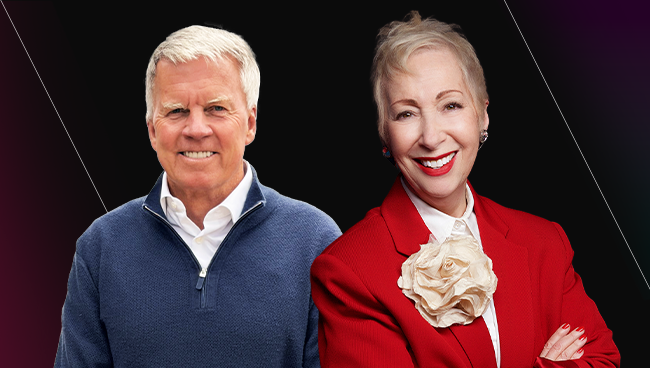
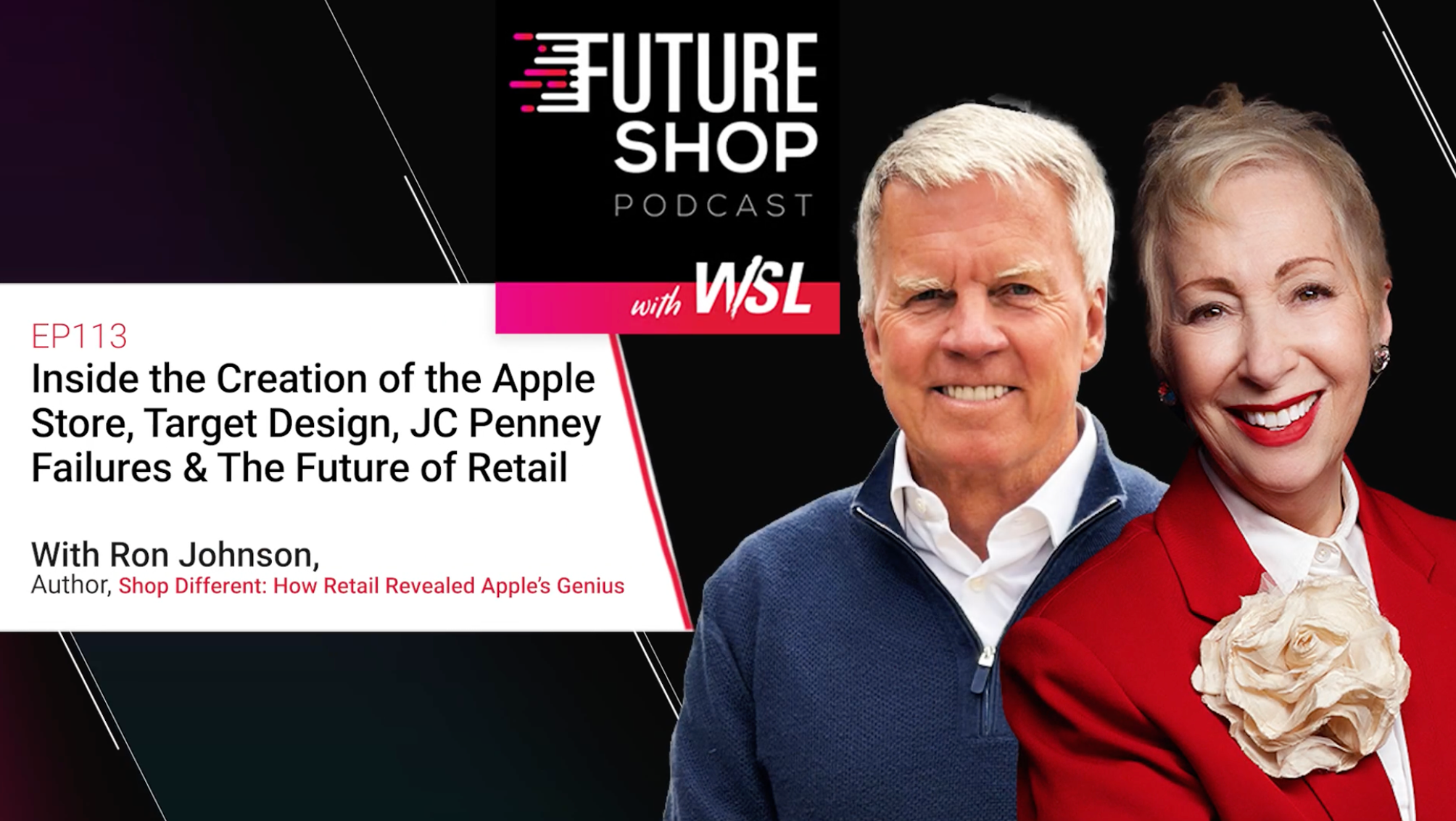
In this episode of Future Shop, host Wendy Liebmann sits down with retail visionary Ron Johnson—former Senior VP of Retail at Apple and former VP of Merchandising at Target. Ron opens up about his storied career, including the creation of Target’s groundbreaking “Design for All” collaborations with icons like Michael Graves, and the strategy behind launching Apple’s revolutionary retail stores. Together, they explore what made these retail models endure, the critical lessons learned from his attempt and failure to transform J.C. Penney, and how physical retail will adapt and thrive alongside AI and digital innovation.
Episode Highlights
- Democratizing Design: How Target brought high design to the masses with Michael Graves and changed the discount retail strategy.
- Building Apple’s Retail Empire: Behind the scenes with Steve Jobs to create the Genius Bar, overcome technology fear, and design stores for everyone.
- Lessons from J.C. Penney: The risks of moving faster than your customer and what retail failure teaches about brand transformation.
- The Future of Retail & AI: Why AI won’t kill physical stores and why omnichannel retail continues to win.
Chapters:
00:00 – Introduction & Ron Johnson’s Legacy
04:16 – Target & Bringing “Design for All” to Life
15:00 – The Story & Strategy Behind the Apple Store
26:42 – Key Lessons & Reflections from JC Penney
32:21 – The Future of Retail & the Role of AI
40:51 – Final Thoughts & Closing Remarks
Don’t miss upcoming episodes, subscribe to our podcast with your favorite app.
Watch the video episode:

Wendy Liebmann 00:03 Hello, everyone. I'm Wendy Liebmann, CEO and Chief Shopper at WSL Strategic Retail, and this, as you know, is Future Shop. This is where I talk to iconoclasts, disruptors, and innovators about the future of retail. Today, I'm really excited. I get to talk to somebody who's all three of those, Ron Johnson. For those of you who know that name, Ron Johnson, you know it for a couple of reasons, or at least I do. Every time I think of that name, Ron, one, I think about Target and Design for All. Two, I think about a genius bar, and not to minimize your extraordinary experience, but those things just immediately pop up in my brain. So much else to talk about, including your new books. Before I begin my chat with with Ron, I just want to remind you: don't forget to subscribe to the podcast wherever you get your podcasts. Great to know your behind the scenes keeps us on our toes. Thanks for that. Now on with my conversation with Ron Johnson. So welcome to Future Shop. Ron Johnson 01:07 Well, it's great to be here, and it's a pleasure to spend time with you. And I look forward to our conversation. Wendy Liebmann 01:13 Yeah, thank you. Thank you for that. again, you you really do have an illustrious career. ⁓ I think about retail that's transformed the world and I sort of feel like we're about ready for another transformation. So that's why I was very excited to have you here today. But but also you have a new book coming out, called, sorry, I'm gonna get the title right, "Shop Different, How Retail Revealed Apple's Genius". My question really for you first is, why a book now? Ron Johnson 01:44 That's a really good question. Well, it's been the book is principally about the Apple Store. The Apple Store, as you know, became a lot of people didn't expect it to be very successful, but it became one of the most beloved, innovative, high-performing retail stores ever, and to this day, many people would say, if you ask them what's your favorite store, they'd say the Apple store, right? And so the it seemed like the the store the story of the store. People know the store, they don't know the story, and I thought after all these years, maybe it'd be a good exercise to put down in a book form, the story of the Apple Store, and the goal is to have people read it, learn from it, maybe be inspired, and you know allow them who read it to either improve their work, improve their life, whatever it might lead to. Wendy Liebmann 02:35 What's interesting to me about that, and why I was, you know, interested in our chat is that when I walk into a mall or a shopping location, High Street, Main Street, anywhere in the world, it's the one place it's probably overemphasizing a little bit of hyperbole, it's a place that consistently has people in it to this day. And how long how long ago was that? It feels like A moment ago, but how long ago was the launch of the Apple store? Ron Johnson 03:07 Yeah, 10, 20. This is the 25th anniversary of the stores. You know, it is it's really interesting because that's a really astute observation, and it's actually true. The stores continue to be filled with people. And you wonder why is that? Because if you think about it, Apple updates its products once a year. It's not like a fashion brand that has drops all the time that you got to go regularly to see what's new. Today, a lot of us been using our Apple products for a decade or more. If I have a smartphone, I probably have. So why do the stores stay so busy? It's an interesting question. Wendy Liebmann 03:48 Yeah, yeah. And I and I do think I mean I I just I can I've just come back from in London with some some work and you know, you see there's the Apple store. I walk by I grew up in Australia, I walk by the Apple store on George Street. I remember when that opened. it remains the one on Fifth Avenue here in New York City, iconic in in its physicality, but I as to your point, I'm I'm always Amazed at the fact that I could be in a mall, as I say, a high street almost anywhere, and there could be traffic in very few places, but the physical presence of the Apple store and people in it. What struck me was, I think when I first became aware of you, it was at Target, in its extraordinary heyday. The work you do that we now take for granted, collaborations with designers. I do recall the story about a Princeton professor of architecture or something, and you created Michael Graves. How did that come about? I mean, what is it in you as a merchant retailer? Ron Johnson 04:56 Yeah, Michael Graves. I I don't you know, that's a really good question. Yeah and you know I decided to go into retail out of I was in business school at Harvard Business School and I wanted something I could love for a lifetime. That was my career objective. It wasn't to get a job that paid money or got me started. What could I love for a lifetime? Because the people I admired in the world were people that were like really good at something. And they're good at it because it was passionate and they've done it forever. So I wanted something I'd do for a lifetime. I came out of business school and I started on the floor, you know, unloading trucks and straightening shelves and eventually became a buyer. But as I was a buyer, I realized the merchandise that really broke through the clutter was completely different. It had to be interesting to people and on trend, but it had to be completely different. And typically it had two things in common. It appealed intellectually, but more importantly, it appealed emotionally. So how do you find merchandise that's gonna satisfy something much deeper than I have to wear something, I've got to put it on my table, right? And so I had the had risen through the time at Target where I was now in charge of the home merchandise, you know, and and Home was a big category in the 90s. You know, that's when companies like Crate & Barrel were opening a lot of stores, and Pottery Barn was new, and William Sonoma, the specialty store in home was becoming really profound. Where the 80s had been about specialty stores and apparel, you know. And and the the second thing that was happening was design was happening. You could just feel it. You know, if you've been traveling to like you traveled to London, you would have seen this Excalibur toilet brush, you know, designed by Philippe Starck, produced by Alan Heller. You would see that literally at every cool restaurant you went to in their bathrooms, right? And then the Volkswagen had created the Beetle, which had a great sense. And Johnny and Steve had launched the iMac. which was this colorful computer. And it felt like design was coming, yet when I looked at Target's home area, everything was functional. You know, our highest priced tea kettle was ten dollars, $9.99, I think, and it it allowed you to boil water, but it had no emotional appeal, right? And and and I remember walking into a little on a rainy day in Kensington, walking to a little boutique, and I saw like 10 objects that each one was a home product with a designer card created by and it was. An Alessi collection, and I said, Well, why does good design have to be expensive? What if Target could bring design to the masses? You know, we could source merchandise really well, but we couldn't design merchandise. And so it hit me that would be really fun to try, and that could break through the clutter, right? Well, the next thing I did though is I said, what if design I from a business perspective the challenge Target had is Walmart was our big competitor and they had lower costs. So on basic merchandise, it was hard to compete with them. But we were pretty good at fashion. Target had become pretty good at, you know, doing fashion. But fashion gets marked down. The beauty of design from my imagination at the time was. Design can command the markup of fashion, which is higher than basics because Walmart doesn't carry it. But a great item is going to stay in your store for 10 years. Never has to be marked down. So that'd be a pretty cool business strategy if you could do that. So I challenged my teams and said, I want designed objects to become 10% of our program, which is in many ways it's a lot, but on the other hand, it's you've still got 90% to meet all the functional needs. Wendy Liebmann 08:48 Yeah. Ron Johnson 09:04 and so we went and actually found Michael Graves and I asked him the question: How would you like to design products for Target that we will manufacture, but you get to have complete influence over the design materials? This will be all you. But we're going to try to bring it at more affordable prices. Yeah, and Michael, as as you said, he was a Princeton professor. He was actually head of the architecture department, and he said, "Ron, there's nothing I'd rather do because all of the things I design now are out of the price range for my students”. Wendy Liebmann 09:38 At the time, and I think people listening to this may not realize it, there were three big, large discount retailers: Walmart, Kmart, and Target. All started basically around the same time. Walmart, everyday low prices and consistent, national brands, not much innovation in terms of product, and then all of a sudden. This amazing tea kettle came out. So those of you who don't know about this, go and Google it or ask AI to help you find it. because I think that was the piece that struck me at the time was this point of differentiation that wasn't about the lowest price, it was also about the value proposition, that good design should be accessible. So that to me was always fascinating. And then the same that became with Apple so much, right? So you were you were at Target for what, fifteen years, something like that? Ron Johnson 10:38 15 years, and the design initiative, as you said, it it somehow connected with people. You never know, but it it it broke you to clutter. You know, there are a lot of people that would you know put an item in a circular. Go, I should go buy that. Somehow, we did 140 products. We didn't just do a tea kettle, but everything we did-from how we marked it, how we presented, how we did packaging-everything we did-it got people's attention. Wendy Liebmann 11:04 Yeah, yeah, Ron Johnson 11:05 Somehow it changed - It amplified their perception of what I could buy at Target. And it changed Target. And to this day, you know, Target published a book a couple years ago, 25 years of design. You know, design for all, and they have done all kinds of collaborations. But that was actually the first you know, real collaboration that a large retailer had done. And now they're very commonplace. You know? Wendy Liebmann 11:26 Yeah, yeah. Well, and what but what's interesting, even in the collaborations that I think about today, obviously a lot around fashion, a lot around sneakers. I mean, in in a lot in beauty. Like many things, and that's back to the Apple story of the Apple Store that's endured. So many of those collaborations now don't feel like they have that unique point of difference. They they are collaborations. They bring the you know the power of both companies, brands, whatever together, and I guess elevate or accelerate that. But there's something about the uniqueness of what you did in that space. of elevating a category that had not was was your basic good old whistling whatever tea kettle. So that that's that struck me as a as a moment. Ron Johnson 12:17 But you know what I think one of the things it was, Wendy, I think is it wasn't a temporary collaboration. Some of these come in and go, they're like pop-up stores. And people want things that are authentic and permanent and real. You want to buy into an idea for longer than a moment. Otherwise, it's I I would call it fashion. So if I had done a Michael Graves collaboration, hey, for this holiday, we're going to have a few items. It would have been seen as fashion, it wouldn't have been Target's changing. Target had a good collection. The Michael Graves thing changed your idea of what, as a customer, it changed my value proposition with Target as a brand, as a store, because it was timeless and was meant to be permanent. And the best items lasted for well over a decade at Target, and eventually the Target richness moved on. Like part of that is, you know, companies - it's hard to keep what made them unique, have those endure, you know? Wendy Liebmann 13:24 Well, that takes us to the Apple story, right? The Apple Store again. That endurance today. That you walk in, what do you? What do you? So I'm always, you know, I always say to myself, a genius bar. Doesn't everybody want a genius in their lives in their stores? And why aren't there more genius bars? Remember saying that to a one of the healthcare retailers. Isn't the pharmacist a genius? Don't you want to put them in the in the window? Why are they stuck in the back? Anyway, but I, you know, me riffing on on this, but I do think that proposition to your point about Target and the quality of the innovation is also about a recognition of who the customer is, who the shopper is. Talk a little bit about then that move from you know ding dong, Apple, Apple, Apple calling. Ron Johnson 14:11 Because of the work I did at Target, Steve, Steve had concluded. You know, he had come back and launched the iMac, as we talked about a moment ago. Steve had been at Apple, return, trying to turn around. The iMac was a cult hit. It was on the cover of Time magazine, I think. Yet it didn't change the business for Apple, and Steve concluded through that that Apple's number one weakness wasn't its products or its software or hardware; it was its go-to-market, how it connected with customers, and the reality technology he understood was so deep and complicated that he believed if he couldn't control the customer experience, he couldn't win at Apple, and that was after 25 years of Apple trying to win in the PC. The Microsoft won, and so he wanted to open his own stores. So he said to someone, you know, recruiter, go find who's doing that stuff at Target, and I was the guy doing that, so I got invited to meet with Steve, and I spent three hours together, and we just connected. And the next time I met him, he offered me the job to come join the executive team at Apple to to create the stores and to operate the stores and leave the stores and so I you know was the right person in the room at the right time so that I got to do that for Apple. Wendy Liebmann 15:30 Yeah, Ron Johnson 15:30 and it it was a real blessing to get a career opportunity like that. Wendy Liebmann 15:34 yeah it is an extraordinary I mean when you think about how long the retail part of it has been around, and I think it it still feels today to me. Not only does it feel very contemporary, But I think about the from a shopper perspective, which is all our work, that that the invitingness, the level of people and support, the geniuses. There must be so much more to that conversation. So when you sat down with a white sheet of paper or the equivalent with him and the team, how did you think about that experience that you were designing? What what was the lens? Because I think we need to think about this today so much as we look at retail, which still feels to me like it hasn't changed way before that. Ron Johnson 16:19 If I look back, the the two big decisions we made was who's the customer we want to go after, and what's the problem we're trying to solve. Okay, so in speaking with Steve, even that first night, he said to me, "Ron, we we have a great business. We've got 5% market share of computers. BMW is 5% of automobiles, and they're a great brand. But we've got to get to 10, and the way we'll get to 10% is we appeal to creative pros. We're going to create apps that will appeal to consumers who have creative instruments that love photography and movies and music and things like that, and I said, "Well, I think that's good, but you know, to go to after 10% of the population, well, half of America is yet to use a computer. It's almost all through work because they had to use Microsoft Office, and and I said I think you're missing the opportunity, and Steve quickly grabbed that and said Ah, five down, 95 to go. Let's go after the 95%. So we are going to build a store for everybody. Okay, that was number one. That was big decision. I'll tell you why in a second. Second, and that was very odd because we were at the age of the specialist store, when anyone would have told you, if I had gone to ChatGPT, if it existed at the time, they would say, "Find a neuro segment and be so pure in going after them, go away. Well, we were going after everybody. So then, what is the problem we're trying? What's the fundamental problem we're trying? That was overcoming people's fear of technology. You know, people were scared of technology, right? And so we had to figure out how to overcome fear. So how do we solve those two problems? Well, number one, we're going to locate stores where everybody lives, shops, works, and that ended up being the shopping mall or high street, as you described, going to George Street or being in London or going to Fifth Avenue. Let's locate where Apple stores are 10 feet out of their way, not 10 miles, right? I will do that. We're going to create places that let you get your hands on technology, but more importantly, just by walking in the front door, you'll say, "Wow, I can do this. There are people to help. There's places to get help, like we became a Genius Bar. There are theaters in which to learn. They've even got tables for kids, so kids can use technology. The feeling was, I can do this. If I buy a MAC, this store will stand behind and hold my hand as I learned how to use technology, and so we created a place that literally people later said I can belong. You know, it didn't feel like a store to buy; it was a place to belong. Wendy Liebmann 19:01 Yeah, I think that's so interesting when we think about retail today and tomorrow. That you know, everybody, everybody, a lot of people talk about you know in the days today with digital, AI etc. etc., what's the role of the store? And people talk about oh, I'm going to do something that's more about the community, and that to me feels like the Apple Store then, the Apple Store now that to your point, everybody's welcome in. There are people who sort of look like me, but actually are much better at tech than me, and make you feel like you're not stupid. We can help you. There are so many. That's the other thing that struck me. Just come again coming back from London. You know, they're the sort of a culture of service as there is, I think, in you know, in in Europe and other countries. Not so for us, and yet there's that model of all of those. They were all in green shirts the last time I was there because there was a whole sustainability conversation going on. But that culture of service, almost like the what is it the not Four Seasons which the the hotel ladies and gentlemen serving ladies and gentlemen- Ron Johnson 20:12 The Ritz Carlton, The Ritz Carlton, The Ritz. Wendy Liebmann 20:15 right. We're all in this together come along we'll help you figure it out, and that's the other thing that feels sort of, almost, antithetical to an American retail environment where we are constantly challenged with the cost of labor and things. How did that fit in when you looked at that? Ron Johnson 20:31 Well that was really the most important thing we did was we had to get the people right. Because when we created the stores, we had two objectives for everyone to walk through that door is they would get their hands on a product and realize that they could do this, and they would meet a person and and launch a relationship that day. We wanted them not just meet someone, to launch a relationship. So we hired people that looked like them, as you mentioned. These people had a common denominator. They love technology, they love people, but they had a unique personal geography. Now it included grandparents and young kids and men and women. And teachers and firefighters and you know programmers, but it was a real unique collection of people that you would find to be interesting, but they care about you, right? And our number one goal is they would approach with a warm welcome and they would help that person, you know, get their hands on a product and end with a fond farewell, but as a relationship with a and an invitation to return. Wendy Liebmann 21:36 Yeah. Ron Johnson 21:36 depending on the corner, If you think about the store, there wasn't a lot to get in the way. They weren't cluttered. They were very clean spaces, and if you walked in, everything was on, connected to the internet. Wendy Liebmann 21:48 Yes, Ron Johnson 21:49 you you you wanted to try it, and the people were there to let you get started and help you as needed. But you had the time to spend, and you know our stores in the early days. They're just packed with people surfing internet for the first time, finding out what Facebook was that started during our stores, you know, and people just come to the stores. They'd meet at the mall. Let's meet at the Apple Store. I can be online, Wendy Liebmann 22:17 Yeah, Ron Johnson 22:17 Because this is before you had a smartphone, right? So I could do something, engage. Wendy Liebmann 22:20 Yeah, I think that the the other piece to that that's so compelling is even as the merchandise, you know, expanded, you know, to the obviously all the phones, the watches, and all variety of of in between of models and things. The iPad, obviously, that this sort of, as you reflected, the sort of curation of it, the simplicity of it as well, and the come play with it. Try it, and we live in an age, right, in certain parts of the country where things are locked up. We can't get to it. There's no staff in the stores, and I do think about that a lot. And the Wi-Fi, my one big bugbear, one of my big bugbears, when we talk to our our retail clients, is you know people come in with their iPhone or whatever in their hand. They want to do a little homework. There's no Wi-Fi. They can't even get onto your website. They can't even get onto your app. They can't even figure out that prescription is ready because where's the Wi-Fi? So those big and small things continue to be a tremendous asset. I think. Yeah. Ron Johnson 23:24 Retail is detail. You got to get every detail right. But you got the most important thing is get the big picture right. And one of the big things we did early on, I I said to Steve, you know, how big is the Apple brand? He goes really big, and I said, you know, computer stores tend to be tiny, and we were sitting in a room, and you could fit the entire app with product lineup at that time. We had four computers on a conference room table, which is 32 square feet. You know, eight foot by four was the table. You put all four products out, and most retail stores were built to present the product line, and the smaller the space, the better the returns. But I said to Steve, "How big is the brand, are you as big as the Gap? He said, "Bigger, because the Gap. I think you agree with this. In the '90s, was probably the IT specialty store. You know everything they did from these beautiful stores and the merchandising and people like Sharon Stone wearing a black T-shirt to the Oscar, their advertising-they were the IT brand. And I said, "Well, if we're as big as what if we built a store that was the same size as yeah, because they were kind of in a mall that was kind of the size of the important stores. And I said, "If the Apple store is this big, people thinking of being that. But if we're this big, he said that's a great idea, but that gave us the liberty to give breathing room in the stores, or to fill half the store with things for owners, even though we didn't have owners yet. You know, places to get help, places to go to classes, and all that. But Steve had the courage to build the store big enough, and then what happened was, you know, early on all those tables held Macs, but then we launched a music player, and we could devote a couple tables to a music player, and then we had a phone. We could devote tables to, and as people, you know, we could reduce the amount of space going to the Mac, add space to the phone, but we didn't have to fundamentally change the story line as we added products because we built it big enough. Yeah, and the same needs people had for overcoming fear were true with a phone, as a Mac, as an iPod. So all the services applied, you know, luckily to what we were trying to accomplish. What's interesting is, as you and I know, tired retail never works, and most that is true. Most stores age, merchandise ages. The Apple stores don't. Yeah, they feel there's a spirit, there's a youthfulness to the stores, even today. You walk in, it feels alive. Yeah, good stores with a heartbeat. Now the Apple store has a heartbeat. You know? Wendy Liebmann 26:08 Yeah, and I do feel that it still represents that sense of community, and I guess possibility is the other word, as she says, waxing lyrical about the challenges of of retail. You've you've seen the arc of retail over this last 20 or 25 years, the challenges of you know what what did you what did what did you learn from the JC Penney experience and how's that informed you know from Apple to an established brand like JC Penney and then you know where you look today at what the future looks like as well in that journey. Ron Johnson 26:49 well, you know, I've been a part of some of the bigger successes in retail, but I've also authored one of the most spectacular failures. I think that would be fair to say, you know, because when I I didn't expect that when I went to Penny's, I just went to, I thought it'd be a an invisible job compared to what I was doing at Apple, and it became a real big deal because the Apple guy is going to turn around a department store. Wendy Liebmann 27:13 Right, right. Ron Johnson 27:14 And I learned so much, and that's also a big part of the book. Wendy Liebmann 27:18 yeah, Ron Johnson 27:19 Is you learn as much from failures. Jeez, probably more from failures, but more. But the most important thing, you know, Target and Apple were young companies with young customers, right? And we're building the future at those. Penneys had a very mature business model, a mature customer base. But I moved at the pace you would move at a technology company. You know, so most importantly, I don't think we the vision was wrong at all. I think the vision was absolutely pretty accurate. We moved too fast. We moved too fast for the customer, for investors, for the employees at Penneys And it didn't feel like, as an employee, it didn't feel like their store. It felt like they now suddenly had to wake up and implement Ron's store. I felt like this is Ron's vision for the future. We're even at Apple, as much as I was the creator, we had 18 months to design the store. I hired the team. We we built it together and we had a it was a shared vision. Where at Penneys, I just really screwed up the transformation. It was a transformation. The timing was too fast. I didn't bring the team up to speed. I just felt like because I had, you know, twenty-five years of kind of unlimited, uninterrupted success at Target at Apple. And I think I was situationally arrogant, looking back. You know, I'm not- I'm a humble guy, I think, but at the time I was seen as and probably was arrogant. I know what it's gonna take to make Penneys win. And I and I believed I could get everyone on board, but I couldn't, you know? Wendy Liebmann 28:57 As you said, you know, we learn more from our failures often than our successes. And I I I do that's when I look at retailers like Costco or Walmart and you know sometimes you think they're too slow on things, you know, maybe Costco with you know, I think even in even Jim Sinegal would had noted that, you know, they should have become more e-commerce driven sooner. But in some ways maybe not. You know, you learn as coming second or Walmart the the evolutions and revolutions there where, you know, now they move pretty fast, but but there were times when they didn't. I always marvel at anybody who's lived and worked in retail, having to open a store or thousands of stores every day, hopefully they will show up is it just a massive undertaking and I admire anybody including yourself who who's done that. Ron Johnson 29:50 I think the answer is, you know, technology changes quickly. But customers don't change very quickly. And the customers of stores, our shopping habits don't change very quickly. You know, it's like at Penneys I wanted to get a young customer because they had a very mature customer, you know, they had age, they were Penneys was great in the 60s, and they had young families in the '60s when I joined. Most of their customers were, you know, in their 50s and 60s and 70s, And how do you get that young family to want to shop at Penneys, you know? And that's what I was building the store for. But I didn't respect the older customer who had come to value their coupons. But that's their the value, just like I got right, the fear of technology would Apple had overcome. I didn't appreciate the value a Penneys customer thought they were giving to their family by being able to collect coupons. You know, took away that satisfaction because I just put the price at what they did anyway. So they never spent, you know, we had forty dollars on the price ticket. They buy it at 10. I just said it's $10. Every day's a great day to shop. And it was, it was a great day to get their product, but they didn't have the perception that I saved money for my family. Wendy Liebmann 31:10 Yeah. So that's a that's a great that's a great example. Recently, you know, if you walk into some of the drugstores, you see all those yellow stickers on, you know, price tags on things like vitamins, and you know one of the one of the retailers decided because people complained they couldn't see what was under there, take away those and just put a sign that says whatever it was one for one, three for two, something like that. But the symbol, that notion of that yellow tag, said this is on sale, and the neat tidy, even though it was the same price, didn't wasn't the same sign to people. To your point, so yeah, the the unintended or intended consequences that we don't recognize and all that. Ron Johnson 31:53 And so like with the Penneys thing you'd walk in the store, there wasn't a yellow sign in the store anymore. They were just, it was just a beautiful store. And and the reality is our sales went down worse than we thought. We thought they'd be down 15%. They went down 20. The NPS was way up. Customers, the ones who bought the 80% who bought, loved it. But it was enough negative that we missed the mark. Wendy Liebmann 32:18 Yeah, Ron Johnson 32:18 But what's interesting, I think is what we said earlier is what about the what's AI gonna do to the future of shopping? Yeah. Wendy Liebmann 32:24 Yeah, absolutely. I mean you talked about technology and you've been at the forefront of that, particularly obviously, you know, on the in the leadership team at Apple. And I think about what is, you know, you've you've got as good a perspective as anybody on this. When I when you think about technology today and AI with some considerable potential to impact the way we make decisions. So so what's what's next here in terms of retail, as you think about it? Ron Johnson 32:54 AI is going to change fundamentally how we shop, but it's not going to change where we shop. It's not going to hurt retail. It's going to help retail. It's going to help. Wendy Liebmann 33:05 on that Ron Johnson 33:06 Yeah. So let me give you an example. When when I launched the Apple stores back in 2000 with the team. Everyone was predicting the death of stores. That was 30 years ago that we started shopping online. 30 years ago, and today, 30% of all purchases are online and 70% are in stores. So you could argue online’s added about a percent a year. But it actually has stopped. Today retail stores are growing as fast as online shopping. Right? And so what we learned through that is that there are things for which people like to go to stores, and there are things for which they like to buy online. And each person reaches their own conclusion. There are some people that buy everything online. There are some people who buy nothing online. But our shopping habits are pretty ingrained. And it varies by category. But online didn't hurt retail. It actually created the rebirth of retail. So if you take that 30% that's online, half of that is the online arm of Target and Walmart and the Apple Store. Only 15% of one out of seven dollars are bought from a pure online player. Right? And so the reality is stores have thrived in the age of you know online shopping. And what won wasn't online or retail, it was omnichannel. know, every brand connects with their customer now through their app, through their website, through their stores. You can buy online, pick up in store. You know, you can buy online, it's delivered from the store really fast. That's what Walmart and Target do. Amazon's tried for years to open successful stores. They understand the importance of physical. Warby Parker, which started out as online only, now sell more through its stores. So the reality is we shop both online and stores. We guys can improve the experience of both. But I don't think it's going to fundamentally change where we buy. It'll improve the experience of buying. Wendy Liebmann 35:06 Yeah. Do you think that as part of it, that as you know, as I think about some of this, it's it's that fragmentation. That notion of so much choice, the ability of online shopping to do it in so many different ways. It depends on who I am, where I am at the moment, what category it is. I want to squeeze the tomatoes, or I'm so busy nobody's going to get fed for dinner if I don't know what to click. Does it mean, from your perspective, we don't need that many stores anymore? Ron Johnson 35:38 No, I don't think that's at all the case. Okay, people, there are different formats, and they all fulfill a different place in people's lives and for different customers. But if you look today, it's an interesting time because if you look at categories of retail, every segment has stores being reborn. So Macy's, Macy's stock is up. I think 40% this year. They've got their new bold new chapter. Traffic's growing in the Macy's stores. Bloomingdale's is doing great, so there are department stores that are seeing growth again, and specialty stores. The Gap has had a resurgence, right? The Gap with new leadership has kind of designed again. Their traffic is coming up at the stores for all the things they're doing. Wendy Liebmann 36:24 Great design again. Mm-hmm. Yeah. So that goes back to the comment you made before. It's kind of like bad retail is bad retail. Bad retail is bad retail, bad business, tired business never works. Ron Johnson 36:39 And so, the point is big store Costco's doing the best it ever has. And it's 40 years old. And the format hasn't changed. But they were probably the store I read about most during the recent World Cup. That these people from Europe that came to the US who love going to Costco and buying a hot dog and sampling in the stores, right? So the point is, but the interesting thing is retail is local. So for instance, like online retail, you know, what's gonna happen? Well, in Europe, people go to the market, they shop every day. They buy fresh things, you know. So you don't buy online groceries in Europe. Some people buy online groceries in the US. But who's the number one grocer in America? It's Walmart. You know, Walmart's an interesting case study because they're doing fabulous. And I admire them. I as a Target person, I was like, I didn't like them when I was in at Target because they were a big competitor. There's room for lots of stores. Yeah, and you know, outlet malls today are now becoming you know some are transitioning to more full price malls. So they believe there's a better future in full price retail than outlet shopping, value shopping. You know, the the big discounters, the the promotional stores have all gone away. Penneys has kind of gone away, Mervins went away, Kohl's has survived, but they're having their own challenges. Wendy Liebmann 37:30 Yeah, the other one that we haven't talked to are the you know I I sort of you know think about them as this sort of curated value proposition, which is whether the Aldi on the one side and the Trader Joe's on the other, but particularly Aldi is a global retailer. You know that that we we see more and more fancy cars in those parking lots these days, but that's an extraordinary concept too, and that sort of curated value proposition. But that's and they just keep getting better. Ron Johnson 37:48 Right. Yeah. Yeah. But that's my point though. They're doing great, but they've had such a narrow assortment. You know, you walk into their stores and you're talking about like mainly grocery merchandise. It is such a narrow selection, yeah, you know, and the point is, you as a retailer, you got to figure out what customer gone after. Apple was everybody, you know, Aldi. It's food people looking for convenience and value, and we got the stuff you need for 70% of what you're gonna buy, and they do a great job in that. Yeah, everyone, but you got to execute, and you got to stand out. Wendy Liebmann 38:59 Yeah, and I think that's. I mean, as as we start to wrap this up. Bad retailers, bad retail, whether it's physical or digital, doesn’t make a difference, right? If the digital people don't deliver, if the quality of the product is horrible, if you can't return it, it's bad. Doesn't matter that it's digital. I think you know that lesson at Apple and Target. But you know the uniqueness of the merchandise, the compelling experience, the people, and that sort of aspect of place of community also seems to me like a like you know the a very interesting way to think about the future of it all along. Ron Johnson 39:37 One other thing very unique to this whole conversation about the future of stores is something that was unique to the United States in retailing that didn't happen anywhere else in the world. Is the US got way overstorred in the 80s and 90s. So if we were having this conversation now before the internet, everything we talked about, we got too many stores. Right? That didn't happen in the world. In 2000, we opened the Apple stores. The US had 10 times the retail square footage per household of any country in Europe. So as online started to grow, retailers could reduce their fleets to the right size. In some ways we still have way more stores per square foot than other places in Europe. Europe's been adding stores the whole time. They didn't have massive store closures. The US had a footprint that was way too big. So people, when they see a closing store, they assume online is causing that. The cause of that is that store probably didn't need to be there in the first place. You know, people invest in retail in the 80s. People invest in retail like they invest in AI today. Wendy Liebmann 40:49 That's a very interesting analogy. The book comes out September, is that right? Ron Johnson 40:52 Yep, September 22. You can pre-order it now from any of your favorite stores. And I think if you buy it, I think you'll enjoy the read. You know, a lot of people love Apple, use Apple products. A lot of people admire Steve Jobs. I had the chance to work with him for 12 years. It shares so many stories into his leadership style. There's a lot about building culture and delivering service and I think there's a little bit for everybody in there. Wendy Liebmann 41:19 Ron, it was a pleasure, pleasure to have the conversation. Ron Johnson 41:21 Thank you. The pleasure was truly mine. Wendy Liebmann 41:23 So here's the thing, you know, in reminding us all, those of us who are retail and shopper aficionados, you listen to that conversation about Target, about the power of a category or a product, or a collaboration that really differentiates. It was about looking for a point of difference and a value proposition that wasn't just about price that enabled it to be different for Walmart and Kmart and some of the other big box retailers like Sears and Penneys at its time. You also think about the viability, the long-term viability of not just Apple as a brand, but the role the stores play, stores of the community, stores that build community, stores that enable people or encourage people to come in and dream about everyday what what have become everyday products and services. Who doesn't want a genius in their lives? I, for one, definitely do. And then you think about Ron's learning of. The getting too far ahead of the customer, the shopper, as he did with J.C. Penney, and what that learning tells you as you transition and try to build a new audience while you're sustaining, holding on to, and respecting an existing audience. As he said in the end, bad retail is bad retail. Good retail is good retail, and every type of retailer, physical and digital, still has a viability in today's market. Even in the days of AI and all the incredible changes that we expect to see as agents begin to rule our lives in the coming years, Thanks for joining me, and look forward to seeing you in the future. Cheers for now.