


Not so long ago it may have been considered niche, but today social media has evolved into a relied-upon channel for one-quarter of shoppers. Our recent How America Shops® report, “The Social Shopping Handbook” reveals who shops which platforms, the categories they shop and how brands and retailers need to adapt to the continued fragmentation and competition social shopping has created.
Social Media Built a Shopping Outlet. And The Shoppers Came.
Or at least a good number of them have been coming. Indeed, one-quarter of shoppers have bought things from platforms such as Instagram and TikTok, according to a WSL Strategic Retail analysis. And that figure has been fairly stable for the past five years.
The opportunity for brands and retailers is hard to ignore: Give your shoppers a different place to buy something and a good share of those shoppers will try it. For many, it then becomes a part of their expanding shopping universe.
But brands and retailers should not ignore this finding from our analysis, either: While social media shopping continues to expand the shopping universe, it is still struggling to establish its meaning and space in shoppers’ lives.
For retailers and brands to effectively fit social media shopping into their marketing strategies, they must work with it to help define who its shoppers are and why they use it. So we set out to do that by asking consumers what influences their social shopping behavior in our latest How America Shops® study, “The Social Shopping Handbook.”
Among our Findings: Social Media Shopping Is Not Niche
Here’s what we know: The fragmentation and competition introduced by social shopping is an evolution. And while social media platforms might fit substantially in consumer behavior now, even this platform is still trying to get its bearings.
Among the key findings of our research:
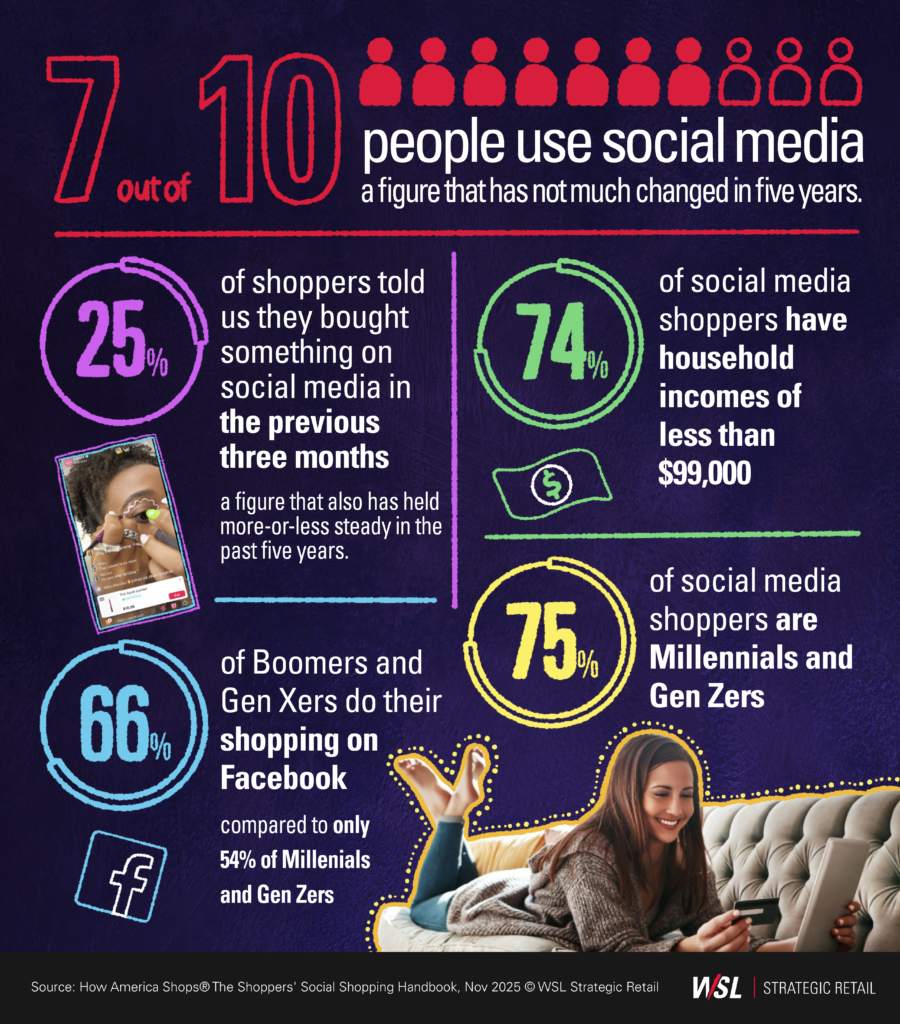 Retailers and Brands Must Be Part of the Evolution
Our findings suggest the potential competition that social shopping presents, but the flip side is opportunity. Individual retailers might come and go as the retail universe expands, and the channels expanding and fragmenting it might need to adjust, but few channels fully disappear. Instead, they evolve with shoppers’ lives.
We’re watching that play out every day, not just on social shopping. For example, here’s how social shopping holds up against two other emerging channels, as outlined in our report.
Livestream and the Metaverse Shopping – In 2021 and 2022, nearly 20% of shoppers told us they had purchased from these novel channels in the previous three months, likely a result of curiosity and entertainment. In 2025, that figure plunged to just one in 10.
Chinese Marketplaces – In 2025, 24% of shoppers shopped on Chinese marketplaces such as Temu, AliExpress and Shein. The figure is similar to social shopping. However, while Chinese marketplaces pose a threat to U.S. retail with their lower-priced products, the threat is now more nuanced. Those cheap options shoppers sought out aren’t as cheap as today due to tariffs. As a threat to U.S. merchants, we see this marketplace more as a watch-and-see “slow creep.”
Social Media Shopping – True, the size of its shopper base has held steady since 2021. However, social media shopping is expanding in some important categories and shopper demographics. For example, the beauty and apparel categories are popular, and nearly one in four Gen Z and Millennial consumers shop more on social media now than a year ago – despite the impact of overall rising prices. Retailers and brands that target such growth areas when integrating social media into their broader shopper initiatives can generate wallet share among these users.
5 Handy Guidelines for Following the Social Media Shopper
The big takeaway here is that social media shopping presents a stable base for retailers and brands to work with, for now. But first, they must know who these shoppers are, how they shop social media and why.
We think retailers and brands can do that – and help shape the evolution of social media shopping – with the following suggestions:

People who buy from social media buy from many more outlets than total shoppers on a three-months basis – nearly 19 outlets vs. 13. This means channels can work better when they intersect. Even a social shopping brand with a small audience can build awareness of its brick stores by incorporating messaging that generates interest. When doing so, never favor one outlet over the others.

And they practice some of the same habits on social media as on other channels. For example, most social media purchases are impulse buys, yet many of these purchases sit in the cart to be completed later. Retailers and brands should track carts on social outlets just as they do on other digital platforms and send shoppers “nudges” about the items they in which they show interest.

This is a highly active, fast-evolving channel across all generations. Tracking activity here can reveal, and potentially help predict, emerging trends in the domestic consumer landscape.

Many shoppers rely on AI technology to help with online browsing, and vice versa, our new “How America Shops® with AI” report finds. Incorporating AI and social media trends can boost cross-channel interest.

Some social channels simply won’t be a good fit for certain brands or retailers, based on their core shopper, category and image. Some poor-fitting options will be obvious but a company can beta test a few outlets to gauge potential (or hire a third-party to help). Then, set manageable goals.
How Our Social Shopping Handbook Can Guide Your Campaigns