
In this episode:
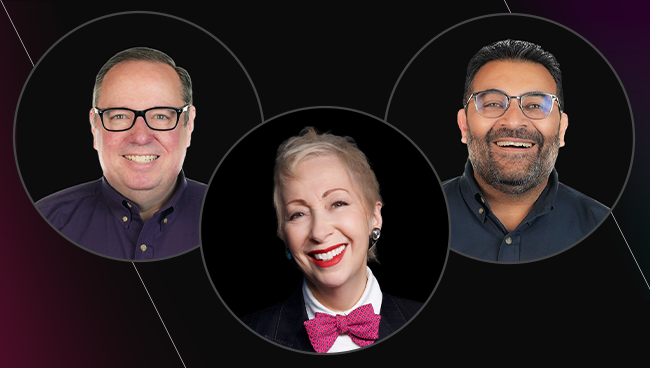
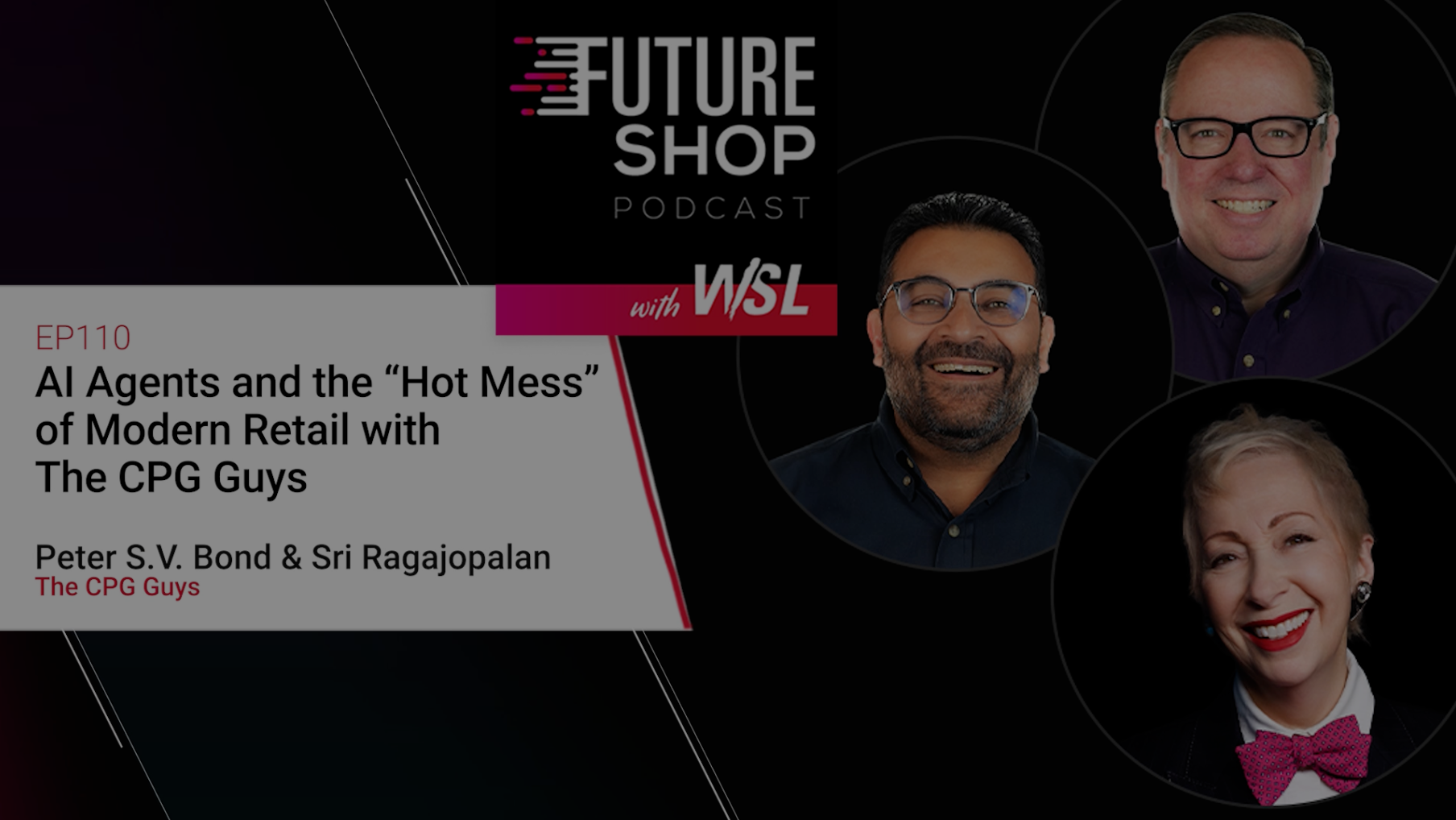
In this episode of Future Shop, Wendy Liebmann sits down with the industry’s most plugged-in duo, Peter V.S. Bond and Sri Rajagopalan (The CPG Guys), to dissect a retail landscape currently in the throes of a “hot mess” transformation. They navigate the complex collision of agentic AI, the shifting power of retail media, and a growing leadership talent crisis. From why Target is struggling to the “intransigence” of Trader Joe’s e-commerce stance, this conversation reveals why the old rules of retail no longer apply in a world where 100% of purchases are digitally influenced.
Episode Highlights:
- The AI Pivot: Why brand websites are shifting from consumer journeys to LLM data repositories.
- The Retail Media Paradox: How budget silos are making retail media counterproductive for merchants.
- Talent Gaps: The urgent need for C-suite leaders to understand TikTok and social trends, not just P&L management.
- Store Evolution: Why the physical store must pivot to “high discovery” perimeter experiences while center-store moves online.
- Who’s Winning & Not: Retailers and brands who recognize why old rules don’t apply.
Chapters:
00:00 Intro & The New Era of Commerce
02:36 Disruption, AI Agents, and Brand Websites
04:25 The Retail Media Ecosystem & Trade Funds
16:05 Mid-Show Break & Women’s Wellness Symposium
17:53 Corporate Leadership and Brand Strategies
30:25 The Evolving Role of Physical Stores
Don’t miss upcoming episodes, subscribe to our podcast with your favorite app.
Watch the video episode:

Wendy L. 00:09 Hello, everyone. I'm Wendy Liebmann, CEO and Chief Shopper at WSL Strategic Retail, and this is Future Shop. Today, I'm here with two very good friends, two very well-known, very good friends, the CPG Guys. I think most of you probably know them. If you don't, I don't know what rock you've been living under. If you're in the CPG, digital media, AI, retail media, fill in the blank space, but I am delighted to have both Peter V.S. Bond and Sri Rajagopalan with me today. Welcome, guys. Welcome, Sri. Sri 00:46 How's it going, Wendy? Thanks for having us. Wendy L. 00:48 Welcome, Peter. Peter 00:49 Wendy, always a pleasure to spend time with you. Wendy L. 00:52 Before I start my chat with Peter and Sri, I just wanted to remind you, please don't forget to subscribe to our podcast. We love to know you're behind the scenes. All you have to do is go to wherever you get your podcasts, Spotify, Apple, our website, just click subscribe, and we will know you are there. Thank you for that. Now, on to my conversation with Peter and Sri. Thank you, thank you both for doing this. It's been a while, so I just felt it was definitely time to catch up. Just for those of you who do or don't know, CPG Guys, if you do not listen to them regularly, they really talk a lot about the sort of convergence of brand and retailers and this digitally driven world we live in, and that intersection of commerce and tech, which is so important to all of us now. They also have other day jobs, Sri with his ThinkBlue Consulting, Peter with Flywheel, and many other things that they get involved with every day. What I always think about you both for in my own mind is making sense of this journey we've been on over the last 4, 5, 6, years in terms of what is going on in this digitally or digitized retail world. When I first met Peter, everybody, he was at CVS, CVS Health, doing a lot of analytic work and work around their loyalty program. When I first met Sri, he was at Revlon, and then General Mills, and so they have a practical view to what's going on. I know this is a very big kind of question, but I keep saying in my own mind, where are we on this journey of this new world of commerce and retail? You know, Peter, where are we on this journey from the days you sat behind the CVS desk? Peter 02:36 Wendy, honestly, we're in the middle of what I think is the most disruptive chapter since the rise of e-commerce itself, and honestly, we're still writing it in real time. The infrastructure has multiplied dramatically: retail media networks, social commerce, shoppable, connected television, conversational AI, agentic shopping. Shoppers now have more entry points into commerce than ever before, but here's kind of the paradox: more channels doesn't always mean better served. We've built an incredibly sophisticated apparatus for reaching shoppers, but we haven't necessarily made their lives simpler. We've made the markers toolkit more complex, and we call that progress questionable. But the journey's long. We're somehow in the middle of things, you know. We haven't even hit the seventh inning stretch yet. So, the next phase, where AI agents may actually execute purchase decisions on behalf of shoppers, that will be consequential. You know how brands are reacting to this brand. For years, brands built corporate websites and put a lot of content and thought about the customer journey. I just talked to 10 brand people just this week. Every one of them said totally shifted our brand website strategy. It is no longer about the customer journey, it is purely a repository of data to feed LLMs, that is, that's big, so we're not there yet. It's not theoretical anymore. There's a lot of activity going on in courtrooms. It is Amazon's, you know, cosmo framework. It's in what Rufus now rebranded, I think they just rebranded this week to Alexa Shopping, is doing every day at scale. It's where it's a hot mess right now. Wendy, if I had to summarize, Wendy L. 04:19 yeah. And Sri, where are you in that journey, in terms of what Peter's talking about, as well. Sri 04:25 Biggest thing I've been thinking about, Wendy, recently is the role of the CMO, the role of the CCO in a CPG brand, and how that actually impacts retail. You know, folks like you, me, Peter, we tend to wear a CPG brand hat and do most of our conversations, but the role of the retailer is one we often neglect, right? Retailers thrived really made its trade rates growth on the basis of trade funds from a CPG brand. Media has not been a focus for a retailer, and you rarely see a Walmart or a Kroger, our holder, Food Lion, actually running campaigns about their own brand equity development. We're now living in the world where retail media has come up by storm, as you know, last 10 odd years. Retail media is at the core of media, especially with most retailers struggling for inventory of onsite. It's all about off site, and then the unleveraged in-store media aspect, a display, and a feature at the end of the day in store as people walk by is really media. The day a merchant realizes they can monetize impressions versus using the 40 year old formula for how trade rates is calculated. The entire media ecosystem blows up completely, because the number of touch points that retail allows will be as good as television, like a good programming on television. Those 12 million household shows, like FBI, as a simple example, American Idol, as another example, and what does that do to the role of a CMO and a CCO to CPT brand? They've been purposely kept separate. One can focus on developing the innovation portfolio and advancing the equities of the brand, and then the CCO purely negotiates trade rates, owns the teams that actually sell to retail, but in the future we're looking at a single funnel, top to bottom, we can call it what we want, full funnel, collapse funnel, really, it's all English language semantics, I think. Media has completely changed, retail media has completely changed my perception of two years out, and that to drop AI in the mix of how CPG brands and retailers will be engaging, what will they be engaging on? I feel like the power shift, which was largely 98 to one way with the retailer, is going to shift to more 6040 with 60 still being in the retailer. I'm not so sure retail knows, understands, was ready or is anticipating any of that, but what an upheaval that will be on just funds in general. Wendy L. 06:39 Yeah, so are you telling me, because you know I'm a novice in this space, all I think about is the shopper, right? Are we serving the consumer as shopper the way as you started this conversation, Peter? So are you telling me, Sri, that all this conversation around retail media that we hear when you, you know, either walk into a retailer's office, or you look at their financials. Are you telling me they don't? They still don't get it yet. Sri 07:07 I would say just like government, we've done an excellent job in the industry of convincing our constituents everything we do is in service of block our constituents, the shopper. If that's the only narrative in town, there's not much of a challenge that can argue against that whatsoever. AI is going to change that completely and put the power completely in the hands of the, in the hands of the shopper. I'm going to argue that we never got it right in the first place. All retail retail set their footprint based on distribution aisles, things of that nature. When was the last time you saw 27 aisles in a store become 23 or 30, or a complete renovation of an aisle. All it is is a category management planogram based on anniversary last year for a growth rate supplied by corporate. It's not a true in service of the shopper. And then we'll claim that when there's a flood, we give out water bottles, we're in service of the shopper community. The person standing behind the deli who wishes you, Miss Mandy. Welcome. Would you like four ounces of beef? That's called serving the community. AI is going to throw, make all that a joke of the past. And yet I'm telling you, listening to this, retail merchants will be like, Sri is wrong. That's what the community is. They're not ready for what's coming up. Where a planogram will not be deciding what a shelf looks like, as they have in the past, and the old methodology of anniversary and doing it will be history. Wendy L. 08:27 So, does that mean, Peter, that we don't have the right people in those chairs, and that we're going to need totally different organization to be managing this? Peter 08:38 I think, first and foremost, we need alignment on our objectives. The problem is, is that what the retail media network is measured and performed against is, is in many cases fundamentally different than when the merchant is doing, and so the merchant doesn't really understand it, isn't bought into it, and therefore they see it as being competitive. Right, look at a vendor who's just come to them and said, 'Hey, I met with the retail media team. They said I should invest this. Here's here's the dirty little secret, Wendy, and it really comes down to budgets. I just had an opportunity to speak with a whole bunch of brand media investors, and what they told me was that for two accounts, Amazon and Walmart, they manage it centrally at headquarters. Everything else is being managed by customer teams, and the budget is controlled by the customer teams. That's trade funds, right now. If I'm a, if I'm a buyer at a retailer, and I understand that fundamental truth, then every dollar that goes into retail media is one less dollar that I get to use for displays for in-store activation for everything else, so I look at that as competitive, and not only is it not incremental, but remember in the world of ad tech, when you run a programmatic advertisement, you don't retain all that money like you do when you sell a display, you have to share with ad tech partners, now it's actually. Be eroding the amount of money that I'm keeping, so it's not productive, it's truly counterproductive. So, until retailers get a better understanding and have alignment between their entities, that won't change, but even if they do have alignment, Wendy, the fact of the matter is that the other, the other truth is that the dollars, because they're coming off the trade, it's never going to be incremental until there's a massive shakeout among everyone other than Walmart and Amazon. There's consolidation, they go to it, they create alliances, single points of entry, getting like I remember talking to one New York-based grocery retailer, and I said, "You're trying to sell your own retail media platform. If I were you, I'd get on a plane fly to Cincinnati, knock on the door of Kroger, and tell them, 'Hey, guys, guess what? You're missing New York. I got New York. How about you just plug me into Kroger Precision Marketing? Right, because, yeah, you're going to have to give some of your margin to Kroger, but I'd rather have 70% of something than 100% of nothing, because right now you're not selling anything to brands. There is some major shifts that have to occur. So I absolutely agree with what you said about the talent in the skills, but we still have to work out the financial mechanics to make media work for everyone other than Amazon and Walmart, otherwise they're just not going to succeed. They're not going to succeed Wendy L. 11:25 when you both, sorry, Sri Sri 11:28 I want to put some icing on the cake in terms of talent. Right, Peter talked about the media world pretty extensively there, so I'm not going to repeat that. That talent, I look at who runs retail, I'm not picking on retail today. This is not radically different from CPG brands, right? We now know that 100% of our in-store purchases, which is still in our grocery world, 85% of all shopping, 100% is influenced by digital. Anyone who says 69.8 pi r square is just making nonsense up. We all spend hours on our digital devices, whether we want to admit that or not, that's just the reality. Survey after survey, stat, or a stat says so. So I'm not going to debate the data. How many CEOs of CPG brands, or retail CEOs, or cheap merchants, or CMOs have TikTok accounts? How many? That's where trends are forming, like there's no if-no, maybe we'll make excuses. Privacy, you're okay snooping on the privacy of other consumers for the purpose of your brand, but you won't have an account, and you're using privacy as an excuse. Shame on you. I think I think talent today is built for the 80s, nines, and early 2000s when everything was based on distribution in an in-store via planogram. That model is slowly getting flipped, and who we have in leadership across the board, whether retail or CPG, are largely PNL managers ready to deliver dividend quarter over quarter over quarter. If you go back to the 80s, 90s, and early 2000s that is what the industry needed. That was the ask. Today, the industry needed people in leadership positions, who understand more than ever the shopper and cannot outsource it four levels down onto a separate department, they need to walk their stores, they need to online store walks, and they must understand media and social. If you don't have those four skill sets and you're just a P&L manager, remain a Wall Street darling, but remain challenged on volume. The last two years approved, you've got a bunch of P&L managers and not consumer-focused people. To your earlier question, the first question you asked, which is the consumer-facing view. Wendy L. 13:32 Yeah, so with all that, Peter, you said we're sort of in the middle, middle of the chaos as we're learning and going, so you're saying that you know the organizational structure, the focus of the structure is not looking at where it should be looking for the CPG. Sri 13:49 I want to say between Peter and my views, there were two takeaways here. We've definitely got a structural problem, and skill, which is a skill set, is causing the structure to stay the way it is, lack of awareness. Peter actually said something very profound as well. Incentives is the other issue. Wendy L. 14:06 Yeah, well, I think about that in old world days when you would see retailers finally understand that. I'll give you the example of, you know, mums with babies, right? And they would have to walk into a store, and they would be the diapers are here, and the bottles are there, and the prams are there, whatever was whatever, and finally the two big retailers said, surprise, surprise, why don't we put it all together in a baby center department, etc. That was the moment when there was the fighting between the merchants, the buyers, saying, wait a minute, I've got this, you've got whatever, so it feels like in service of the consumer as shopper, that by itself is a massive challenge. So are we at that same point that we're saying if we don't now begin to look at this through the lens of the consumer as she or he thinks about their whole. World ecosystem that we are just going to, it's going to remain chaos. We're not going to be able to, you know, articulate the growth that we need to have. Is that.. is that.. are we at that moment? Sri 15:12 I want to make two or three statements, and then look to Peter to navigate this one. But the clear answer, and that Wendy, is this country got challenged by volume from a CPG and retail standpoint, march 17, 2023 when the first government assistance check, SNAP, EBT started getting impacted. Three years later, we're still hearing excuses. No one has really proved it, with the exception of a one 2% who are truly exceptional at what they do. Retail, Walmart is a great example, Amazon is a great example, but when you start diving deeper down after that, Costco, DG, that's pretty much it. Everyone else is struggling. CPG brands, you've got the P&Gs, you've got maybe Clorox, you've got three or four up top, and then everyone else is struggling. The number one reason they're not back on track, and they're struggling in this, even though they claim it, you see that CAGNY consumer understanding, they're not there today. You cannot be a leader in the industry or grow without a deep consumer understanding. Wendy L. 16:05 Let's just take a quick break from the great conversation with Peter and Sri. I just want to remind everybody that on June 25 in New York City, we are holding our biannual health and wellness symposium, this time called Women's Wellness: The Next revolution. This is a bold and impactful look at what we all need to do to grow in this space. In the coming years, we've got retailers, we've got brands, we've got investment companies, we've got medical professionals from Walmart to Ulta to Mecca to Morgan Stanley, whole slew of great speakers who will be talking to us about the opportunities in women's health and wellness. So, join us at The Revolution. Go to our website, www.wslstrategicretail.com and you'll be able to click on and sign up. We look forward to seeing you there. It's going to be revolutionary. Now, back to my conversation with the guys. And one of the things that disturbs me in all of this, and then I'll throw it to you, Peter, is that you, you hear these companies talking about, we are going to grow by putting the consumer in the center of everything, and I'm like, where have you been, people, what have you been looking at, and that's why I worry about Peter. You were talking about investment, you know. We talk about all the new things that people are spending their money on. So, anyway, but, but to respond to his point, Peter, sorry if my hair was on fire for a minute, even though it's now blonde and not red. You didn't even comment, you guys, that I'm now blonde. But don't worry about me, it's fine. It's fine. Peter 17:39 Do you have more fun, Wendy? That's all I wanted ask. OK Wendy L. 17:41 I don't know yet. It's a little early. It's only a couple of months in, but I'll let you know next time we see each other. So, anyway, Peter, back to you on this whole conversation of consumer shopper. Peter 17:53 I want to double down on what Sri said, because it does really get to the heart of what you said. Is they say we're focusing on the consumer, but are they really anyone who falls CPG Guys knows that Christmas for us comes every February when the CAGNY conference convenes down in Florida. This is the Consumer Analyst Group in New York, where roughly about 30 publicly traded big staples companies get together and they trot their CEO and their CFO in front of all these analysts, and it's kind of like a massive series of investor presentations. The one that caught my attention was Unilever, and it caught it caught my attention because they talked about how they had substantially restructured and weeded out both senior leadership and their board of directors because they knew they needed new blood to enable the changes necessary to refocus their company for growth. Right, so here's what I would say to you. If you look at a company and everyone at the senior level built their way up through the company from right out of college, and you look at that and you look that their numbers are suffering right now, what belief should you have that this group of people is going to be the leadership team that is going to usher in the kind of step change growth necessary to deal with these, the incredible pressures of volume challenges, and really being able to focus on the consumer, to be able to understand what social media is, to be able to think about agentic, I don't. If I were, if I were an investor in one of these companies, that is something that I would seriously question from leadership. So every time you see someone anointed as the next CEO in waiting, and that person has come up from an entire career at that same company, I'm sorry, I'm not buying what you're selling. I'm just not. I don't think they're really positioned to do it, Wendy. So that's a real concern. Wendy L. 19:48 Does that apply? I mean, I think about we've gone through this last six months, 12 months, quite a lot of change in some of these big organizations, whether it's, you know, the handover at Walmart. It, whether it's Target, whether it's Dollar General coming up in terms of on the retail side, we see all the spin-offs going on still between Kimberly Clark and Kenvue, and all of those things going on, and who's running the show, not to trash anybody anywhere, but do you see, and throw in Apple, you know, let's throw everybody in this discussion, when you look at all the companies that you both talk to and observe, are there companies on the retail or the CPG side that you say actually I think they're getting it right. Peter 20:34 I'll let Sri, Sri, let me, I'll give you a couple, and then I'm sure Sri will throw in. I think the reason Walmart does so well is because they, they were selective about who they brought in, and they focused them on certain areas. Walmart was brilliant to bring in Seth Dallaire from Instacart. He has built out a revenue model around Walmart Connect, around Walmart Plus, around Walmart Data Ventures that fundamentally changed the profitable trajectory of the company. Now you needed a good store operator like John Furner to keep, keep going in the right direction, but make sure you have the right people at leadership positions to help bring that new focus in. So, I think Walmart's done a great job. Right, there are others that clearly haven't. Target is struggling right now, they just are. I asked seven or eight manufacturers this week. I said, How many of you have deprioritized Target in your 2026 plans? Every single one of them held their hand up. That is, that is a damning indictment, as far as I'm concerned. From a from a brand standpoint, you know, L'Oreal is just phenomenal. Let's, let's face it, they always, they always deliver. There's, there's, they're so far ahead of the game in terms of consumer engagement and the use of digital, but you know, there, there are lots, Sri, I'm sure you've got a couple that are going to come to mind as well. Sri 21:53 I want to go back to the Walmart example and talk about, what, why are they so exceptional, why are they on such a growth trajectory, what, what are they doing right? Right, so Feet already referred to the digital angle. They bought and strike people like Seth Dallaire, so I won't repeat that. I think one simple act that they did about a decade ago has been a path for success for them. They took Amazon seriously. They knew Amazon would be a general merchandise super center competitive period, including grocery, Walmart is the largest grocer in America, and they knew they need to take it seriously, and they've been following, they've been building, and they understood we got to get close to the consumers, operate in a way that we make it friction free for the consumer. Most of the retailers are like, yeah, they're the every everything retailer, we're not really competing with Amazon, there are nobody in grocery. The problem is Amazon is taking away trips and during term merchandise, and when it takes those consumers with them, the center store starts to move. You lose center, you really become a fresh and perimeter retailer, which is where most of their volume struggles are for retail. Very few of them are struggling on perimeter and milk, eggs, bread, meat. They're all struggling on Stenos, or that's where the volume has gone. It's all moved to Amazon. I think that's a very important part. I look at some of the others in the retail landscape, Dollar General benefiting significantly from the economically challenged country we've become in the last four or five years since COVID, just paycheck to paycheck, being able to affordability crisis, gas prices being high, which impacts just a whole list of supply chain things going back into pricing. So, Dollar General is certainly benefiting from that, and starting to go into food desert areas, opening stores in the right locations, really saying grocery is going to be a big focus. Peter and I went down to the headquarters in Tennessee. We actually did a live episode from a store, a model store, which is one of their flagships for food and fresh, so you know, Costco is another one that's benefiting people. Think Costco is surprise and delight, it's really value. The consumer, when they get a paycheck, is looking out by seven units significantly cheaper on a per item cost, and Costco significantly benefiting from that world as well, while keeping fresh, while keeping surprise and delight ready, and really, Amazon is the only one I'd put into that bucket. I have no, no offense to anybody else, but it's in the numbers, and the numbers don't lie. And then I look at CPG, Peter gave an excellent example. Watch Unilever in the next few years, Unilever CEO walks on stage in front of 700 Wall Street analysts and says my board has changed 70% in the last year, and the normal reaction would be, you don't know how to retain people. He said, that's my intent skill set. I only want people on this board who know and understand the consumer. Wendy, we want to flip this question over to you. You're in the middle of consumer insights every day for a living, that's what you do at WSL. What are you seeing? What's changed? How's the consumer responding? What are the crisis moments of the times? We'd love to hear from you. Wendy L. 24:46 Thank you for that. You know, one of the things that I look at is the fact that people are now willing to buy from so many different places, and their loyalty is so pragmatic, that all the things that they think about at this moment need. I’m sitting here at my desk. What do I need? Anything that might I need right now, right from what's for dinner tonight to I'm out of a prescription to I'm my nail polish. Oh, that's sticky. I need a replacement, and the notion of convenience being the supermarket down the on the corner, or the drugstore on the corner, is like what I can click here while I'm talking to you, right? And it'll be here. We always laugh by the time I click, it's at the door. Well, maybe not quite, but it'll be here very quickly. So I think about the terminology that we as an industry use to describe our point of difference, whether it's innovation and product or it's innovation in, or it's just the way we're on the corner, we're convenient, has absolutely no meaning to the consumer anymore, a shopper, and there feels to me like there's this huge wall of disconnect between the shopper and the retailer, whatever form that takes the traditional retailer, I think. The other thing that we're seeing, and you didn't mention this retailer, but I think about ALDI all the time, and I think about as I look at that curated, affordable, accessible, whatever, whatever the terminology is, and the improved quality, you're a surprise, delight, you know, the Costco writ small, and that trip that it takes away, and more and more you walk into the parking lot, right, and see the cars in the parking lot. Your point about people who are moving into other places to buy, what concerns me most, if you, as I say, this pragmatism around the shopper who says, I'll just, whatever it is, it's in a physical store, it's in a digital store, it's in a high low. I don't care, it's what do I need, and who's helping me solve my, you know, the old world jobs to be done. And so I feel like on two different paths, which is my big concern. Peter 26:56 Let me, let me extend that on what you said on ALDI. I couldn't agree more. I absolutely think they've built an assortment and a compelling value proposition. I never shopped Aldi until the last two years. Now it's it's a, it's a standard part of my shopping trip, and it's where I get all my staples. But as much as they seem to be in tune, I worry that their sister company, Trader Joe's, losing that focus. Wendy L. 27:19 Right, Peter 27:19 the single biggest post I made on LinkedIn last year from an engagement perspective was the open letter I wrote to the leadership at Trader Joe's, saying, "Isn't it about time you got into e-commerce? People were almost militant about their position on this. I don't want e-commerce, I don't want a click and collect line, and already crowded parking lot. I don't want this, I don't want that. And my response was, Why does it have to be that way? Why can't they do dark stores? If I did a dark store, does that stop you from shopping your local store? No, it doesn't. But a lot of people were still like, no, I don't, even if it's a dark store, I don't want you to have the ability to go shopping, even though you've got three kids, and it's hard to get them out of the car, it's hard to get them into a store. They still are, are violent about it. And Trader Joe's doesn't seem to want to deal with the fact that we live in an omnichannel world. Wendy L. 28:16 Yeah, Peter 28:17 and they can do that only for so long. Wendy L. 28:20 Yeah, Peter 28:20 because their pride in trying to say we're never going to be digital seems to be foolhardy, and I just don't understand why they have to behave that way. Why? Why can't they embrace it? They don't have to, they don't have to do what everybody else is doing, but you've got to realize that some of your customers would shop more with you if you made it easier for them to shop with you. Wendy L. 28:44 Yeah, yeah, I do. Yes. So, so there. So I think about, so you built on that whole notion of there's a vernacular, there's an experience, there's a whatever it feels to me. There's, I know, there's a tech term, and I can't think what it is, you know, it's like, anyway, whatever it is, it's this sort of, we're talking not to each other. It just feels like there are these parallel tracks, and people are speaking a language that, for the consumer, they like, I don't care, I don't get it, whatever, leave me alone, I'll do what I want, because I can now. Peter 29:15 They're intransigent, they don't want to, it's a good word, they don't want to. This is the way they've always done it. Wendy L. 29:21 Yeah, Peter 29:22 yeah, they feel they're elite. I mean, they're very strong brand advocates, these consumers for Trader Joe, but I don't understand how you can say you should deny if my ability to shop with Trader Joe through ecommerce has absolutely zero impact upon your shopping experience at your store. What the hell should you care about? But I would love it, because I would shop at Trader Joe's, more, because I like their product. Wendy L. 29:48 Yeah, well, and I only get to shop with them when I go and get my new blonde hair done, because that's the one - it's not close enough for me every day. However, if they were at my fingertips, anyway. So, anyway, Sri. Of the things that are on my mind, just thinking about people who are talking about consumer centric on that subject, the role of the physical store. I noticed there was an article in New York Times about all the things that Walmart's doing, all the things that Target's doing, including adding new shopping carts, dollar general upgradings to, you know, one of those things. What does that look like for both of you as we move to the next year, two years, three years? Sri? Sri 30:25 I love that question. You know, if you go back 10 years in history, when e-commerce first came, people said nobody will shop in store anymore. They're doing it again with AI. No one's going to stop shopping store anymore. AI will make all your decisions, and they've gone crazy with agentic AI, which really doesn't have much of a role in grocery shopping, other than maybe meal planning, where it's pretty obvious. That said, that said, I do not believe even for a minute the physical store is going to go away. Let's get that out of the way. 10 years, and with good e-commerce agents in the ecosystem, such as Amazon, Walmart being just two of the many that exist in the system? Only 15% of grocery has really moved completely online, shop above. No, I don't want to mix up online browsing discovery, which is 100% digitally influenced, was the actual shop. So, the role of the store is going to very much be profound in retail and in grocery. Now, will the store look the same. Absolutely not. It shouldn't. You're not serving your consumer if you make the store look the same. Tennis store is not a high discovery, high discretionary Peter 31:30 purchase occasion. We've fooled people into it by putting 30 choices and having end caps and TPRs all the time. That world is going to change with AI. I see the rules having a bigger footprint. The stores having a bigger footprint for fresh, frozen, refrigerated deli, meat, cheese, everything you find, bread, everything you find at the perimeter, the store having a larger presence, because people still want to touch, feel, produce. Center store is going to move more and more and more online backed by AI. Either thoughts. Yeah, I agree, Sri. I think that the products that are are one easily, easily designed for supply chain delivery, either curbside or home delivery, i.e. center store are ripe for harvesting and will become a part of our more digitally focused end of the omni-channel experience, but you know, Mey Sherry, and you're like me, you walk into a grocery store, you want to choose the produce that you're going to cook for dinner that night, you want to select the cut of, cut of meat, in my case, or the piece of tofu that you might be getting for, for, for yourself, but, but I think you're absolutely right that that the expectation that we're going to go completely digital is completely unrealistic in grocery, and sometimes we go, although we tend to go to grocery for the meal that we have to cook, there is an element of inspiration, maybe not as much as when we walk into some big box retailers, but it certainly is something that that we do, and grocery is going to do this for me. I think what we've got to understand is that consumers are to Srise's earlier point, consuming so much content. Our consumers walk into every physical store carrying this really powerful device with at a touch of the screen, more information than probably any of us had growing up, being able to shop at a store. I certainly know it wasn't my case, and they turn to it with regular frequency. I mean, my daughter is amazing when I watch how my seven year old uses this. It is a core part of her existence. So we have to get better at that. We have to understand where it plays a role in the customer journey. To Sri's point, about 100% of all purchases are effective to one degree or another by digital. Is so true, it just is. It is. It's part of everything we do, and and we need marketers who understand how digital plays a role in the path to purchase, and how it engages shoppers, you have to, one of the things that we saw at Monday night's Amazon up front at the Beacon Theater was they had someone on stage talking about Twitch, Twitch is their streaming business that originally was focused on esports gaming, right, but it's so much more than that now, people go there to have live conversations in live community, it's not just about gaming. All sorts of artists use that. I asked a bunch of marketers the next day, how many of you have a Twitch strategy? Twitch strategy, nobody put their hand up. Like, did you not see that last night? How many of you were a little nervous after seeing that last night? All the hands went up. I'm like, Wendy L. 34:35 yeah, Peter 34:35 guess what, they're all going to be doing, they're going to be looking at Twitch as a mechanism, so you have to be where your consumers are, yeah, or you're missing the boat, Wendy L. 34:43 yeah. Well, you said, I think, and as we start to wrap this up, I know we can talk about this forever. You both said two things here that strike me. One is that two things have to happen. One is there has to be a recognition that the way people come to you as a brand. And or a store has changed dramatically and forever-ish, I say ish, because you know we all talk about younger shoppers who are wanting to be more analog and using iPods, and you know, whatever, etc, but that that acceptance that that has changed, and if you're as a marketer, a researcher, a retail anything, if you don't accept that, that to me feels like step one. You know that first piece of acceptance, and I'll ask for your thoughts on this too. But the other is what you said, Sri, is yes, we all look at the numbers and say, well, you know, digital is really important, and e-commerce is x, and you know, we still only do 15% of whatever grocery, whatever online, but your point was, but the store shouldn't look the same as it has for 50 years within that context, and most stores I always say could come down from Mars and walk in, and or from the bush where I grew up, and you could look at it, and you can say, oh, that's familiar, that looks about the same, milk is at the back, and the pharmacies at the back, and you know, whatever. So, anyway, so last thoughts on this one. Sri 36:06 You look at a super center, the general merchandise hasn't changed the footprint. Again, you look at a super center, the general merchandise footprint still hasn't changed from 20 years ago, the amount of apparel in store, toys, electronics, electronics, televisions, largely bought online. It still looks the same. Why? I'll leave it at that. Why? Peter 36:28 I don't even know. I walked into a club store the other day, and I thought to myself, why are they selling all these big TVs? It seems like the younger generation, the screens keep getting smaller, like their fascination is more with this than it is a giant flat screen TV. Maybe I'm completely missing the boat here, but I think my old days of having a really big flat screen, so I could watch a sports game, it doesn't seem to be gelling with what the younger generation. Sri 36:52 I have a bunch. I have a bunch. Peter and I are Gen X, those in leadership positions in retail and CPG at Gen X, they're hanging on to the lost thread of the biggest wallet today, which is Gen X, and they're not changing. You said it, Wendy, pretty poignantly. If you don't accept it, I think we're at a cusp now where the last 10 years, if you didn't accept it, you could still survive it. We got the COVID boom. We've completely reset from the COVID boom. All that is out of the ecosystem, except is the word that's the magic word, Peter 37:22 it's one of the 12 steps, I'm pretty sure. Wendy L. 37:25 Well, well, I thank you both. You always bring a logic to this conversation and put it in some order. And next time we'll discuss baseball, as always. And I thank you for your insight, and thank you for joining me on Future Shop. Peter 37:40 Absolutely, Sri 37:41 Wendy. Thank you for having us. It was a pleasure talking to you, as always. Wendy L. 37:44 Cheers.