
In this episode:
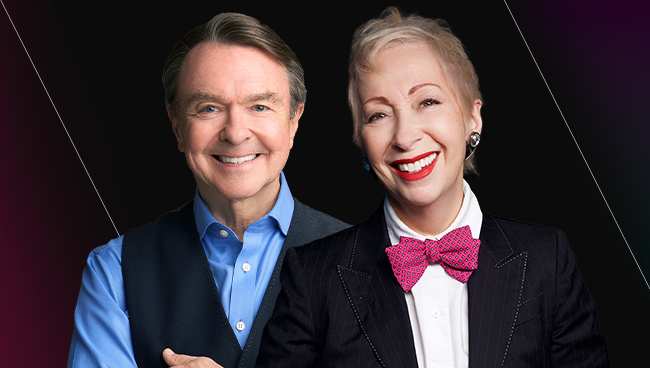
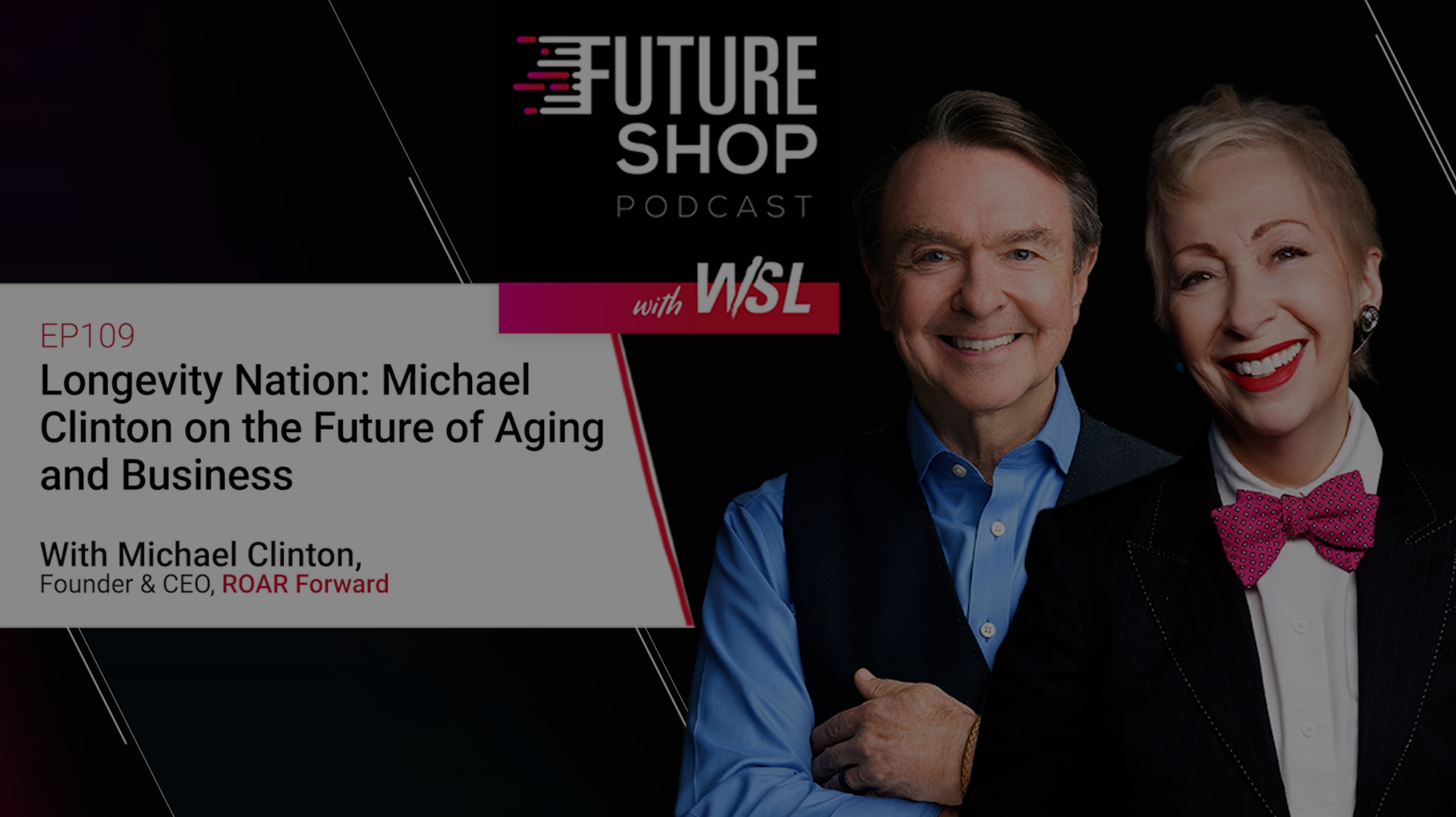
In this episode of Future Shop, Wendy Liebmann sits down with renaissance man and ROAR Forward founder Michael Clinton to discuss his latest book, Longevity Nation. As life expectancies climb and today’s children face a 50% chance of living to 100, the “second half of life” is being completely rewritten. Michael shares how businesses, retailers, and individuals must adapt to a world where 74 is the new middle age and the 50+ cohort represents the most significant growth market in the global economy.
Episode Highlights:
- The 100-Year Life: Why a holistic approach to health, finance, and spirit is essential for modern longevity.
- The $15 Trillion Opportunity: How brands are missing out by ignoring the high-spending 50+ consumer.
- Global Innovation: Lessons from Asia on urban planning and public-private partnerships for an aging population.
- Future Tech: The role of AI and precision medicine in democratizing “cellular rejuvenation” and slowing the aging process.
Chapters:
00:00 – Introduction to the Roar Forward Mission
02:49 – Redefining Longevity for a New Era
06:14 – The Modern Rewrite of Retirement
09:58 – A New Map for 60-Year Careers
13:12 – Global Leaders: Lessons from Asia
28:17 – AI and the Future of Medicine
Don’t miss upcoming episodes, subscribe to our podcast with your favorite app.
Watch the video episode:

Wendy L. 00:01 Hi everyone. I'm Wendy Liebmann, CEO and Chief Shopper at WSL Strategic Retail, and this is Future Shop. My guest today is actually a return guest, Michael Clinton. Michael Clinton, who you all know has had an illustrious career in publishing and media. A number of years ago, he’ll remind me when, I think was four or five, he started a whole new venture, which was called Roar, which was a content platform that inspires people to Roar Forward into the second half of their life, and with that came a new book called Roar Forward, which many of us have read. He is also right on the precipice this evening, at least the evening that we're recording this, about to launch his next book called Longevity Nation. So this is very exciting. Michael, thank you for joining me again. Welcome back to Future Shop. Michael C. 01:04 Wendy, thank you. That was such a nice introduction. It's so great to be with you as always. We've known each other for a long time, so it's always great to reconnect. I'm coming to you from the Hearst tower on 57th and 8th, where I have my Roar Forward office, which we can talk about. But thanks for having me. Wendy L. 01:20 Before I start my conversation with Michael Clinton, just a reminder, as always, don't forget to subscribe to the podcast. Go to anywhere you get your podcast. Spotify, Apple, our website, just click. Subscribe doesn't cost you anything. We just like to know you're there, and it makes us look even better than we do now. So thank you for that. Now on to my interview with Michael.01:10 No, it's, it's, it's a pleasure to have you back. For everybody who didn't hear the first podcast I did with Michael when he when he published Roar Forward, Michael is not only somebody who has spent much of his life in the media business, in illustrious roles, but he's also a mountain climber. He's climbed all the highest peaks in the world, including the one near where I grew up in the Bush called Mount Kosciuszko. Not so high, only 7000 feet, but high enough in Australia, land of flatness. He has traveled all around the world. He is a renowned photographer, published books. He is a renaissance man who has roared, roared into the second half of his life, great inspiration. So lovely to have you back and to talk about all the new news. So the topic of the day seems to be longevity. And you were very prescient or forward in your in your focus on the second half of life, but also living a long, healthy life. And so you know, when you use the term longevity, how do you how do you define that? Lots of people have lots of different ways of defining it. Michael C. 02:49 Yeah, no, it's a great question, and certainly it has hit the global conversation and the global Zeitgeist. You see the word longevity everywhere now, and I think that it's really it's a great concept, because what it really is is that life expectancy. Expectancies are getting longer. People are healthier. You know, I'm on the Stanford University Center on Longevity board, and you know, a lot of the science there and other places is today's five year old is going to live to be 50% chance to live to be 100 so, you know, there is this new awareness that if you are 50 and healthy, you may live another 30, 40, years, which is a complete rewrite of the second half of life script. Now, you know, everyone says, Okay, are you? Are you saying everyone's a little bit to be 100? No. But what I'm saying is, as we live longer lives, longevity means healthier, better quality manifested through new developments in medicine and technology and AI. And we can talk all about that, but it is really about living the longest life possible in the healthiest way, mind, body, spirit and financial well being as well. Yes, holistic view. Wendy L. 04:01 It's interesting because, as you know, we've been conducting our How America Shops® research for many years, and speaking of longevity, and in the most recent study that we have just, just published, literally, we, you know, we tracked how people are defining longevity. And it's been interesting to watch that, you know, quality of life, healthiness, you know, you know, sharp mind, community and the the different attributes as people that we've had to add, because as people think about this and even think about it as possible, the many different ways they're thinking about it, including, as you said, financial which, Of course, becomes a big issue for many of us who plan Social Security at 65 and maybe we'll live for another 10 years. Okay, we could do it, and then you're like, 30 years. 40 years. Now what I'm going to be back at my, you know, Walmart job, or my working at Pizza Hut, which is where I got started. So anyway, it's great Michael C. 04:58 it's great because. You know, when I give I give keynotes all over the world. Now, I've done about 25 keynotes last year. I'm on my way in July to Hong Kong and Taipei. We're going to be doing a longevity summit there. And when I speak to audiences, I always ask in the audience, how many of you would like to live to be 100 and I get about half the hands. And then I say, or I ask, how many of you would like to live to be 100 if you were mobile and cognizant and had all your brain power and your health and all the hands go up. And so my message is, well, are you ready for the 100 year life, or are you ready for a 90 year life in all of its various forms? So yeah, it's very much. As you said, the AHA, for a lot of people who are saying, gee, I better think about this in the context of my own personal life, Wendy L. 05:48 yeah, and that planning, I mean, I must say, I marvel. I you know you read the obituaries. I guess you get to a certain age, you read the obituaries, but you know, you read The New York Times obituaries. Excuse my bias. And when you do, you see more and more people who are in their 90s and their hundreds. Somebody dies at 74 and you go, Oh, my God, that's young. Michael C. 06:07 Yeah. Wendy L. 06:08 Where? Of course, what was it used to be three score and 10? Or is that the Gettysburg Address? Something? Anyway, whatever that was, Michael C. 06:14 I think you raised a great point. You know, 100 years ago, only 100 years ago, 1935 when Social Security was launched and the quote word retirement was launched, because most people prior to that worked until they died, right? There was no such thing, but the average life expectancy was 62 and there were 7.8 million people who were 65 or older. In the United States today, there are 60 million growing to 80 million in the next decade. And this idea of, you know, 60-70s in particular, even early 80s, the first boomers turn 80 this year. You know, you look around and see some of these 80 year old boomers, they're phenomenal in terms of fit and active and engaged and do all sorts of things there. They're, they're the the new role models that are taking place live as we, as we rewrite what it's all going to look like. So, yeah, so 74 feels more like middle age, mid life. Wendy L. 07:16 mid life? Yeah, yeah. Somebody, I had that conversation with somebody the other day who asked me if I'd had a midlife crisis because I changed my hair color to white. Thank you. Annie Lennox, and I thought, Oh my God, I don't think this is midlife I think that would be really interesting, and I'd definitely be in the Guinness Book of Records. But anyway, that that aside. So how did this? How did the new book, Longevity Nation, which I do have on pre order, hopefully it'll show up next week, right? It's out next week, right? Please push, Please promote. You can find it on Amazon and other places. So how did that evolve out of ROAR Forward, and that work you've been doing is that society is now. How long ago did you ROAR Forward? roll forward? Michael C. 07:58 The book Roar was written, right? Wendy L. 08:00 Sorry. Michael C. 08:00 And the business, Roar Forward launched about three plus years ago. So Roar Forward was launched as we work with about 40 different companies, many companies in beauty and fashion, but you know, many other divisions we work with C suite leadership on informing them about all things longevity and you know, as I was on this journey, I kept meeting all these amazing people who were doing incredible work in medicine and technology and education and travel and skin, longevity and so many places that I thought the, you know, these are the longevity innovators, the people who are really creating the future. So I thought, you know, I would love to raise their voices and put them, you know, right? A lot of the voices that were heard in 1.0 were, you know, the tech bros who all wanted to, like, live forever and, you know, spending a lot of money and all that kind of stuff, and a lot of other voices. And there are a lot of women's voices that I wanted to write, you know, intentionally in the book. So I started interviewing people. I interviewed about 70 people from all aspects of longevity. I call this the survey course on longevity. It is really remember in school when you did psychology, 101, and you learned all about psychology. To me, this is what's the global landscape look like on the longevity front now. And hence the word Longevity Nation sort of came to me and will be in hardcover and Audible and Kindle for all ways want to read it. But it was a great blessing and gift to talk to so many incredible people who are doing such amazing work to help to help us all live longer and better, which is really the goal, Wendy L. 09:43 yeah, yeah. So the work you do with Stanford, explain that that work, because, you know, I followed you, and some of the work and the and obviously the researchers in that program tell us, tell our listeners about that program. Michael C. 09:58 Yeah. So this. Stanford Center on Longevity was founded around 2007 by Dr. Laura Carstensen, who actually wrote the forward to Longevity Nation, which was, I was very honored, and she's one of the OGs of longevity. She was psychologist, but she really started this, this exploration of how we were all living longer, and what it all meant. And they do a lot of research on this front. A few years ago, they published a document called the new map of life. It was written by nine post doctoral fellows across different functions, everything from economics to psychology to medicine, which was really a template for how we're going to think about the second half. So today's younger professionals are going to have 60-year careers, versus my generation, who's got a 40-year career. They may have two or three careers. They may not be as linear as we were in our careers. There's going to be restructuring, institutional restructuring, that's going to have to come along with businesses and companies as they think about talent. And you know, one of the great examples is in the beauty space, which is L'Oréal, which has a great program called L'Oréal for all Generations, where they're very intentional about their 50 plus year old employee. But also companies rethinking how they market to this group, because the youth culture, which was created for the boomers, you know, as those generations, have moved into second half of life, and you've got the Xers. And I always love to tell and there's a gasp in the room when I say the first Millennials turned 50 in four years right? That is a huge cohort. How are brands and companies and retailers and businesses rethinking the 50 plus market as a growth market versus they're phasing out? This group is not brand loyal anymore. They have a lot of money to spend, and they can't. They shouldn't be ignored by by brands so the Stanford Center on Longevity does a lot of work that amplifies that brings research to it. Estée Lauder, we work with them globally, and they have a big project. They have funded a couple of big research projects with the Stanford Center. Really about, it's not about product. It's about the esthetics of what is self perceptions? What are the psychologies as we live longer, and what, what will that mean, especially to future generations? So the center is a really interesting place. Wendy L. 12:33 Yeah, and I do think, you know, you hit upon this that, yes, esthetics obviously important to all of us, but also the economic, the psychological, as well as the most obvious, the physical side of things, that that really does talk to how we need to think and restructure the way we build our institutions, whether it's work, whether it's, you know, pleasure, whether it's medical, all of those things. Do you when you look Around the world with all the work you've done, is there a country or companies who are leading the way in this work, or is everybody just getting started in all of this. Michael C. 13:12:42 office? The beacon of all of this is in Asia. I always say to people, go to Singapore. It's a microcosm of how it's being done, right. But I'm just back from Japan and Korea. And, you know, life expectancies there are much older than in the US and even in the EU. Asian women in Korea and Japan and Hong Kong are are seeing average life expectancies late 80s, hitting 90. As you know, there are a lot of centenarians in those in those cultures, but what what has happened in Asia? First of all, there's a completely different cultural mindset about people who are living longer. There's a much bigger level of respect and so forth. But government, policy, public private partnerships, brands in retail, urban planning and infrastructure have all really done they've done amazing work in those countries to retrofit what the countries are going to look like with older populations. And I write about this in the book, yeah, and did some amazing went to Singapore and did some amazing interviews there. So I say they're the ones who are leading the charge. EU, a bit, a bit behind, but better than the US. The US is still a bit blind to all of this. But the, you know, the tsunami is here in terms of the number of people. I mean, you know, you heard the stats earlier. So the US is going to have to really adopt and adapt quickly to this, to this group. Wendy L. 14:40 Let me just take a moment to pause in the middle of my great discussion with Michael, I just want to invite you to our upcoming Women's Wellness symposium, an event we hold every two years on the subject of health. This one's called The Next Revolution. It's June 25 in New York City, at the beautiful Pier 61 this is a day long event where we will talk about both the challenges and opportunities around women's health and wellness in the coming years. Love to have you there. It's going to be a great event with speakers from Walmart and Ultr, Mecca in Australia, Holland & Barrett coming from London. Just a great audience of speakers, many more than that. Go to our website for more information, www.wslstrategicretail.com, and you can get that information. You can register and come join us. It's called The Next Revolution because there's a lot of work still to be done, so come join us at the revolution. Now, back to my conversation with Michael. Yeah, and it's interesting for in this country, certainly, where something like Social Security was supposed to help people through these latter years, not to discuss the chaos that we live in these days, although we could. I know we could have a long conversation on that, but that economic security, and theoretically, younger People putting into Social Security, helping older people, or enabling older people to receive their Social Security payments. That whole structure does require some real, tough thinking on the part of, I would say, our governments. I don't know, how is it public institutions that you're seeing that are doing more work in this country and in other places, or companies like the Estée Lauders, L'Oréal of the world, or, you know, others in the home, travel, other industries that you work in, who's doing something here or leading the way. Michael C. 16:29 the way? Well, let's first talk about financial wellbeing, and we do have a chapter in the book. I interviewed the former deputy commissioner of Social Security. And you know, it was really a lot of insightful information around that, but, you know, it was meant to augment your income, not be your income, and more people are relying on that for your income. And we need Social Security reform, but Washington doesn't want to touch it. And but the bigger issue is that we need to integrate financial literacy into our schools or to our living the way we have health wellbeing. You know, in Denmark, which, to me, is the poster child country, their kids in school learn financial literacy throughout their early school years. They learn about savings and compound interest and short term, medium term, long term, all of those things. They have a different kind of scheme than Social Security, but we're really bad at that here, and that becomes school systems and and others who step in. But on the business front, if you look at various sectors, you know, I mentioned, I mentioned what Lauder and L'Oréal are doing. You know, there are, I'll just pick a travel company if you're familiar with Backroads, which is the hiking cycling company. I interviewed the founder, Tom Hale for the book. What he says, which is so interesting, is that his consumers now his the people who do the Backroads, some of them are in their 70s, and they still want the Backroads experience, but it might be a combination of regular bicycles and E bikes, and they just started a new program called Dolce Tempo a slower pace, so that you're not racing through one day to the next. He also said that the one of the most successful programs that they just introduced was solo women's travel for women 60 and over. And you know, a lot of women who might be single or divorced or widowed, who want to have an experience, can now tap into back roads. So I think that's and by the way, if you look at all of their marketing materials, and you go online and you look at their catalogs, what they're so brilliant at is integrating people of all ages into their imagery. So you see people in their 20s and then in their 70s and in their 50s, and they're all doing active things, and it's very organic. And it's their marketing, and advertising and branding is spot on for what's happening in this whole longevity phenomenon. So that's a good example in the travel space. Wendy L. 19:04 space. That's great. It feels very it's inclusive. And that sense of, right? Also we saw in our research, sense of community. Do I have a community that I can participate with at whatever age, or that whatever interest was, the was the other piece that popped up in in our work. You know, when we last talked with Roar and then the Roar Forward initiatives we talked about, you know, who was getting it right, retailers. You know, when I think about some of our listeners in the CPG space, food, beverage, beauty, all of that, health, obviously, but fashion, across the across the retail board, of all types of retail, you know, we both agreed a little bit was going on, but not a ton. Well, how are you seeing that today? And then, what's your anticipation from a, you know, an everyday CPG retail space, when we think about all of this new work you're doing? Michael C. 19:58 Yeah, it's a great. Question. So we track now what we identify as the top 12 ad campaigns of the year that speak to the longevity phenomena, because words, images, messaging in a contemporary kind of way, and people can go on to RoarForward.com and see the campaigns that we've selected. And some of them are in the US. Some are in Europe. Some are in Asia. And the brands who are doing it right with that, and one of the great examples is Prudential Finance, where they have a woman whose name is Karen, who is, quote, unquote, going to retire from her first career, but she says, I'm far from done. I'm going to do this and this and this and this. And she's got a whole sort of portfolio of things that she wants to do. That's the sensibility and the messaging, which was, was a good example. Back to Estée Lauder. They launched a campaign in Europe called “because of my age”, which was very pro age. They had the former Prime Minister of Denmark in the campaign. That campaign then ran across the EU, and ultimately the US, as you know, they just brought Paulina Porizkova back as a brand ambassador. So good example of a brand who, who was doing it, you know, in Europe, H&M is doing a really great job of their imagery. Sephora is doing a great job in the imagery. Very, once again, organic, inclusive, not forced. And I think what was has been really good to see, as you know this, on the fashion runways, in the last few seasons, they've had more. For multi-generational women, mostly in the women's shows, not so much in the men's yet, Wendy L. 21:35 not too Michael C. 21:36 much shows. And you saw the big piece in The New York Times that Vanessa [Friedman] wrote, oh, fashion, people are finally paying attention to women over 50 who, by the way, have all the money, have the have the style sensibility, and don't relate to a 25 year old influencer. They want to see other women like them, right? So you're seeing some great, some great sprouts happening across. Wendy L. 22:00 Yeah, yeah, you've raised the, you know, have the money to spend one of the things. And, you know, we recently, the very voluble is that a word Scott Galloway wrote a piece about, you know, the affordability of longevity. You know, does is this, feel like haves and have nots. Are we talking a K shaped longevity? Because there are a lot of people who are just struggling to put the meals on the table. How do we have to think about money as being a key, a principal key, right this moment, living a longer life? Michael C. 22:34 Well, I love how Scott and everybody else is getting on the longevity bandwagon, because, of course, Wendy L. 22:38 of course, Kara Swisher, I mean, come on, you've led the way yet again. Michael C. 22:44 They're dipping in, but what they don't have is the long longitudinal gravitas that Carstensen has, or Dr. Linda Fried, Columbia, who who really track these in a very deep, deep kind of way. So all good for Scott and Kara and everybody else to be in on it. But let me start first with before we get to the actual affordability. Cost. Thing is there's a there are a lot of fundamentals that anyone of any socio-economic background can partake in, and that is that your own personal longevity is more in your hands than you think your genetics are only 25% of your personal longevity. Now, there's been a new study that says, Well, maybe it's more, but I've done some research with epidemiologists who still stand behind the 25% number, because, you know, you have one study that pops up, it's kind of like, eat meat, don't eat meat. Eat sugar, don't eat Wendy L. 23:40 Oh, so don't go there. Do not go there today. Michael C. 23:43 So the 20, 25% seems to be a good number. And what that means is, you know, movement and exercise, how we eat, our sleep patterns, our relationships, everyone can partake in creating a better personal longevity strategy. So we got to start there, because that makes you a healthier human being. And when you're a healthier human being, the affordability factor, there are less health care costs, there are less medical costs. You know, many of the things that come with living longer, and I write about some really interesting people in the book who in the academic world, who have studies that take sedentary people in their 70s, putting them on a light exercise diet, and watching their health metrics improve dramatically. And you know, when you think about the GLP1-s, which is the miracle drug of our generation, you know, it's now going to be on Medicare starting in July, prices are going to be half price starting in January. It's becoming a democratized drug for healthy wellbeing so your your your affordability of your health care gets recalibrated when you take care of yourself and very fun. The mental kind of ways. Then you get into the other affordability discussions of, you know, housing and food and all of those kinds of things and and certainly, that was always been a phenomena of the haves and the have nots. And how do we as as a country, we're less, how do I put it, generous once again, when you go to Asia, there's, there are more social infrastructures, government, government structures that help, help people who are living longer. And we don't. We don't have that here. But I think the awareness factor is people become more and more aware of this, younger people in their 30s, 40s, become more aware of this. They're going to realize that they're going to have to work longer, save more, become part of a 401K plan. Have a financial plan for those you said it earlier, for those who were from a different generation, who were like, well, I'll sort of kick into Social Security. And then there was a lot of fuzzy like, how much more longer you're going to live? Yeah, you know, now, if you can live another 30 years, that group is going to have a bit of a hard time playing catch up, but the next generations are going to have a different a different approach. So Wendy L. 26:18 So I also think, well within that, you talked about millennials. And you know, the oldest, I think about Gen Z, and the oldest is 30, I think, and these people are going to have to take care of some of those other people. So to your point, the awareness of what do I need to do not to be in that position, or what's the learning that I can build? Because I've got these people in my life still, whether they're neighbors or family or all of that. I mean, when we looked at again in our latest How America Shops® work, you know, people reported that 30% of the national sample that we do say they are taking care of somebody other than their immediate family in the house. So that whole notion of it's not just I have to figure out how to do that, particularly as people live longer. But hopefully that is also a reflection to say, Gee, who's going to take care of me and or, how do I take control and and do some of these things? I appreciated your comment about the cost of living longer is often generated by the cost of not living as well or help as healthy as you might, even in mentally, socially, as well as physically, in later years, when you know the illness does, does that. Just as we start to wrap up here, you know, some of the breakthroughs that you're seeing, either through Stanford or the other universities that you're aligned with, are around the world, what are some of the medical you talked about, GLP1-s, which are, you know, of course, reputed not only about weight and diabetes, but to have other potential benefits as further research has done. Are there other things that you are seeing as you spend time with the medical profession, or the psychological whomever? Yeah, yeah, for sure, there. We're at an incredible moment. Once again, a lot of it's going to be enabled by AI, which is the good side story of AI. A lot of drug development, fast paced drug development, you know, there, there are two FDA approved drugs, slow down, Alzheimer's, Michael C. 28:17 but there are 140 different drugs in the pipeline, which will be fast tracked, hopefully through mRNA and through AI, which is going to bring a lot of different solutions. You may have caught the story about what's happening in the cellular rejuvenation space. That means that there will be treatments, drugs that will slow down the aging process at the cellular level there. There's no cure for aging, and aging brings a lot of diseases in the later, later years, but if you slow down the aging process, that all gets pushed out, and that will lead to better, longer lives. A lot happening on the Metformin front, with Metformin also being a potential longevity drug, precision medicine, you know how you'll be treated versus how I will be treated. I write a lot for Men's Health on this topic, and Esquire and people can go on to our website, RoarForward.com, and see some of the stories, but, yeah, it is a those things. The key Wendy is that all of these developments have to be democratized and come down the pyramid so that everyone has access to them. And I think if you look at the history of innovation, you know, it always starts sort of at the top of the pyramid. You know, I think about the first families who had televisions. They were like the wealthy people down the street. My father would all go down the street and watch, I remember Wendy L. 29:52 and watch, I remember that one go across the road to that neighbor to watch something, right? Michael C. 29:56 Telephones. You know, telephones. You know, innovations. All. Laptops. You know, it always move down the pyramid, and we have to make sure that all of these longevity drugs and treatments and diagnostics are available to every person. And I think what I loved about interviewing everyone for the book is that's their mission. Their mission is to bring democratization to longevity care, and I love that. So, yeah, I think there's a lot of promise. I think there's a lot of promise. Wendy L. 30:28:57 Yeah, well, as you you know, unfortunately, you're going to be on your book tour to 5 billion countries, so I appreciate that. But as you know, we are doing our biannual Women's Wellness, normally it's a health symposium, this is focused on women's health and wellness, called the Next Revolution. And I always say, where goes women's health goes everybody's health, right? Because we are the caregivers and the long people who live tend to live longer. If you guys could just catch up, it would be really good. We could use some help. Hurry up. Climb more mountains, do something. But within that, within that space. We will obviously talk about, we will miss you, but we will, we will talk about some of the work that's that's going on in that space and and it's interesting, because we have somebody talking about financial health, we have somebody talking about where investing is going in the private equity markets, things like that. So we're trying to do beyond the science, which we will include. My hope is here that we in this conversation yours and sharing it for pushing it, roaring it forward, which seems most appropriate. Yes, is that it doesn't become just a sort of greenwashed, if you will, word, and that we really do with the work you're doing and the financial story, and the medical communities and the consumer communities, which obviously can touch lots of people, and the retail communities that we, we really do see the implications of that. Just seeing all the people on the floor at, you know, Walmart and Costco and all of those places is great. Michael C. 31:58 You know, there's, as you know, we, publish Women's Health magazine. I've been the publishing director of that and Men's Health many, many years. And what is astounding to me is the funding on women's health initiatives is completely lopsided, versus versus men's and you know that, and yeah, you know there needs to be a rethink. I interviewed a lot of women doctors for the book, who talk about some really unique things. Dr. Jennifer Garrison, who is at the Buck Institute, who has, she's up for the X PRIZE Women's Health X PRIZE. I mean, they're doing just incredible work. But I do want to, you know, mention one thing you said, it is true that women live five to six years longer than men. No one's really put their finger on why that is. I mean, there's a lot of different research and speculations on that, but the one thing which I think has a lot of relevance for your audience and who you work with is, over the next 10-20, years, there will be the generational transfer of wealth. That will be the largest generational transfer of wealth in the history of the world, and granted, have and have nots, but the primary recipients of that wealth transfer in phase one will be women. They will be the spouses, if they're in a traditional marriage, they will be the the partners. They will be, you know, and obviously, many of those women earn your earn their own incomes. But this, this is only going to underscore the growing economic power that women will have, writ large, in the market, in the marketplace, and that's global, by the way. Yeah, So paying attention to those women who are over 50, is pretty important, I would say, yeah. Wendy L. 33:43 yeah. And as a last thought on that, thank you for opening that door before we as we say, you know, welcome to the revolution, is one of the things we've seen in this, in this last piece of How America Shops® work we've done is, you know, with all the new things that are going on, all the new products on the shelf, etc, etc, that people are getting overwhelmed and starting to feel either the need to push back or underserved. Women are the group in that's broad, broadest, not, you know, across generations, but women are the ones who are saying, Whoa, way too much, guys. You're making this way too complicated with everything else we have to do. So that's also going to be another interesting tension as they start to think about health and wellness in even more practical, maybe pragmatic, ways that they need to deal with it and take some control in in this crazy world. So as always, thank you so much for joining it's it's exciting to watch your your evolution revolution through all of this. I'm really excited to read the book. I got a little preview, but I'm very excited to read the book when it lands on my doorstep on Monday, I think. So Michael C. 34:53 So we coming any minute, so we're excited. So thank you, Wendy, it's always great. Yeah, I'm sorry I can't be with you in person. I. This year. But as you know, I'm on a global tour, so I'll be Europe and Asia and the US, and I'm excited to be the advocate for this story in this mission. So thanks for having Wendy L. 35:10 we will. We will be following you on Instagram and everywhere else. So it's exciting. We will LinkedIn instead Michael's everywhere, so we'll be following you and the and the team and all of that. And everybody do look for go to Michael's website at RoarForward.com, because there is so much there that is of value in just the practical and inspirational ways of thinking about the future and the opportunity with this growing cohort, as they say, of of people roaring forward. So again, good luck. Have a have great safe travels and look forward to seeing you in the future. Thanks, Michael. Cheers for now.