
In this episode:
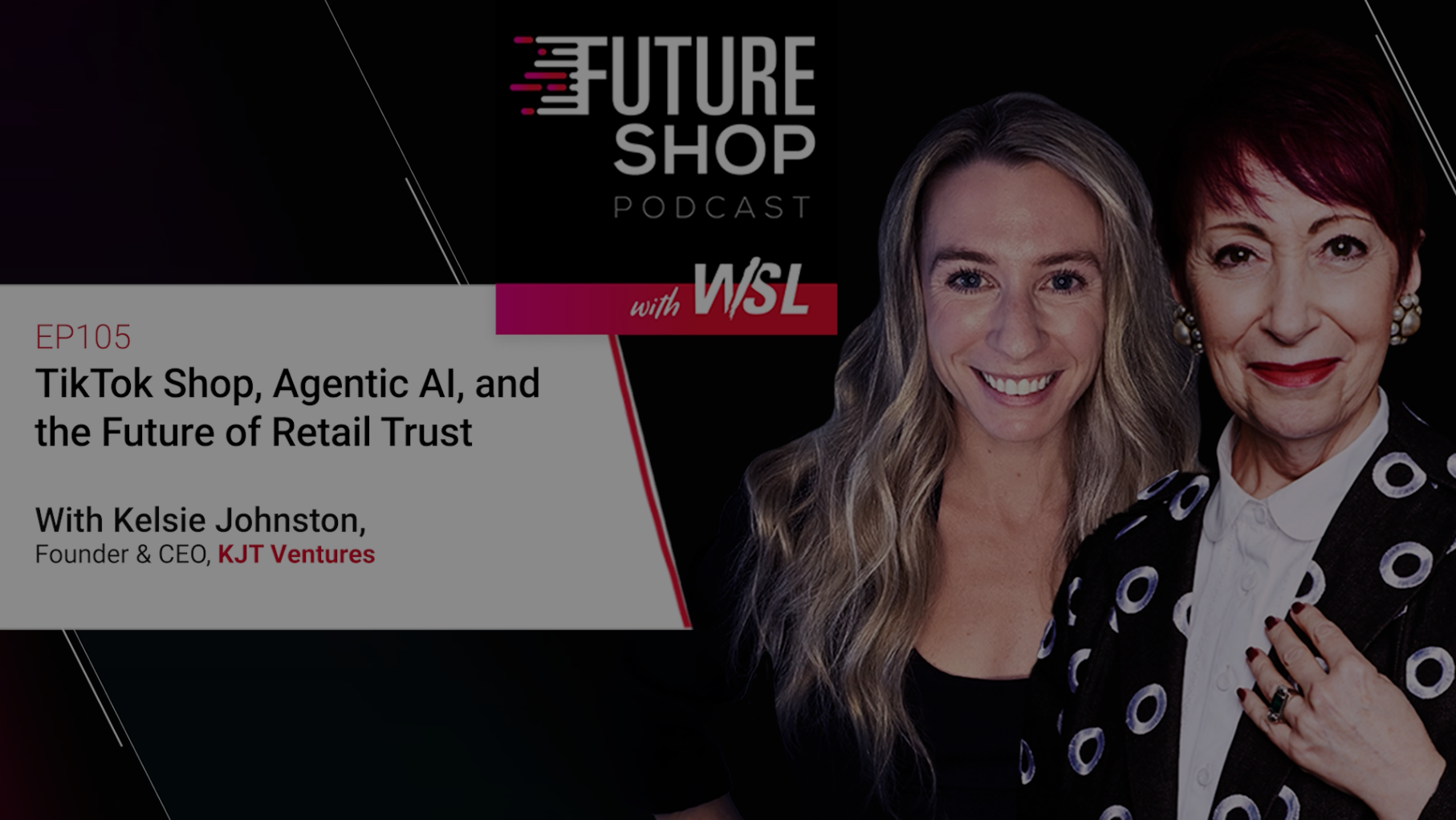
Join host Wendy Liebmann as she sits down with Kelsie Johnston, a retail strategist with a career spanning Macy’s, Walmart, Coty, and most recently, TikTok. In this episode of Future Shop, Kelsie breaks down the seismic shift from traditional omnichannel retail to the exploding world of social commerce and the dawn of “Agentic AI.” They discuss why brands and retailers must move beyond transactional selling to build genuine community and trust in an era where algorithms and AI agents will soon curate what we buy.
Episode highlights:
- From Omnichannel to Agentic: Tracing the evolution of shopping from “buy online, pickup in store” to AI-driven discovery.
- The TikTok Strategy: Why the platform is less about selling and more about fueling the “trust signals” of the future.
- Fast vs. Slow: Understanding the modern shopper’s desire for friction-free speed or immersive, slow retail experiences.
- Retailer Advice: Why prioritizing pace and psychological safety is critical for legacy brands trying to survive the next disruption.
Chapters:
01:36 – Kelsie’s Journey: From Macy’s to TikTok
04:22 – Building TikTok Shop from Scratch
06:54 – Agentic AI: The Next Shopping Disruptor
18:01 – Why Creators are the Future of Trust
27:23 – How to Prepare Your Brand for AI Agents
33:07 – 3 Critical Steps for Retailers Today
Don’t miss upcoming episodes, subscribe to our podcast with your favorite app.
Watch the video episode:

Wendy L. 00:00 Hello, everyone. I'm Wendy Liebmann, CEO and Chief Shopper at WSL Strategic Retail, and this is Future Shop. Today, my guest is Kelsie Johnston. She really has the panoramic view an incredibly diverse background, from traditional retailers like Macy's and Saks, where she got her start in planning, and then jet to Walmart, to Coty and then the infamous TikTok. She has just recently moved into her own space, and she will talk a little bit about that as well, but I am delighted to have her here. So Kelsie, welcome to Future Shop. Kelsie 00:46 Thank you. I am so excited to be here with Wendy, and just for everybody listening. When Wendy asked me to come on and do this, I was like, Wendy, I would just sit and talk to you for hours anyway, in a coffee shop. So if we can help give this conversation to more people who are curious, it works out perfectly. Wendy L. 01:00 So one thing before we get started, please subscribe to this podcast. Helps us know that you're in the background, that you're listening in. Don't forget. Leave a comment if you like. Rate the podcast. We love to hear what's important to you. Thanks for that. Now onto the chat with Kelsie. Thank you for doing this. As I said, you have this extraordinary modern I'm going to call it a very modern art to your career. Talk a little bit about this journey from there, from traditional retail to where you are today with your own consulting and advisory practice, yeah. How did, how did that all begin? How did you get into retail and planning? Kelsie 01:36 I think if I, if you talked to me when I was 21 years old, and you asked me what my career roadmap was going to look like, very little of what I actually did was on my bingo card. So all for the best reasons, but we sort of just say yes and lean into different opportunities. For me, I knew, kind of coming out of college that I really loved the ability to marry art with science. I'm a big data nerd at heart. I also love creative thinking and sort of pushing limits and new ways of just approaching consumer demand. So like you said, started my career in traditional retail. I joined the buying offices at Macy's out of school, and it was great. I learned everything there was to learn about mass retail, things from retail math through assortment writing, purchase orders and everything in between. Joined Macy's when they were really trailblazing the industry, they were doing buy online, pickup in store, they were rolling out an app, everybody thought that it was just the most innovative thing in retail at the time. Lived through them going omnichannel, back in 2014 or 2015 and had a great experience there with fundamentals. Went over to the luxury side of the house from there was at Saks for, you know, in a buying capacity, started in their buying offices, and then eventually moved over to financial planning. Touched every category under the sun. I was in menswear, jewelry, handbags, you name it. I probably touched it. And the experience there really taught me that running a business is a bit category agnostic, and if you understand the needs of the consumer and how to look at the data well, then you can sell anything if you approach it appropriately. But when I went to Saks, it was really an omni channel business. It was about 85% brick and mortar penetrated, and I missed being in that fast paced e-comm environment. Joined jet.com which was subsequently Walmart e-commerce, and it was an incredible ride. It was an environment that really operated like a startup. It was truly bootstrapped. It was go, you know, figure out how you want to reposition the Walmart beauty perspective for a lot of shoppers. And a lot of what we trailblazed In my time there was bringing in just a refreshed view of beauty. We were talking about more inclusivity. We were bringing in small indie brands for the first time, testing a go to market online before end caps and everything in between, probably wouldn't have left if there wasn't a physical relocation to Arkansas back in 2020, and you know, I live in New York, so that wasn't in the cards for me at the time, but it was great because I did what most people do who leave Walmart, I went supplier side and worked at a brand led the e-comm and digital teams at Coty, everything from commercial relationships across mass DTC and luxury retail media centers of excellence that we put in place coming off of covid and then accidentally, again, found my way into TikTok in 2023. Kelsie 04:22 So as fate would have it, the talent partner who hired me into Walmart years ago was now at TikTok, and he called me when the solution had not been built yet. He said, we're thinking of building shoppable capabilities into the platform. Would you like to come build this with us and take it to market in the US? And I remember thinking, you know, this is either going to be the best move of my career, or I'm going to be out of a job in three months. And I'm not sure how this is going to go. But ended up joining when the solution was still in beta. We had zero partners, $0 in GMV. The charge was really just to call everybody in our network and figure out, you know, all the way from the. CPGs of the world, the L'Oreal's, Estee lauders, all the way down through small businesses bootstrapping out of their garage and basement that were really homegrown to TikTok. How we make it a success? So, you know, two and a half years later, I think at the time that I left, we'd scaled it to over a billion dollars in just under two years, which, you know, I don't know that I'll ever have the opportunity to scale something so quickly again in my career, but I learned so much. And I think, you know, like the key thing that I'm thinking about now, when I left, and now coming out on my own, I realized when I left, and, you know, my intent was very much to take a break and be intentional about what was next. And really did plan to go back into corporate, but at the end of it, I was getting a lot of phone calls about, you know, how do I stand up a tick tock shop? How do I go to market on tick tock? And as I pulled that thread with a lot of different brands, I realized what we were missing was it's not just going to market on tick tock and approaching tick tock as a commercial channel. It's, how do you build a true Creator infrastructure, community model, and set yourself up for a more organic storytelling and brand building approach in a way that has not been the model through traditional advertising in the past, and then a state would have it. You know, around this time, it was when open AI was announcing the Shopify partnership, and there was this just boom in the news about agentic commerce and all of these trust signals that are now feeding these models. And I was sitting there like, oh my gosh, the dots that nobody is also connecting are all of these video and content moves that brands are making on social platforms, both by way of text and whatever else they will be the trust signals of the future that fuel all of these new shopping journeys. So, yeah, very long story, long, super excited about just how the industry is shifting. It's, I think, the biggest disruption to shopping that we've seen since the internet, and I can't wait to see how it unfolds. Wendy L. 06:54 Yeah, well, well, certainly you're in great shape for that. You know what reminded me when you were describing where you began? In some ways, that was where I began. But generationally, I had a very different experience. Started off in Australia. I'll just tell the story in Australia out of working during school, but at university, but then working in the management development program at one of the retailers, one of the department store retailers, my experience was not as exciting. I think. For the first six weeks, they had us in the warehouse learning to use a pricing gun to pricing hair accessories. So I became very good at pricing hair accessories, and I'm quite dangerous with a pricing gun right now for many reasons, and I know a lot about hair accessories, but after six weeks, I said, if this is it, it's not for me, and so I led a revolt. So anyway, the long and long, the long and long of that tale, but it does really feel to me like that knowledge of, if I think about an omni channel education, part of the reason why I was really intrigued to me, you, it does, you're absolutely right, feels very seismic in that sense of the early days of the Internet and the implications of that, but the speed at which it's all it's all changing, and we certainly see it in all our how America shops research a new something comes and people just add it to their portfolio of places to buy. So when you think about that, how do you how do you even approach that today, if you're looking with a customer client, and saying, okay, Out with the old, in with the new, or is it? No, this is an and not an or Kelsie 08:38 if we think about the beginning of the shopping journey on the internet, it was very we are on one website. We are searching, converting, browsing. It felt like a doc website, whether DTC or retail.com. Was its own native experience, and people weren't really switching and flipping with too much ease when we were taking TikTok to market in the US. If I take us into sort of phase two, when we were explaining it to partners, we would say, okay, show of hands. How many of you have been scrolling through your TikTok, your Instagram, any other social platform you see somebody talking about something, you screenshot it, and then you open another tab, or you open your Amazon app, or you open, you know, a different user experience, and you go research where you can find that, right? So I think that was the beginning of sort of fracturing, the journey of saying social is now evolving. It's, yes, a commerce channel, but still a really powerful discovery platform. So that was kind of phase two, thinking about social and commerce really merging, and then now going into three, which is this world of agentic and, you know, a whole new technology and way of approaching brand relationships. It's still that same mentality of but we're trying to foster trust. So you're searching on ChatGPT, you're looking for something to buy. ChatGPT might serve you up some answers, but you're still going to open another browser tab. You're still going to search and validate what it's telling you and double check price. Pricings. I think it takes time, but, but the short version of it is, in my opinion, this whole world is shifting very far away from brands and retailers just selling and more into true trust, building community at the center of everything, people being connected. And what's super exciting for sort of like retailer or store mindset, there's definitely going to be consolidation. There will be winners and losers in terms of productivity and who can do it well. But what I like to say, for the example, is, if I think about some of my favorite experiences shopping in my life, it's always with somebody that I really love or it's a special moment or place or experience, so the role of stores by nature, are not really transactional. The nature of E com has historically been quite transactional. So I think the question is, how are brands and retailers taking these relationships with customers, with creators, with all of the people that they're fostering digitally, and then bringing those people into moments in store for different community hubs or content studios or live streams. Like real estate is a really powerful asset right now, and I think there's going to be a great evolution of how that looks. Wendy L. 11:11 So I get where you're going in terms of what it could be and should be, but now I've got 9000 of these stores and 5000 of those stores. So I also step back and say to myself, how much of that stuff do I need moving forward, if it's my hubs? As you think about this, I'm just curious even how you if you're the retailer, if you're Walmart in the day, how do you even think about that moving forward in this different way of engaging the shopper. Kelsie 11:44 Yeah, I think it probably depends a bit on the category too, because in the Walmart example, you have a really powerful grocery business that is always going to be a need based driver of traffic. So whether that's somebody physically going into the store to go grocery shopping or doing their from the parking lot, online, grocery pickup. I think the user journey is a little bit different there than maybe a sax right, where somebody is truly going in for the sake of luxury discovery and a certain experience. But how I think about it is at the crux of it, like I think about when I was growing up and we would go hang out at movie theaters, like we would go hang out at malls, like it was a true in person experience with our friends and family, and you shopped while you were there, and that was just something that you did in the background. I almost feel like that's where we're getting back to as people are just getting hit with technology from every side of their life. They are sick of it. They are tired. They crave that in person connection. And it's going to be a little bit of that, you know, short of a community hub, like a meeting place or third place for some of these people again, Wendy L. 12:48 yeah, yeah. I think that's interesting too. Because when I first came to New York, which is a long time ago now, if you wanted to meet a fella or somebody, you actually went to Bloomingdale's and you went up and down the escalator on a Saturday, because that's where people hung out. And then Bloomingdale's was very good at creating these amazing events, like India month, or, you know, they took a place in the world and created this extraordinary experience, you know, top to top to bottom. Or even the Barnes and Nobles of the day, where you went, had a coffee, met friends, all of that that feels very modern, feels very right about retail. But the other point you made was it depends on that journey, whether I'm buying dinner tonight and or whether I'm, you know, spending some of my time discovering, researching, absorbing, all of those things. If I'm thinking about my digital journey, Do I really have to understand that if I go to a TikTok or anywhere else, the category matters, depending on the journey, depending on what my journey and mission is, is this is category really important here. Kelsie 14:01 Oh, absolutely. Which. It feels like I'm contradicting myself. Having just said at sax, I learned you can sell any category. You can understand the customer journey Wendy L. 14:09 Well, in the fashion, in the fashion world, in the luxury fashion world, that's probably fairly true, yeah. Kelsie 14:15 But I think what you're getting at, which is really interesting, is obviously beauty, personal care, wellness has all been a runaway success on TikTok Shop. And you know, reasons for that. It's, again, my word, a very contentable category. It's very clear to see, you know, the efficacy of a product before and afters. And in some cases, you know, there's many beauty brands that are approaching the platform with, you know, not just I'm launching a product there, but I'm actually designing packaging and designing product with TikTok in mind to make sure it is this really creative looking experience that translates well on video, largely, you know, like beauty definitely a success story. But I think I laugh, you know, I've got some friends who work over at Ken view, and I talk to them about this, and I say, let's be realistic. Tylenol should never. Really sell on TikTok Shop, or be a big strategic pillar of your brand story on TikTok Shop, right? So I think we're also in this really interesting space where what TikTok has done is it has again, sort of democratized access to conversation, education, content, brands, everything in between. If I put my retailer hat on. All of these buyers are looking to TikTok to say, what are the up and coming brands, and how do I get to them first and bring them into my store for shelf space? So on the flip side, if you're a Tylenol for example, and I'm not saying they're losing shelf space anywhere, but are you at risk of losing shelf space to some of these really exciting, up and coming, digitally native brands, and then are you therefore saying, I just need to do TikTok, and it becomes less of a strategic storytelling, marketing, customer conversation, and more of a bit of a defense mechanism for some of these old school incumbent brands, because the category might not be right, or The product within their portfolio might not be right. So I think to any you know, marketers or maybe operators listening, I would say, don't just do it for the sake of doing it, because it's a new platform, like, be really intentional about how and where you show up in the conversations to customers and creators as you're building it. Wendy L. 16:18 I think that's such wise advice, because you're absolutely right, it is this sort of bright, shiny thing. And so there's this understandable wanting to learn about how it works and how it doesn't, and whether you need to play and whether you don't. But that level of discrimination that you just identified is, I think, so powerful in that, or so important in that, as we consider it, whether it's an established brand, old brand, type of category that it's in, as you were just describing that, and sort of traditional retail, we were doing some of our research about where did people really want assistance in the physical store? We thought, are they going to say they want a beauty advisor and they want a pharmacist? Actually, that's not what they said. They said we actually would love experience. We'd love some help and guidance in the children's analgesic aisle. And was like, and part of it because you were talking analgesics, well, that aisle has got more and more complicated. People are really get their child. They really want to make sure that they're making the right decisions. And so it was very interesting to think about that, and think about if I've got an influencer paid or not, if I've got this environment, this platform that informs me, how does that fit into serving or providing that kind of content and support, whether it's an established band or another. So I'm really interested in the way that particularly categories beyond beauty play in this new digital world. Does, does a platform like TikTok, and obviously there are others, but does a platform, a social media platform, is that a vehicle for providing that kind of education for the future where people want information? Kelsie 18:01 Yes, oh, completely. And sort of follow me on this journey as I untangle this. I think what we know to be true today, generally, consumers say they are 61% less likely to trust traditional advertising, and they will trust creators and influencers, whatever you would call them, over traditional advertising. That's all great. However, I think we're in this really interesting saturation point where you say, you know, on TikTok Shop, there's probably north of 2 million creators now, all having conversations. And as a user of TikTok, you know, primarily you're there to be entertained. So it's a really fine balance of saying, How do I want to play on these social platforms as a user for entertainment, versus where do I actually want to be marketed to and sold to for all of these new conversations and user journeys? So I think, firstly, there's a conversation to be had about as you're playing on these new platforms. Do not approach it as a place to sell like truly approach it like you mentioned, as a place to educate, a place to brand build. People are going to move on very quickly if they feel like they're just being sold a bag of goods. I think second, the thing that I really like to kind of position vision wise for TikTok Shop, for brands and retailers, is everybody is looking at this right now as a customer acquisition platform, which is true. Like very largely, most brands that I talk to have north of 80% of their sales coming from first time buyers and hopefully folks that come into their ecosystem and then repeat on DTC, Amazon, wherever else they want to guide them. I think what becomes a little bit interesting, if you play it forward, is if you consider it also a platform that is a creator acquisition platform, and you build out a model of true-community management where you're saying, I am connecting with 10,000 creators on TikTok, and then I'm bringing them into my own community as a brand or as a retailer. I'm hosting it on WhatsApp. I'm posting it on Slack, whatever the owned channel is for the brand, in theory, the way you can activate those people. Is far beyond just TikTok Shop. So you're then getting them creating content for your ads for Meta, for YouTube. You're having them show up in stores at different events. You're treating, again, your store, real estate, as maybe a content hub, which obviously creators love, but increasingly customers always love, because everybody wants to live their best life and most what's going on online. Kelsie 20:22 So I think it's not just about selling. It's not just about listing certain categories. It's really thinking about this as the engine that will drive the future of trust and marketing for your brand and for most creators, it has traditionally, for the last Jewish years, been a transactional model in which they get paid commission on a sale on TikTok Shop. But as this grows, you know, I'm hearing from creators. They're demanding a seat at the table. They want to sit with brands, and they want to co create product. They want to help guide on packaging. They want to serve truly as extensions of teams and almost like a mini focus group within a brand ecosystem, to help have a part in it. And as this world of creators is driving more towards creators now as their own brand, their own franchise, which, again, how many creators do we see now launching a line of something or a media company, or whatever else they're doing? I think the brands that will do very well are the ones who figure out how to create these relationships and test things now, versus waiting 1235, years to get into that world. Wendy L. 21:23 You're laying out a very compelling view, and one that says, think about this. You know what Procter & Gamble used to say, what comes after? What comes next? Don't just see it within the context of, you know what we're so used to in this landscape of physical stores, digital store, what it reminds me of in the day when, the when, when most of the big retailers decided to jump into digital, and you lived in that world, and they had their e-commerce space was in California, and their traditional retail was, you know, wherever their home base was, and never the twain shall Meet. And it was only when the understanding that where the shop of fit into that story, that they began to understand that you have to have a cohesive proposition to all of that. So this, this feels like it's that moment when you have to change the framework in which you're thinking, how can you influence and tell your story in a in a compelling way, whether you're a brand or a retailer. It feels like lot more people at the table, and that brands and retailers have to be more open to that kind of dialog to be really successful. Kelsie 22:32 Yeah, and I think what's so tricky is, like, from a business perspective, if we even, like, step back beyond just getting to the Creator world. When I was at Coty, we had, I sat within the e-comm team, which was a standalone team. We also had a sales team that called on brick and mortar, and then we also had a marketing team. And the marketing team technically owned the brand marketing budget, but we had a carve out that was e-comm driven for retail media, but paid social, even though social commerce lived within e-commerce, paid social, sat with the marketing team. So it's a really tangly web already, before you even get into this world. And then as you think about the future of creators, and again, like how advertising is shifting and everything there, I think organizations are going to have to get really smart about taking risks or being comfortable with a little bit of dotted line relationships, or, you know, however they want to structure it, maybe as a test to start. I think omni channel was hard enough for people to design around and organize teams around, and this is a really hairy, different, complicated view, and they're just going to have to be a little bit nimble and testing what works best for every brand size? Wendy L. 23:42 Yeah, yeah, it is. And again, I think we're at that, as you said, whether it's 2.0 3.0 we're at that moment where it is about, I mean, the only way, and everybody who listens to this or watches this knows I say this all the time, you know, is the shopper in the room. What is it that will what is the experience, whether it's transactional or truly experiential, what is it to your point that will build trust with the person that you see as your target, lowercase t, buyer of your goods and services or your experiences? What do they want? Now? How do you inform that life? And then how do you build much of a used word ecosystem around that? And who do I need around the table to do that? Because otherwise you keep pulling these, as you said, these, these threads that are, well, it used to be like this, versus Well, it could be like this, and some of that learning just doesn't is not relevant anymore. And that's, that's where I'm finding the conversations. I'm going to use the word disturbing, which may be overreacting, but it's like we need to be there, and we're going to do it the way we did with our traditional media, or use that model. And I'm like, no, no, that's not what we're talking about here. So, yeah, I. Yeah. Kelsie 25:00 Or worse, you have holdouts, right? So there's, you know, people keep asking, especially in this world of retailers, which I still, you have a lot of friends and folks in my network in that space, they're asking, you know, what retailer has done it well, on TikTok Shop, yeah? And the answer is, really, nobody has played in a meaningful way, and there's still first mover advantage to be had there. But I think, to your point, it's like thinking about it's a disruptor, yes, but there are a lot of retailers that are saying we won't play for whatever reason. Maybe it's you won't integrate our loyalty program. Maybe it's we can't have the customer data and the way that we want it. Third, maybe we can't capture retail media dollars as effectively. So there's a little bit, and I mean this with love, like a stubborn mentality of we're going to resist the technology. But to your point, that's where the eyeballs are. You've got over 170 million active users. You've got over 2 million creators. It's not about do we do it? It's do it, but figure out how it makes sense for you, financially and for customer relationships and everything along the way. Wendy L. 26:01 And then, of course, to your point earlier on is now we toss this thing called agentic AI into the middle of this. I was just at NRF, and that was, you couldn't, you know, elbows out. You was nowhere to go beyond where you couldn't find that conversation or that sign or that something. And what was interesting to me on that it was, on the one side, very internal, commercial usage of AI and how you run create a more efficient organization, versus some work we've just done. We've just finished coming out of the field, one on one, in depth interviews with shoppers who are using AI, and the way they talk about actually curating their own algorithm, yeah, so they get a more personalized offer and experience and answer the questions. And I thought about retail media, and everybody talking about personalizing me on I'm like, What are you the shop is just way over that. Let's put retail media in this. It's a profit center. Knock yourself out guys. Recognize what it is. And if you're thinking it's serving the shopper in a more customized, personalized, curated, bespoke way, they're way beyond you and all of that. So when you what do you what are the one or two or three things that are really that people need to you know what step one or step two, three? Yeah. Kelsie 27:23 Well, I always laugh. I'm like, this whole world of agentic commerce and AI, it's so reminiscent of the early days of TikTok Shop in so many ways, right? Because it's a new technology. It's kind of sexy, like everybody's talking about it all of the conferences, and yet nobody really knows what they mean about it. So in the same way that people were like, we need to do TikTok. Now the conversation is, we need to do AI. And off the heels of what you just said, it's like, okay, well, do you need AI for content creation? Do you need it for team efficiency? Do you need it for customer facing shopping purposes? Like, there, this is a technology. It is not a single platform or that narrow in the way people are thinking about it. So I think if I tackle the question from the lens of it, is a new touch point in the shopping journey with customer in mind. Let's call it a ChatGPT, a Google Gemini, whatever else is going to emerge in this space. I think what's so interesting is the traditional marketing perspective has been for many things, again, with love. How do we hack it? Like, how do we do it quickly? How do we put some cash behind it? Like, how do we just win eyeballs in the most effective way? And what I love about what's happening in this particular space is we're finally kind of shifting the narrative to say it's all trust driven and it's all user driven, and marketing organizations and big brands, small brands, they're not controlling it all themselves anymore. This is something you know. I'll liken it to again, early days of Walmart e-commerce, when we were trying to reposition Walmart beauty to date. At that time, this must have been around 2018, 2019, primarily, the beauty narrative at Walmart had been, it's a L'Oreal it's an Estee Lauder. It's a young, 20 something white woman who is, you know, looking in this very particular way, and the big CPGs are telling the customers how they need to look. And it was not that way anymore for consumers, because you had glossier emerging, you had all these kind of community first and user first models that brought about the indie brand boom. Kelsie 29:27 So I think about that same model here as we think about agentic tech. And in a way, all of the big strategics are going to have an advantage, because if if AI agents are referencing your digital footprint as a trust signal. Those strategics have been around. They're in every point of distribution, across retailers online. They have been discussed in community forums. They've been discussed in press like they already have that footprint. So then I think the question becomes, how can emerging DTCS or new up and coming brands? And play the trust game and win it out. And for me, that's where the whole-community management model becomes really important beyond just TikTok. Because right now, these LLMs are not referencing videos explicitly for trust signals, but they are looking at text. They are looking at, you know, like captions, overlays and those kinds of things. If I were a betting lady, I would say within probably the next six months, video is going to play a very big part in this. Again, knowing that Google owns YouTube and there's sort of back and up conversations happening. So I think the most powerful thing a brand can do right now to really accelerate these trust signals and set themselves up for success is one, you have to get a good measurement platform, because if you don't know what your visibility is, what your ranking is, you're kind of just like shooting in the dark hoping that you're going to get more mentions on the internet. But how valuable are they and what do they mean for you? That's going to be step one, and then step two. It's going to be figuring out, based on what you see in the data, what are the platforms that you really prioritize, and what sort of low hanging fruit versus what do you actually want to build a strategy around? Because low hanging fruit might be we just need to update all the copy on our DTC, our retail.com to make it more conversational and remove all this marketing fluff, because that's not the way that these agents are crawling data anymore. But then if we start talking about editorial or overall digital footprint, that's a massive PR strategy, and that's a new undertaking to figure out. You know, not only how do you get advocates, customers, creators talking on your behalf to build trust, but also credible sources, like journals, if you're in sort of like the health medical space, or best of lists on allure, if you're in the beauty space, like there's a lot of different ways you can play it, but you can't just hack it and say, okay, Reddit is the number one trust signal today. So we're going to build a whole team for Reddit, and we're going to invest $5 million next week. You know, it because Reddit might be gone the week following. It's all very, very dynamic. Wendy L. 31:56 The thing that resonates a lot with me is this notion of trust, trust, anytime, but trust, you know, with new technology, we saw that in the in the early days of the Internet, oh no, I'm not going to give it my credit card, it my credit card, all of those sorts of things. And then little by little, we learned as shoppers to trust. And how was it engaged? And how did it prove to us? The technology proved to us that that this was a safe place to be. And then, as we've evolved here, that notion of trust, which brands and retailers have have had as an important sort of beacon for themselves, but how people have come to trust or learn to trust today, but I don't think people always understand how it's evolved, and how you need to build that into this model, or this new world of shopping that we're talking about as we come to the end of this. Is there a pitfall that you see, or a concern maybe you have, that you know when I think about you know, our audience here of retail, CPG, in a global not just us. Is there something that you say right now, do not do this? Kelsie 33:07 I actually, I take it less of a don't do this, and more of a do this. And I think the three thing, the three things I would leave somebody with are, especially in the space of like large, strategic CPGs, you have to prioritize pace. That is the number one misstep. Especially early days of TikTok Shop, there were so many folks where it took a year to get them on board because they had to run it up the flagpole. You needed CMO, CDO, COO CEO, like all the different buy ins under the sun again at a certain point, like my key questioning goes back to what additional information is going to matter. And like, as you think about the size of these companies, if you're testing something like TikTok Shop, and if it's going to cost you, I'm making it up $100,000 to run a proper test. What is that $100,000 as a test, as a rounding error on your overall global P&L, right? So I think it's really prioritized the pace to be a first member to these technologies, second, sort of on the heels of that, I would say, maintain a risk appetite, because a lot of people, again, traditional retail very comfortable with you anniversary yourself. You look to last year. It's small updates, it's productivity. That's okay. You don't want to walk away from what works and what keeps your customers happy, but you also don't want to be so stubborn as to say we are not going to offer any budget fluidity this year. We are just going to keep spending on connected TV or retail media or whatever it is, and not be willing to test and possibly fail and get a bad result from something new. And then, I think third, you have to create for your team the psychological safety to play with new technologies, and if you can offer company sponsored education, that's one thing. But, you know, have a group where you're talking about, you know, what's everybody's experience been on ChatGPT this week? Like, what have you found? What something funny you learned? Like, has anyone tried the new shopping capabilities? Like, there has to be, not only. Encouragement, but safety for people to test, because all of these mandates and how to use new emerging technologies cannot come from the top down, like C suites are too busy. Executives have too much accountability on their plate. And you know, it's often the younger folks who are entry level within the company who are the most savvy, so let them test and let them teach you, Wendy L. 35:19 yeah, yeah. That's, that's the, it's the reverse mentoring, right? The reverse teaching. And I think in these times, you're absolutely right. I think interesting to split out, you know, we've got people with lots of responsibility, you know, reporting to the market every quarter or every month or whatever it is. On the one hand, they want to be there because it's use the expression sexy, and they need to be seen as being contemporary. On the other hand, that tolerance for for innovation and experimentation is a big challenge, especially when you've got hundreds of stores, 1000s of stores, very big brands, all of that. So I think that's, that's that's very good guidance for for our audience, to say you got to be there. But think about how you get there. It's a different learning experience, and especially as it keeps moving and moving. And we do tend to love bright, shiny things, yeah, all of that stuff. Yeah, I think that's why I think your experience and the journey that you've been on is really amazing, because in this last decade or so, as you you understand what it is to be a buyer or a planner or whatever, in a luxury space and then in a mass space, but then watch that evolution to the digital spaces is incredibly powerful. So I knew we would have lots to talk about. We have much more to talk about, which means we could do a 2.0 which I'll perfect. Put that on your calendar, because much more for us to for me to learn, and also good coffee is unbeatable at any time. Last quick question for you, favorite place to shop Kelsie 36:51 I am so not loyal, which is like the world, yes, yes, but what I will say is, I'm driven by one of two things. Either one, I am, like, all in on the convenience game. I am, like, searching and converting on Amazon. I'm getting it same day. Like, I just want the least amount of friction. My mom is horrified that we order our groceries and they show up at our doorstep. She's like, you know, you can walk down the street, but the convenience game is a true driver for me. Or I want, like, a real wonderful, immersive retail experience. I was in London this summer, and was able to spend some time in Liberty. And I just love that department store. They tell beautiful stories, beautiful assortment. You just feel better when you walk in there. Wendy L. 37:31 We had one of my great friends and colleagues, who's the CMO at General Motors now, but was the CMO at CVS drug stores, and he says, people want it fast or slow. You know, if you it's exactly the experience that you described. I said, is that cars, he said, in life, when it comes to shopping, they want it to be like you and me. I want it to be here in two hours because I'm really busy. But if I have time, I might be in the cheese isle of Murray's Cheese store down here in Greenwich Village. But it is that, or, of course, in somewhere else, very special this. This was absolutely great. Thank you for coming. I really would love you to come again, because I think the story continues to grow and evolve, and I think you are certainly at the forefront of it, and you make sense of it. Thank you for joining us on Future Shop, and I look forward to seeing you in the future. Kelsie 38:20 Sounds great. Thank you, Wendy for having me. Wendy L. 38:22 Cheers for now you.