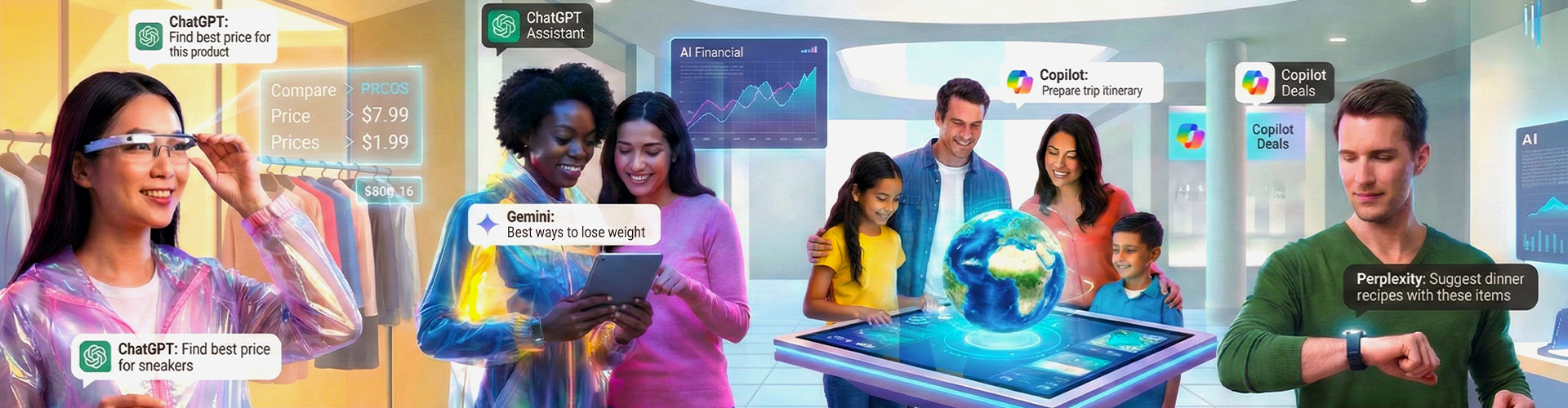
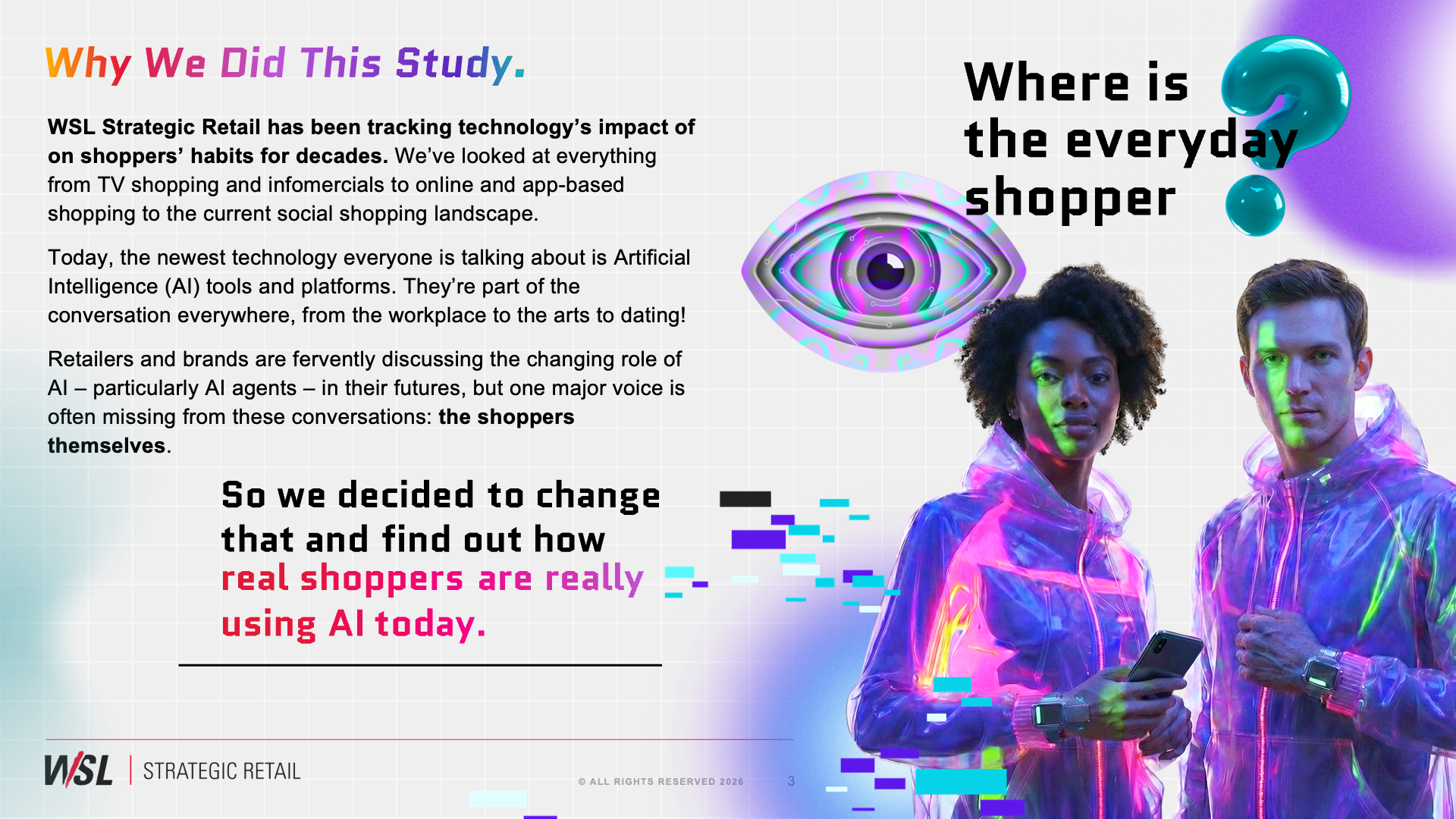
Everywhere you turn people are talking about how AI is changing the workplace, the economy, even the arts and dating! But so often the shoppers’ voices are missing from the conversation. We determined to rectify that in this new study.
We conducted in-depth one-on-one interviews to understand how people, across generations, are (and are not) using AI in their everyday shopping lives. In this study, you’ll learn AI is more a shopping evolution – not a revolution, and thus what your business needs to pay attention to and watch out for in the near future.
Highlights:
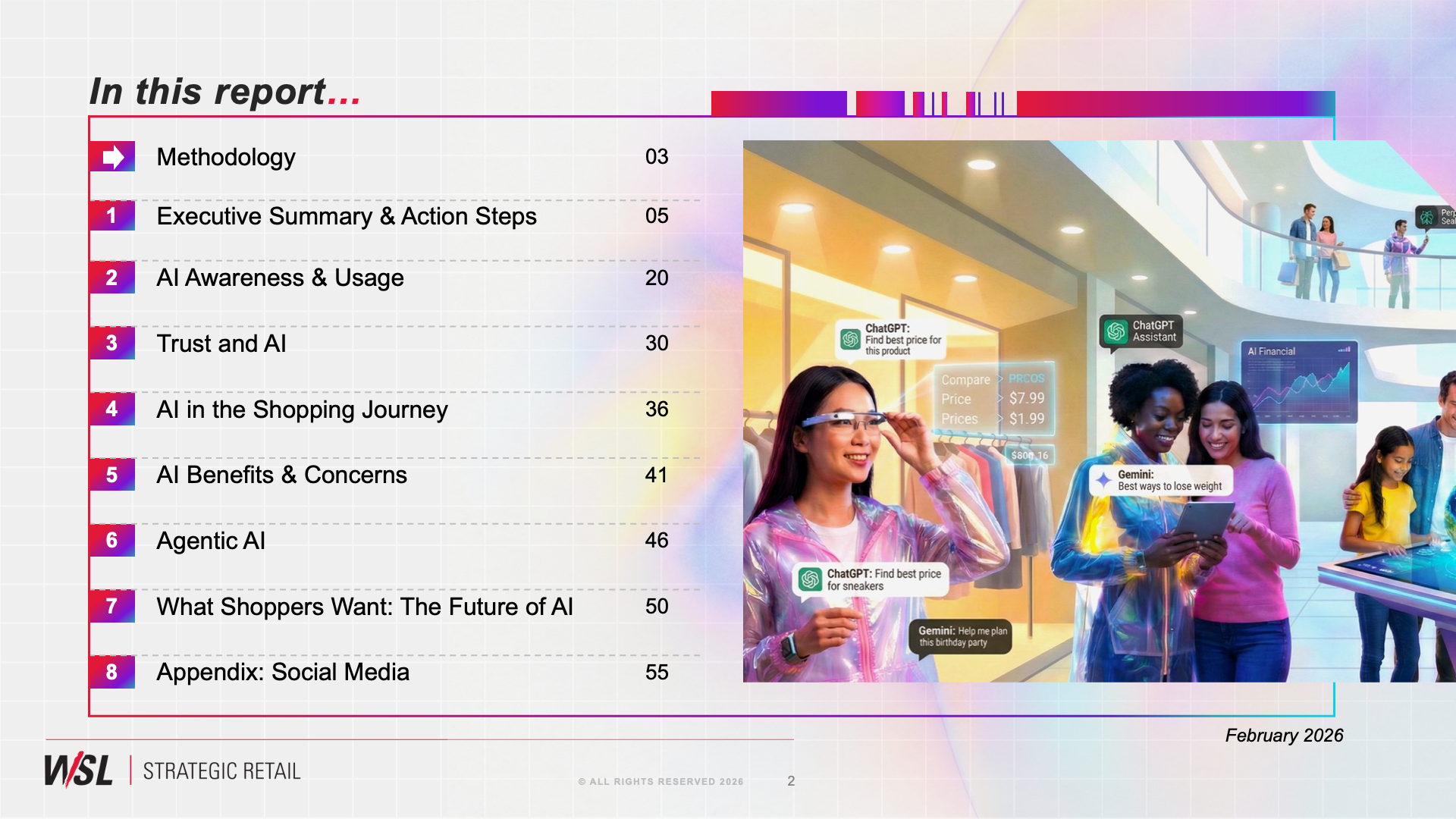
This report details evolving shopper attitudes, habits and the landscape. It helps you have more realistic expectations of shopper needs and expectations – and understand where to invest in the future.
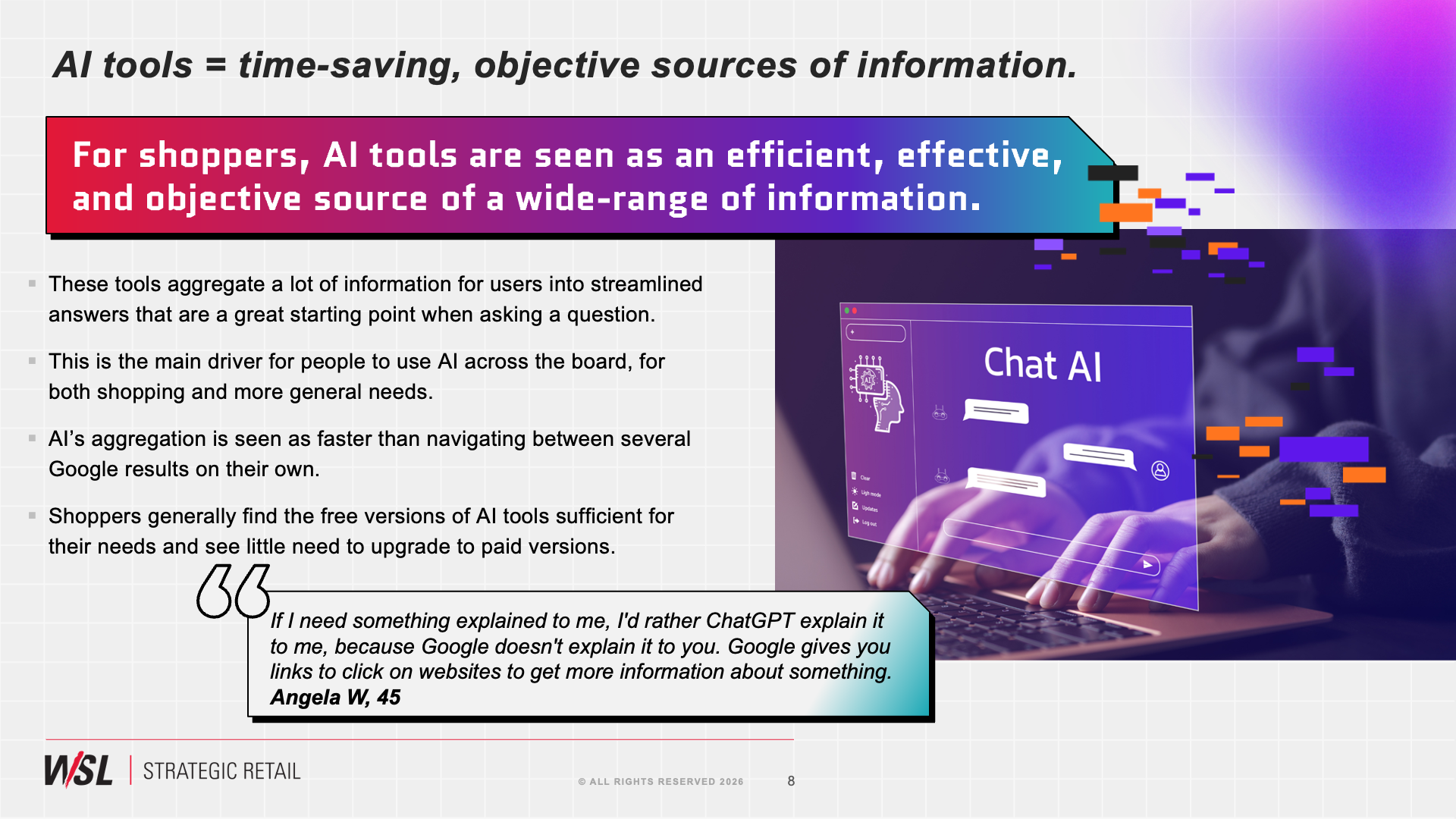
- AI tools are used as quick and efficient information aggregators – they’re faster and more objective than opening dozens of tabs of Google results.
- Shoppers are open to using AI for a wide array of topics and needs, from personal to professional, from low stakes to more private. But that doesn’t mean they’ll tell it everything.
- Just because AI tools say something, doesn’t mean it’s true. Shoppers trust their instincts and take a “trust, but verify” approach when using AI.
- Agentic and site-specific AI doesn’t align with shoppers’ current needs or goals. These tools face a lot of skepticism.
- And there’s more…
About this report: This report is part of the How America Shops® shopper insight series. The results are based on 16, 60-minute one-on-one online interviews with shoppers who actively use AI in their shopping journey. The interviews were completed in December 2025.
If you are a subscriber, you can access the report by signing into your account.
If you are not a subscriber or would like to purchase this individual report, reach out to our Director of Insights, Rich Kaminski, through the form below!
Our latest shopper insights – at your fingertips.
Our national How America Shops® surveys explain what’s driving shopping behaviors, sentiments that influence how and where shoppers spend time and money what engages them emotionally, how categories and the retail landscape will be impacted.