


Our How America Shops® research reveals a shift in men’s shopping habits.  There’s been much discussion about how younger men have driven growth in personal fragrance (ask anyone who has a teenage son) – but that’s just the start of it.  In this blog, we highlight how men’s shopping habits for wellness are changing, how they differ from women and how to meet male shoppers where they are.

Most Men Shop Wellness and Beauty. Where Do You Meet Them?

Indeed, our 2026 How America Shops® research shows nine in 10 buy wellness and eight in 10 buy beauty.  And they are spending eye-catching sums: According to research by Ulta Beauty and the financial services company Bread Financial, men spend nearly $90 a month per shopper on personal care and grooming products.

But how men shop these categories in terms of channels, preferences and trust differs from women – and between younger and older men. These differences can determine how retailers and brands can step into the male shoppers’ paths.

What Our Research Reveals About the Male Shopper Wellness Journey

This is definitely a Mars vs. Venus story. (If you don’t know the reference look it up!)

  • Nine in 10 men use both health websites and YouTube for wellness information. However, just four in 10 of men trust health websites and three in 10 trust YouTube. That “trust YouTube” metric scales up to 45% of men under 40, while only 24% of women do.
  • About 20% of men trust influencers for health and wellness information, compared with 13% of women. That figure climbs to 28% of men younger than 40.
  • While 20% of all men trust social media sites for health and wellness information, younger men are far more likely to – 32% of men younger than 40 trust social media.
  • And then, of course, we have the emergence of AI: 18% of men use artificial intelligence tools for information on the wellness topics they’re interested in, and men are more likely than women to trust AI overall – 27% vs. 20% of women. And note: That male trust figure rises to 34% among men younger than 40.

Retailers and brands: it’s critical to pay attention to these informative preferences.  Here, one size does not fit all – especially it comes to gender and generation.

Categories Men Shop, and Where We Spot Opportunities

We’ve highlighted health and wellness here because that’s not only an area that is on the minds of many of our clients, but also because it’s where the biggest shifts are. (But note: we have insights on lots of other categories. Just ask us.)

WSL Strategic Retail’s experts dug deep into our shopper trends in both 2025 and 2026 to learn which categories men are shopping. We then looked to see how the results compared year over year. Following are some noteworthy highlights.

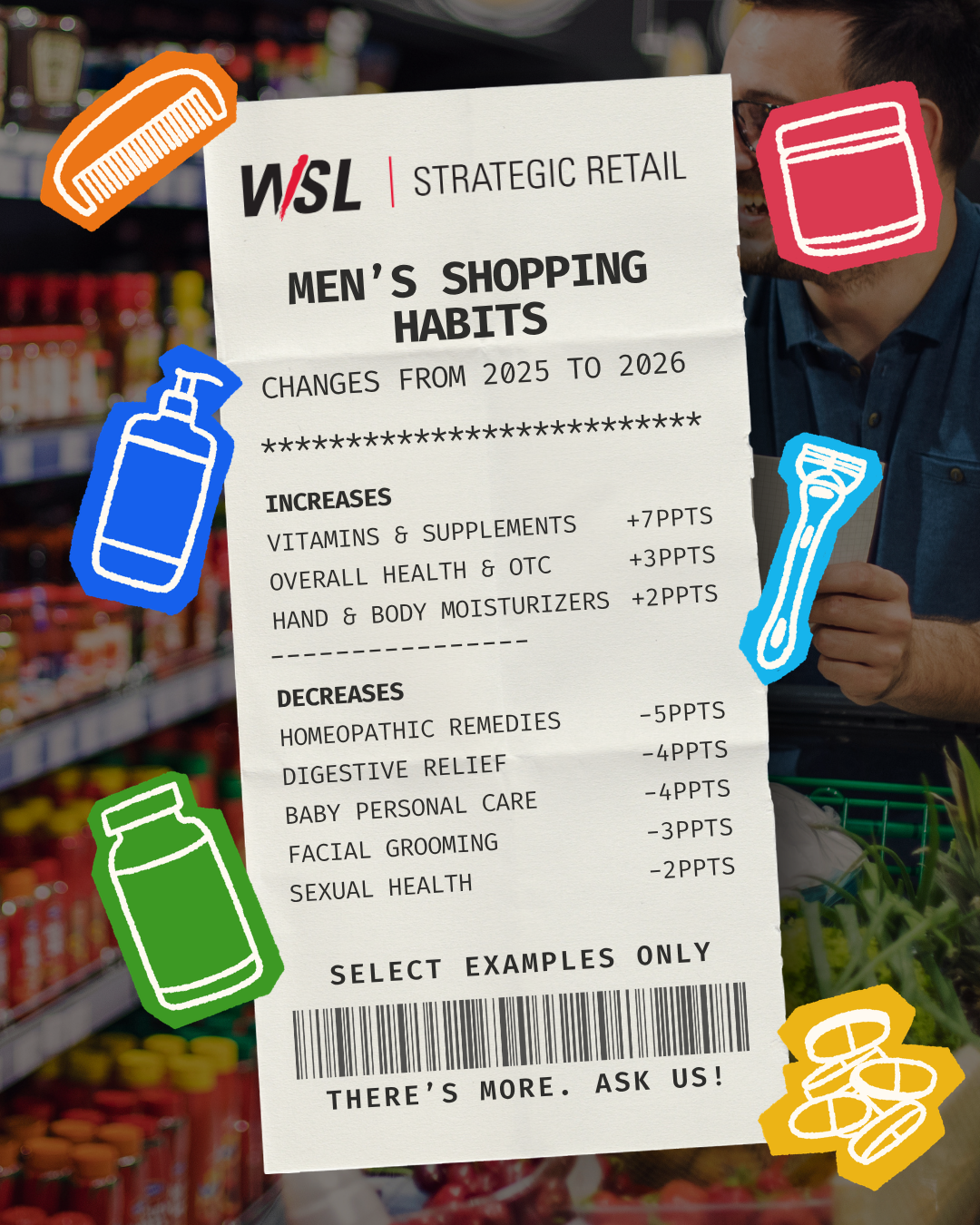
How are male buying habits evolving for health, wellness, personal care. The highlights:

Based on our 2026 How America Shops® research, what men tell us they are buying is pretty stable year to year… but with few standouts that are worth noting. (Select examples only. There’s more. Just ask us.)
How to Get the Shifting Male Shopper’s Attention

Our insights make it clear that men are fixtures in wellness and personal care. Retailers and brands need to understand how to be relevant — especially among the next generation of male shoppers.

To meet men wherever they are, in-store or online, consider the following:

Even in categories well-shopped by men, the number of choices and information can be overwhelming. Simple efforts, such as clear signage that state “men’s sexual wellness” and “male fragrance” will save time and can trigger impulse purchases. Even better: Include areas where men can test products discreetly and without pressure. These spaces can include helpful, image-driven tips such as “the 3-step skincare routine.”

Men are more likely to use technology to search for products, so incorporate in-aisle QR codes or URLs that take shoppers to a branded product’s website or the retailer’s own male category web page. The key is to make the sites informational, with clear direction: “Scan this code for more options in men’s skin care.”

Because just over one-fourth of all men trust AI (and one-third of men younger than 40 do), they also are more likely to use any in-store or online portals that connect them to an AI assistant. Options include in-store touchscreens that encourage conversation (like Vitamin Shoppe’s “innovation store” in New York City), to apps that act like store associates, answering questions and making product recommendations.

From 2025 to 2026, men have pulled back their spending in several categories, likely due to rising prices and financial concerns. Retailers and brands can target these categories for limited-time “new low price” promotions, or offer smaller sizes, or by calling out a product’s other values besides price. These values include convenience (for example, product bundles in end caps); transparent pricing (“this product costs more because we pay living wages”); and simple relevance (brands that prove they care). Read our blog “What’s It Worth Now? to discover more.

Retailer and brands, almost all men are exploring the wellness and beauty aisles of your online and digital retail, and those who are not are likely wondering about it. So meet them where they are now.

Which Demographic and Category Do You Want to Learn More About? Ask Us!

WSL Strategic Retail can curate a shopper report for brands and retailers across categories and demographics. Visit our “Consulting Services” page to find which type of research we can tailor for your need, from category opportunities to shopper-specific retail experiences.


Our How America Shops® research reveals a shift in men’s shopping habits.  There’s been much discussion about how younger men have driven growth in personal fragrance (ask anyone who has a teenage son) – but that’s just the start of it.  In this blog, we highlight how men’s shopping habits for wellness are changing, how they differ from women and how to meet male shoppers where they are.

Most Men Shop Wellness and Beauty. Where Do You Meet Them?

Indeed, our 2026 How America Shops® research shows nine in 10 buy wellness and eight in 10 buy beauty.  And they are spending eye-catching sums: According to research by Ulta Beauty and the financial services company Bread Financial, men spend nearly $90 a month per shopper on personal care and grooming products.

But how men shop these categories in terms of channels, preferences and trust differs from women – and between younger and older men. These differences can determine how retailers and brands can step into the male shoppers’ paths.

What Our Research Reveals About the Male Shopper Wellness Journey

This is definitely a Mars vs. Venus story. (If you don’t know the reference look it up!)

  • Nine in 10 men use both health websites and YouTube for wellness information. However, just four in 10 of men trust health websites and three in 10 trust YouTube. That “trust YouTube” metric scales up to 45% of men under 40, while only 24% of women do.
  • About 20% of men trust influencers for health and wellness information, compared with 13% of women. That figure climbs to 28% of men younger than 40.
  • While 20% of all men trust social media sites for health and wellness information, younger men are far more likely to – 32% of men younger than 40 trust social media.
  • And then, of course, we have the emergence of AI: 18% of men use artificial intelligence tools for information on the wellness topics they’re interested in, and men are more likely than women to trust AI overall – 27% vs. 20% of women. And note: That male trust figure rises to 34% among men younger than 40.

Retailers and brands: it’s critical to pay attention to these informative preferences.  Here, one size does not fit all – especially it comes to gender and generation.

Categories Men Shop, and Where We Spot Opportunities

We’ve highlighted health and wellness here because that’s not only an area that is on the minds of many of our clients, but also because it’s where the biggest shifts are. (But note: we have insights on lots of other categories. Just ask us.)

WSL Strategic Retail’s experts dug deep into our shopper trends in both 2025 and 2026 to learn which categories men are shopping. We then looked to see how the results compared year over year. Following are some noteworthy highlights.

How are male buying habits evolving for health, wellness, personal care. The highlights:

Based on our 2026 How America Shops® research, what men tell us they are buying is pretty stable year to year… but with few standouts that are worth noting. (Select examples only. There’s more. Just ask us.)

How to Get the Shifting Male Shopper’s Attention

Our insights make it clear that men are fixtures in wellness and personal care. Retailers and brands need to understand how to be relevant — especially among the next generation of male shoppers.

To meet men wherever they are, in-store or online, consider the following:

Even in categories well-shopped by men, the number of choices and information can be overwhelming. Simple efforts, such as clear signage that state “men’s sexual wellness” and “male fragrance” will save time and can trigger impulse purchases. Even better: Include areas where men can test products discreetly and without pressure. These spaces can include helpful, image-driven tips such as “the 3-step skincare routine.”

Men are more likely to use technology to search for products, so incorporate in-aisle QR codes or URLs that take shoppers to a branded product’s website or the retailer’s own male category web page. The key is to make the sites informational, with clear direction: “Scan this code for more options in men’s skin care.”

Because just over one-fourth of all men trust AI (and one-third of men younger than 40 do), they also are more likely to use any in-store or online portals that connect them to an AI assistant. Options include in-store touchscreens that encourage conversation (like Vitamin Shoppe’s “innovation store” in New York City), to apps that act like store associates, answering questions and making product recommendations.

From 2025 to 2026, men have pulled back their spending in several categories, likely due to rising prices and financial concerns. Retailers and brands can target these categories for limited-time “new low price” promotions, or offer smaller sizes, or by calling out a product’s other values besides price. These values include convenience (for example, product bundles in end caps); transparent pricing (“this product costs more because we pay living wages”); and simple relevance (brands that prove they care). Read our blog “What’s It Worth Now? to discover more.

Retailer and brands, almost all men are exploring the wellness and beauty aisles of your online and digital retail, and those who are not are likely wondering about it. So meet them where they are now.

Which Demographic and Category Do You Want to Learn More About? Ask Us!

WSL Strategic Retail can curate a shopper report for brands and retailers across categories and demographics. Visit our “Consulting Services” page to find which type of research we can tailor for your need, from category opportunities to shopper-specific retail experiences.


You will receive an email with the download link shortly. Check your spam folder if you don't see it.