

In this episode:
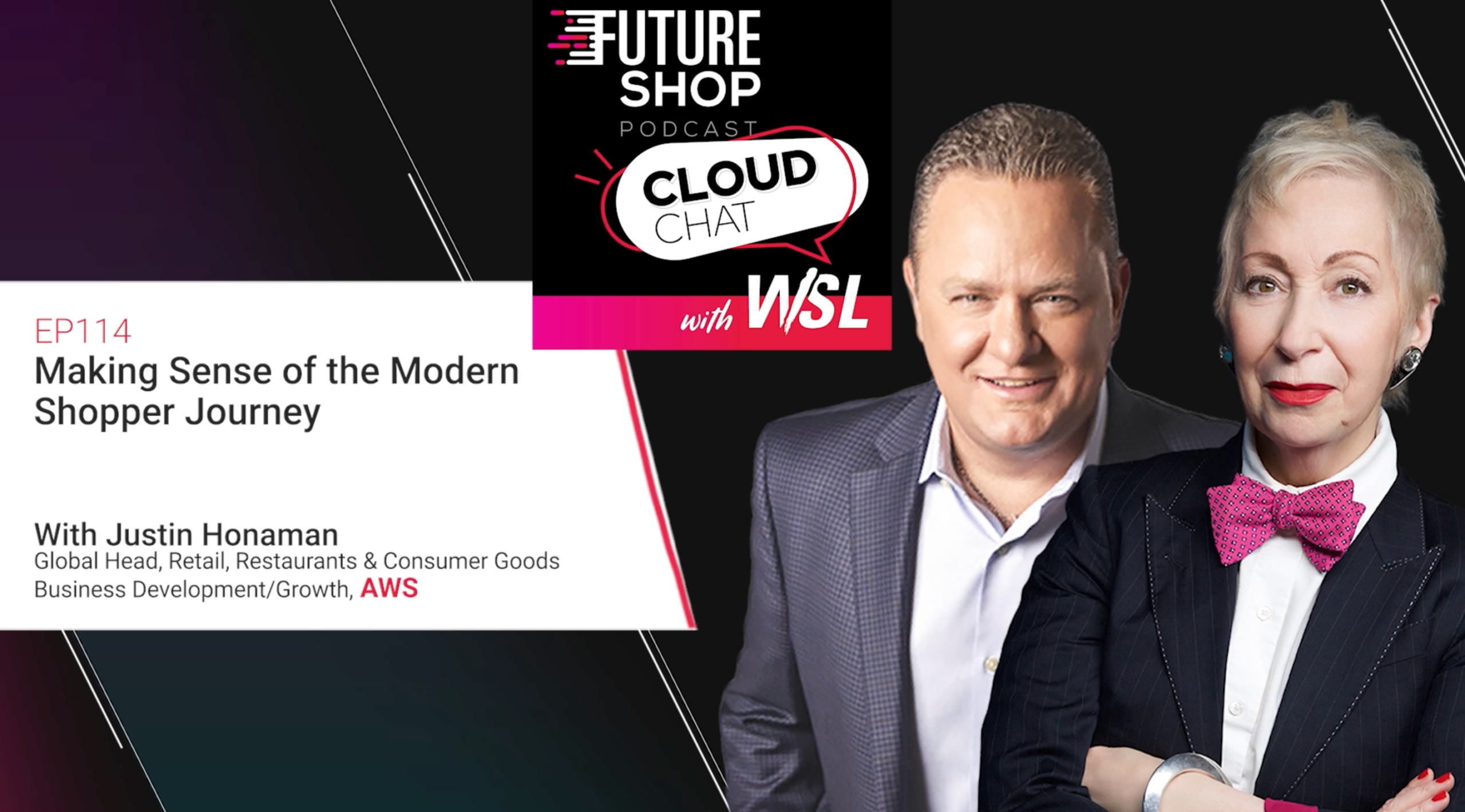
AI is moving faster than ever, and retail leaders are shifting their focus from basic operational testing to real-world customer journey transformations. In this episode of Future Shop, host Wendy Liebmann is joined by Justin Honaman, Global Head for Retail, Consumer Goods, and Food Service Business Development at Amazon Web Services. Live from a customer summit in Brazil, Justin dives into the rise of agentic commerce, the technical hurdles of legacy systems, and why company culture, change management, and talent buy-in are the true keys to AI adoption. They also explore the evolution of search, dynamic joint business planning, and how physical stores fit into a digital-first world.
Episode Highlights
-
Agentic Commerce Surge: Why AI is moving rapidly into search, supply chain matching, and customer experience, and how brands are deploying conversational shopping assistants in days instead of months.
-
Overcoming Data & Org Bottlenecks: How legacy ERPs, disconnected data platforms, and internal change management often hold retailers back.
-
Rethinking Joint Business Planning: Why traditional annual CPG and retail planning models are failing in an AI-driven environment.
-
The Customer-First Anchor: Why keeping the shopper’s true “job to be done” front and center prevents getting lost in shiny new tech.
Chapters:
00:00 – Introduction & Live from São Paulo
02:27 – The Shift to Agentic AI and Overcoming Legacy System Bottlenecks
08:12 – Putting the Shopper First: Personalization and Customer Experience
14:33 – The Evolution of Search: From Rufus to Agentic Shopping Assistants
17:17 – How AI is Transforming Retail Media, Trade Spend, and Business Planning
28:55 – Creativity, Operations, and Lessons from Retail Legends
Don’t miss upcoming episodes, subscribe to our podcast with your favorite app.
Watch the video episode:

Justin Honaman - sept - final Mon, Sep 28, 2026 2:36PM • 35:40 SUMMARY KEYWORDS AI, Agentic Commerce, Retail, Supply chain, Data governance, Change management, Customer experience, Personalization, Agentic AI, Retail media, Consumer goods, Digital transformation, Shopper journey, Product discovery, Business planning SPEAKERS Justin Honaman, David Pinto, Wendy Liebmann Wendy Liebmann 00:09 Hello, everyone. I'm Wendy Liebmann, CEO and Chief Shopper at WSL Strategic Retail, and this is Future Shop. This is where I talk to innovators, disruptors, and iconoclasts about the future of retail. Today, my familiar face, partner in crime, is the lovely Justin Honaman. He is the. I always say this, so I'm going to do this with a straight face because it's an amazing title. No straight face. Here we go, everybody. Here we go. Justin Honaman, Amazon Web Service. I have to read all this. Global head for retail, restaurants, and consumer across the world. He's now in business development, connecting digital everywhere, and he is currently in Brazil. Am I allowed to say that? Is that public, or you're not? Justin Honaman 00:59 That's right. Yeah. No, we. It's great to be here. Obviously, we've got a huge customer summit this week, and everything around that is all, as you can imagine, customer engagement, customer means. I mean, it's just that it's exciting time to be in retail. So it's good to be back with you as usual. Wendy Liebmann 01:15 As usual. Well, always just good to gossip. People tell me they love this pod because this when you and I talk 'cause it's like they're sitting in the room just having a gossip. So we do talk about things of great of great moment and great import, but we also gossip about the wonders of the world. So we will do all of that. And I am quite jealous you didn't invite me to Sao Paulo, but that's all right next time. Next time. Justin Honaman 01:38 I mean, there'sother other things I'm gonna invite you to in the next couple of months. Wendy Liebmann 01:42 Just before I continue my conversation with the lovely Justin Honaman, don't forget. I know I'm nagging. Please subscribe to this podcast. Some of you are, which was great. Actually, a lot of you are, but a few of you I know are not. So please, wherever you get your podcast, go on, click subscribe. Now on to my continued conversation with Justin Honaman from Amazon Web Service. So, Justin and I always talk about sort of our cloud chat, but we are always talking about sort of the key topics of the day. And and we've been talking about AI, we've been talking about shopper journey, and I really feel in the maybe four or five months since we've actually spoken that things have shifted. Some they feel a little less operational AI discussion and much more. How do we how do we think about the impact on the journey of the shopper and and what they're doing? What's what it what's your thinking? What's your latest thinking? Justin Honaman 02:37 A lot is happening. I'd say first of all, you know, just as a as a reminder, maybe I I haven't met some of you, but you know, our the scope of who we work with are retailers, traditional retailers, consumer goods organizations, consumer goods brands, food service distributors and restaurants like chain store chain restaurants and whatnot. So, but it it is interesting in retail and and as it relates to AI, the last let's see, now nineteen, twenty months where I would put agentic commerce and agentic AI has has really just a skyrocketed in terms of interest and and and an investment, quite frankly. but you're right. So there -- you know, no longer are we in the, you know, what is what are agents and and what is agentic AI. we're definitely see many retailers already doing it very quickly. Like it moved very quickly into leveraging elements of agentic commerce and some of the capabilities there. And also with that is coming the spotlight on bad data or disconnected systems. I was with a retailer just yesterday here and you know, the CIO was so excited about you know, talk about he wants to educate his board on kind of what's real, what's not, what's what are the governance concerns, what are the the opportunities and you know, kind of that. And then he he needs help with his organization getting buy-in to use AI instead of, hey, I'm a better programmer than that. I don't you know, or I'm a better project manager than that. So there's, you know, this kind of fear of of of that internally. And then what and then the last thing he mentioned was like I I you know, I still have three ERPs and I've got, put a data platform together just to get a view of what we're doing. And so I want to do all these great things, but I'm hamstrung. So that is a const a kind of consistent message we see across many retailers. Wendy Liebmann 04:25 Yeah, and how in that, how do you play the role in that conversation about providing credibility? You know, facilitation. In I mean, you know, you you've got so much knowledge in that space. How does that come to play? Justin Honaman 04:41 the CIO was laying out kind of we, you know, not priorities, but just things that he's focused on and and thinking about. It's interesting, in addition to what I just shared, around kind of AI and and the t challenges with data, his other big buckets were change management and people. Like and and change management being how do you get the organization to buy in? How do you get leaders in the business to to be kind of flagholders for new capabilities? You know, do I have the right talent? We we struggle to find the right talent. You know, that that part of it was as much the conversation as, you know, hey, what do you have to fix a an SAP problem? Or what do you got how do you how do you guys solve some of the complex complex data matching and whatnot? And one other area that he mentioned though around supply chain. And so despite the other things I just mentioned, he said, you know, one area that I think we can move quickly on is using agents in supply chain. And I totally agree because we've already seen retailers doing that, matching inventory to what's selling out of stores. Like there's some really interesting things happening there. Wendy Liebmann 05:43 It's so interesting because it's not even from my naive shopper point of view-not naive, but you know what I mean-singular is there are so many areas that this can touch, and so much learning. Whether it's the way we analyze our data, at your point, whether it's time saving, whether it's capabilities of people, whether it's how much further ahead some of the companies are, some of the retailers, all the test models that are going on that people are doing, but not to to understand this the structural thing. I have to be able to bring my organization along with guidance, obviously. Justin Honaman 06:22 Totally, totally. Wendy Liebmann 06:24 But those issues, I'm not surprised that you particularly get called into the conversations to do that because you have this broader view of retail, you know, fuss of you know food as well as as well as consumer products and and that ability to look. So that that to me is interesting. You know, you know our holy grail. It's so interesting, of course, when you talk to the shopper, right? So where is the shopper in this journey? We brought a group, a group of real shoppers, into one of our retail clients with other manufacturers a month or so ago. We had five five people, different demographics, etc. and the way they talked about shopping, yeah. They and the way they organized and the way they built their lists, and these were people from a 20 year old at university to a 65 year old, but all in between, and how they, with some dubiousness about accuracy and things like that, but willing to inform their own journey and decisions as they went through this. So you know that tension as well. If the person spending money is over there and you're still trying to figure out how to convince your board that you better do some testing or something, you know? Justin Honaman 07:44 Yeah, yeah. I'll build on that. So you know, the example I used from yesterday's meeting was really more of a technical conversation with a retailer that has stores and e-commerce, and and and it was interesting because all of the discussion topics are really more internal focus, right? And we at Amazon are always like, okay, that's good, but how do you can enable the customer experience, or how are you going to make it better? So today's the meeting just before we hit record today was more of what you're you're talking about. We had a customer that has a marketplace, and they're thinking about like how do I enable a better customer experience for buyers and sellers, and treating them as different cust those are different customer sets. So, what do you need to enable that? Where does AI fit into that? If it does, where does personalization fit into that? And then you get to some of the the kind of core technical things around like data and and customer data platforms and whatnot. So, what I think is exciting right now in in our our industry is first of all, most customers are leaning into innovation, both on the business and technology side. Are open to new ideas around innovation. And second, you know, just being here at Amazon, I mean, I mean, kind of what we're known for. So, you know, every meeting is a little different. It could be talking about supply chain one day, but the next day is talking about like a agentic, you know, search, and then even the broader Amazon thinking about advertising, retail media, whatnot. So there's just there's a lot of interest and excitement, and it's no longer just an IT conversation. It's definitely line of business led most of the time. Wendy Liebmann 09:15 Well, you you've been talking about that for a while. You know, in in some of our previous conversations where you've said, you know, it can't just be the IT lead in the room. You know, we really have to bring everybody to this table to have this conversation. Yeah, and and I think more and more, you know, we've seen in a lot of our consumer product clients, as you would see, you know, these reorganizations, somebody buying, somebody spinning off here, whatever here, and as they look at what the structure is of the organization, it's very interesting to see where they place the technology expertise, the AI, you know, all of that, which is really, really interesting. But you're right, all all of those things that we're still learning, but it feels like it's. Move some, and you know that's why I figured you'd be a great benchmark for that kind of conversation, as always. Justin Honaman 10:06 Yeah, and for those listening, there is no one answer. We get asked this all the time when we do executive briefings with customers. Many times they'll bring up operating model or op model, and I always say, "Listen, I'm gonna. I'll give you five examples, and they're all different. Like just so you can hear how how companies have approached it, but there is no one model or one go to market approach for for example around where you put data or data owners, where you put AI and AI owners. One thing that I know that is a challenge right now is with the ease of which you know platforms and capabilities are available. It's easy for different parts of the business to to start using a service or a platform or a model or whatnot. And if it's not aligned to a broader strategy, that can be a challenge, right? From an organization perspective, Wendy Liebmann 10:55 that's the whole thing, right? And encouraging people to try it, but you do think internally now? One, how do I manage my own data? How do I protect my own data? You know, all of those things, and how do I enable my clients to access my data and combine it with their data? It's interesting. One of the things that came up in this panel, and consider it was five shoppers, was they've shifted their model from task first, retailer second, which is probably not a surprise to you and me because what's the job to be done? What do I need to do? But the room-it was almost like the air went out of the room. So imagine a room of 20 people, retail executives, some manufacturers, and having this conversation about what do you mean you're not choosing me first? This is my place. Well, guess what? Not. It's what do I need to get done, and where am I? And click here or not? You know, whatever. So that complexity easier for the shopper, easier for the person, complexity for the retailer or the brand is really emerging even faster than before. I think. Justin Honaman 12:09 Yeah, no question. And I remind my customers all the time. In fact, I put a slide in my most like recent presentations. Like, before you get to the technology, let's not lose focus on who your customer is and where they like and and putting them in the center and then you know solving around that and whether if it's a consumer goods brand you know I spent 10 years at Coca Cola and I've worked with most of the major CPG brands globally now I mean their customers is the retailer first or the distributor so that's your customer first like how am I going to better serve you know Walmart Kroger Costco you know, the the Publix, Safeway, and and then the consumer or shopper is more about consumption. How do you know engagement, brand, whatnot? Which you typically don't have good data around, right? But for the retailer, they own the actual end customer relationship. So how do you keep that customer experience consistent, like you brought up, Wendy Liebmann 13:01 yeah, Justin Honaman 13:02 across channels. Still, how do you make sure your products are discoverable? That's a question right now. The consumer goods brands are asking, and they they're asking retailers and the e-commerce providers, and they're trying to figure out this whole agentic search thing. That's top of mind. You know that that's big. And then beyond that, though, and getting not enamored with the tech, but how do you make sure your product's available where customers want to buy it? Like, so if I'm, you know, as you see some shift into, for example, food delivery versus you know some grocery and whatnot, so it's just an interesting. I guess it's an interesting approach to just make sure to keep the customer front and center and not get too enamored with like a solution or tech. Wendy Liebmann 13:40 Yeah, and it's interesting you say that because I was thinking about. I was very happy when Rufus became Alexa because she's going to go be quiet. But the logic of that was I'm already saying, you know, madam, madam. So why wouldn't I say madam? And why? Who was this guy who was popping up? And who figured out that name? But anyway, you'll tell me that off camera. Anyway, but so I was pleased with that. But what I I have noticed a lot is even before you think about what you're thinking about, it pops up, right? Yeah, she, they pop up, kind of how can I help? And the other thing that struck me the other day was now as I go onto Amazon to get something like one bottle of Wolite because I couldn't find it at the retail store. I tried, didn't come. Anyway, one bottle of Wolite. All of a sudden, pushing more of the groceries. You know, everyday groceries. Justin Honaman 14:33 A couple things on that. Just for those that may not know, Rufus was the conversational search solution on Amazon.com. It, I mean, it drove incredible numbers. You all can take a look. Last year, like, what an incredible use case and success story. It's on on my app. It's on the bottom right here, and you'll see now there's a little A, and it's Alexa Plus. So it became Alexa Plus. We had so many customers and reach. I was saying, how do we take? How do we? We want Rufus, but what we did was we said, okay, well, maybe this is an opportunity to take the tech and make a service for customers, and then that's what became. This is just a couple months ago. The Agentic Shopping Assistant. You can, you all can check it out on Kate Spade. But I mean, now we have not only retailers. I mean, you wouldn't believe the consumer goods brands that are are deploying this now, and they're able to get this up and running, conversational agent search in like days, not months, no big project, and it's Wendy Liebmann 15:32 yeah, Justin Honaman 15:32 it's so powerful. But it's a great example of taking something that you know was working and was needed by our customers, and then converting that into a service and then launching that literally a couple literally a couple months ago. Wendy Liebmann 15:45 Well, and I do think I I know I was teasing, but I do think the other part of it is you know you again jobs to be done. You know I've got a birthday, I've got a this, I've got a graduate, you know whatever, I've got a party I'm trying to do for my kid. You know all of those things that I get either get written on a list and some somewhere or on a list on my phone, and the ability to have somebody solve that for me efficiently or begin to curate solutions for me efficiently is the thing that moves the that satisfaction with the shopper. You know, very quickly, very quickly, and I think that's the other piece that's so interesting to me, and all of that. You brought up the point about retail media, and I think about that. Even set Amazon aside, obviously not obviously, but set Amazon aside from there, and thinking about, I had Kerry Masters from the Breakfast Club on the other day, and we were talking about how that journey begins and ends. So I'm I'm now in I was in search, and I might be looking for lots of things now. If I'm using an agent, I might get to my two or three choices faster, and then I'm literally going across and clicking here, as opposed to, you know, all the different ways that we've been adopting retail media. So I wonder how you're thinking or seeing in use cases about now with agents or choice and information changing that journey at all. Justin Honaman 17:17 It's so retail media is still a top priority for brands and retailers, it just it feels like it's fallen down the list of hot topics. Do you know what I mean? Like because of all the excitement and noise around agentic commerce, but it's still there. In fact, if you think about advertising, advertising spend, promotional spend. Let's think of two different buckets. Okay, so the consumer goods side, you've got trade promotion dollars to spend with retailers to activate brands in the marketplace, like the soda I'm drinking here. So, but okay, that that process for most of the brands, if any of them are listening, is still largely spreadsheets. Okay, spreadsheets, massive pivot tables because of the different data sources and whatnot, but like the whole trade promotion process, you know, there's some technology elements that have enabled it over time, but a lot of it is still spread. So, but the idea there is, imagine having an assistant, you know, on top of that data recommending, you know, changes to the trade spend strategy or changes to price, for example, price optimization. Okay, now on the retailer side. So when you think about promotional spending and advertising, like advertising on e-commerce sites or advertising in store, and and and how to spend, how to do your ad spend, like both on retail and CPG. I mean, very quickly. And anyone listening that has used you know any sort of assistant tool already, you can see how quickly the recommendations can be made. Now they're not perfect, so I think you still need human in the loop to to do some checking and provide better clarity around prompting, for example. But there's no question this is an area that there's going to be more efficiency for the brand and retail around ad spend, but also more effectiveness and connecting the right message to the right end customer consumer. So I think that's it's a super exciting space. I'll tell you though, what's really going to change is the process around doing joint business planning. Okay, the retailers and CPG brands that are used to doing annual planning and having a quarterly calendar and all that, like that process, does not work with the speed that you of which AI works. So there's going to need to be some change of thinking around how we've traditionally done that process in retail and CPG, and then how it could work. And the winners will be the ones that get to be a more dynamic process around execution. Wendy Liebmann 19:41 So interesting. So we we took a group down to Arkansas and met with the new head merchants on Walmart and Sam's, and just the this that conversation very intimate on the ground small group strategy. What's going on? What do we need? Be thinking about the speed at which they are working, like the speed at which AWS, Amazon, you know, and all the elements of the Amazon shopping model, as well as the the the web service model, moving that that struck me exactly what you just said struck me so clearly the winners and the losers in this, and the dynamic of the relationship, which I know you believe a lot in being in front of people. I do the ability to sit, roll up your sleeves, and say, "Okay, here we are, and then what are we going to do in the next 30 days? Is so it feels even more urgent, important, Justin Honaman 20:41 Totally. Wendy Liebmann 20:42 than ever before, ever before, yeah. Okay, Justin Honaman 20:45 So I'm gonna build. I'll build on that then. So, like, we just rolled out a tool internally called Amazon Quick. It's basically our. It's our agentic assistant. I mean, it's amazing at how fast it helps me to write documents, to write reviews, to put awards together, to you know craft emails, respond all that kind of stuff. So, but thinking about industry, so it will be everybody will have that. If and if again, if your company doesn't already have something like that, like that, well, it's only a matter of days or weeks maybe before you do. And if you don't, then oh my god, I don't understand. But okay, if you're in consumer marketing or shopper marketing, consumer insights, if you're in allocation and planning, if you're in category management, if you're I'm throwing out titles of roles across retail and CPG, your role should get better, like more efficient and more fun, because very quickly instead of having to spend so much time in the nuts and bolts of a spreadsheet, you're going to be able to quickly get to insights and then start thinking about decisions. And I think it's super exciting time for the, especially those that are early in their career that are coming up through those those types of departments and retailers and CPGs, if they still call them departments, those groups because of the the tool sets are just going to get only better, Wendy Liebmann 22:04 yeah. Justin Honaman 22:05 And I do think that that's an exciting space to be in, and it will help drive decisions. But again, that's going to force change in how retailers and brands work together and execute in market. Wendy Liebmann 22:16 Yeah, it that that came up with us not not so long ago with a with a group, one of our consumer packaged goods clients, who the fellow who's now leading the group comes from companies that have you know much had many great greater resources, etc. etc. But he knows how to work his way around the technology and and make it useful. He's got a kind of old worldish team who've grown up in category management, kind of old world shopper insights. Yeah, whatever. He said to us recently, he said, "Listen, why don't you just send send me all the data files? I'm like, "You really want all this stuff? Yeah, yeah, it's just fine. And I know exactly what he did. He just did it. He ran it. He built out. I said to him, 150-page deck. He said, "No, I just was pulling stuff from lots of places in it for me as my kind of his repository of all things he might need, which he can now pull from. He created his own, his you know his own data warehouse, both you know manually and digitally, and I can see that he just he said I have to do it because I can't wait until my organization, my board gets up to speed, putting the money and all of this because he's come from that you know he's come from the space with much greater resources. So it's been very interesting, and our role becomes how do I fill in the gaps? Where's the insight he needs? All of that sort of thing, but yeah, it's changed changed a lot. The change, you know, I can see us handing over stuff to people and saying, "Here, here's what you know. Have a look at this. Here's what the five key things you should be thinking about, and then kind of getting and going from there on with it. Yeah. No, I think that's the other thing that has struck me in the journey piece is listening to again not just these women in this panel, but also some of the experts and and that ability of you know we all were talking about TikTok, you know the topics AI, retail media, TikTok, right? And that TikTok leading me to Amazon, you know, it's sort of as I think about the shopper. Where do I get exposed to a brand? You talked about discovery. Where is discovery coming from? It could come in lots of places. Then who do I trust to deliver what I want efficiently at a great price? You know, all of the above. Me with my Woolite container of this big for my pantyhose, or what? I'm not taking that out. Whatever it is, but literally, it arrived at my door. This one bottle, and I thought, "Oh my God, this is so unsustainable. But I really needed it. So anyway, anyway, back to the topic at hand. Justin Honaman 24:53 So not commenting on any of that. Wendy Liebmann 24:56 Anyway, so that journey, though, right? That says. Where's my discovery? What's my entertainment? Is it YouTube? Is it is it TikTok? Is it you know fill in the blanks? Justin Honaman 25:07 Prime Prime Video. Wendy Liebmann 25:09 Prime, exactly, Prime Video. Whether whether it's I'm looking at my you know my what I what all of those things right and so then where am I going that I can depend on to know what I want in stock tomorrow, a week from tomorrow, at a price that I am willing to pay, service, etc. So that journey piece, where everybody's like, "Oh, TikTok and nothing else, it's like, "Ah, you know. So I think that's the other nuance to a lot of, or not so much nuance anymore to to to all of this, yeah, Justin Honaman 25:41 And there's a lot on the retailer to deliver on the promise, right? So if we say we're going to deliver same day or within 30 minutes, or you mentioned grocery, I mean you're you're going to see and continue to see availability of grocery within you know a much faster period of time. That's been obviously focused there. If you see, like in some other countries, in India, some of the our biggest customers there are food delivery companies, and they are like 15 minutes. So, but the minute you don't that you break that promise is when you risk losing the customer. So that and and also it's like how do you ensure that what's being sold on a platform is, in fact, you know the what the product says it is. So you know reviews, quality control, all of that is really important. And for a brand, you know, you want to very quickly get insights if there's an issue with your brand or product in the marketplace. I think that's another opportunity, especially you know we had a recent you saw in the marketplace a recall just in the food space last couple months like this quickly as you can to get insights into what where and what and and be able to take action I think that's going to be you know a priority for a brand especially in the food space Wendy Liebmann 26:54 Yeah and I heard that and recently at the farm stand we go to on the weekends where all of a sudden because they were they were staying even though it's an old family farm and a farm stand. They were very conscious of some of the health issues that were occurring in the prepackaged lettuce, and they were able to make sure that they brought their lettuce literally out of the ground, you know, onto the you know onto the pallets in their in their farm stand because they too, even though it's a family-owned farm business, were listening, conscious of the conversations, the concerns of their customers, shoppers, and all of that. So the the just the knowledge we can come to, we can come, we can bring with us when we shop, and then the speed to your point about the speed at which we can react as both brands and retailers, I think it's just it is it's incredibly. I think it's incredibly exciting. I know some of it's scary. I get it. And the last thing I because I'm sure there are other things that you've got on your mind, but the other thing I want to ask you about was so last podcast I had Ron Johnson. So the interesting thing about that was sometimes you forget, or I had forgotten that we're going to cut this in a minute. Justin Honaman 28:12 Is that my friend? Wendy Liebmann 28:14 There's David saying hi to Justin. You know, there is no privacy. Hello, Justin. Justin Honaman 28:19 Don't cut this part. This is great. David Pinto is -- Wendy Liebmann 28:22 He can't -- That's right. He has just dropped in. He, David, he can't hear you because I'm away. But but Justin is in in in Brazil. David Pinto 28:32 Oh, Brazil! I've been there many times. Wendy Liebmann 28:34 Yeah, Justin says leave David in the the icon of all. Justin Honaman 28:37 I mean, you gotta have you gotta have David Pinto on any episode, you know. I mean, like it's not an episode without David. Wendy Liebmann 28:45 That's right. Well, some people don't even know our relationship, so that's all revealed now. That's the end. No, that's funny. Well, a lot of people ask me about that. Justin Honaman 28:52 All right. So Ron Johnson's got a new book coming out. Wendy Liebmann 28:55 Yes, he does. And so, but the conversation that I found so fascinating was he reminded me of, and he was very open about the pennies disaster. But he reminded me of what, how technology was sold pre-Apple stores. He talked about how they designed the stores and all the elements. People didn't know about technology; they saw it in little tiny stores with, you know, with nerdy people. How they, you know, we're just learning about Wi-Fi and Facebook and all of those things, which we're just beginning, and how that space has endured. I mean, it's one of the few places you walk into a mall anywhere in the world or a high street, and people are in the in the store. So I just it reminded me of how you should think about retail, not just a piece of real estate on a corner, and what you're trying to solve. But anyway, fascinating conversation. So, if you hadn't had time, listen up. So, tell me your tell me your Ron Johnson story. Justin Honaman 29:52 So, I highly recommend listening to that episode. I I'll just share. I had a really cool interaction engagement with him. So. I mentioned to some of you that I worked at Coca-Cola for 10 years. The last couple of years of which I led new business acquisition or new business development for retail in North America, and especially retail is awesome, amazing team, and one of that's quite frankly because I got into that role. You know, think about your career and and how things work out. That's why I'm in my role here at Amazon, and that's a conversation for another podcast. But but so Ron had he had gone to JCP or JC Penney became known as JCP, as many of you know in retail. He brought this you know the creative team and the creativity of Apple to it, and in Dallas they bought an old department store and converted it into the new JCP, like what it was going to look like, and it had neighborhoods, it had technology, it it was incredible. And and when I was at Coke, we were all you know we had Smart Water in our portfolio, and if you remember a lot of the Apple events, they'd have water on the table, like you know, out of the announcement table, so we did it. We we kind of got Smart Water in there, and we're going to be in all the new stores, and and we signed a whole relationship with them. But like, what I thought was so cool was just that he, you know, this is a visionary that was you know bringing the creative and tech in ahead of when others could even think about doing that in retail, and it was so cool to just kind of be around that, and it really made me think differently about you know pushing the envelope on bringing creative with operations, not just operations. He was one that really brought that vision and like you know a north star for where they where they could and could go, and that's so very exciting. Wendy Liebmann 31:42 It was a wonderful conversation about from Target and you know design for all and and that exclusivity and and then you look at so so here's the the that later story right so Michael Francis has just gone to run Old Navy he was the you know that iconic CMO at Target at the same time, and so all those incredible people who really did think about everything from creativity to how we build customer experience and and how we deliver that yeah physical digital yeah Justin Honaman 32:16 he was all about that in store experience Wendy Liebmann 32:19 that was that was the way I was thinking about you know the nature of the physical store, as I always get back to in this world that we're thinking about. It isn't either or. It's different, but it's not either or. And you listen to some of the, the riffing you and I do, and your lens is such a dynamic one because you really do literally see the world that I think is so fascinating in all of that. Any last bon mot for us as we? I should do that in in Spanish. Any Justin Honaman 32:47 last? What was your word? Oh, in French. Wendy Liebmann 32:49 Any last good words? I don't know how to say that in Spanish. Bon mo means good word in French or the other. Anyway, any last words of wisdom as we think about what we should be thinking about over the next couple of months. Justin Honaman 33:02 I'll give you one, and this is this is something that I got asked by a group of students a couple weeks ago. They said, "So, you know, we we want to know more about the industry. Like, should we be going to certain websites or podcasts? And I, of course, mentioned several, whatnot. And I thought, you know, if you want to keep up with retail, let's just say, because that's probably the majority of people listening here, or consumer goods. I set up an agent on my phone, okay, with with a with a platform, and every day I get a briefing. I I have like the top three, you know, big news buckets for the industry worldwide, or you know, I put some different caveats in of what I was looking for, and my suggestion is, if and you don't, it takes a couple minutes, right? Everyone in the morning is playing Wordle, or they're doing you know whatever game they do in the morning, right? It just takes a couple minutes and and get keep up the speed with the industry, or or if your passions like you know, AI. Like, what are the top three or four developments? Not just having to read an email newsletter. So, like, it's a simple to do, but I promise you, you could do it while while you're listening right here and wrapping up, and just set it for daily. I mean, or weekly. And I promise you'll you'll be glad you did. I have learned about some things happening in other markets that I had no idea about, especially rules and regulations around the industry that I've been able to bring to our team that we just didn't have the visibility to it. So that's that would be maybe a word of wisdom. How about that? Wendy Liebmann 34:31 Yeah, I love that, and I we do that within the context of you know new retail concepts, and I think it used to be a very manual reading everything what goes on the spot goes off, and and and now it just becomes something where we can. We took a group to London, you know. We group came from Australia. All of those things now, totally. As we as we collect that, so whatever your passion is, or you are experimenting with, as a young person or an old person, whatever. Yeah, I think that's really. Really great advice. So, as always, dear Justin, it was great to riff with you, hear from you, see you. Yes, indeed. And when you're closer to home, we will see you and break bread. I appreciate you. Justin Honaman 35:12 Thank you for always the invitation, and I always look forward to the conversation. So, thank you. Wendy Liebmann 35:17 Thanks again, Justin, for being part of the conversation, continuing our conversation about AI and all things technology and where we're headed in this retail world. Always a great chat, and thanks to you, our dear listeners. See you in the future. Cheers for now.